Get Full Government Meeting Transcripts, Videos, & Alerts Forever!
Get email alerts on the Public Comment topic
No spam. Unsubscribe anytime.
Residents urge caution on rezoning and local traffic safety during public comment
Summary
Two public commenters urged the Planning Commission to account for RHNA realities and local traffic safety: one called for clearer disclosures about RM‑30 rezoning and RHNA shortfalls; another described a near‑fatal traffic incident on Baseline Road and urged the county to reconsider high‑density approvals without infrastructure upgrades.
Two members of the public used the meeting's general comment period to press the commission on development and local safety.
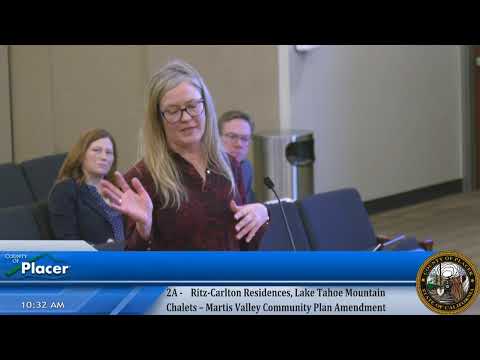
Laura Bullard, speaking in person, urged commissioners to protect local communities from what she called overconcentration of development and a failure to coordinate with transportation departments. She recounted a near head‑on collision on Baseline Road in the Dry Creek area and said that approving more density without road improvements endangers residents. "You guys keep approving development in the area that's 4 to 5 times the amount that's supposed to be in our community plan," Bullard said, adding she would show commissioners the local impacts firsthand.
Caller Diane Luz Alessi, who said she is a 60‑year Placer County resident, raised a separate but related concern about the county's RHNA accounting. She said rezonings to RM‑30 create theoretical maximum capacities that do not equal entitled and built units and urged staff to disclose that approvals at densities below the zoning maximum create shortfalls the county must address. Using Hope Way as an example, Alessi said the site was rezoned with a theoretical capacity of 343 but the current application seeks 240, creating what she characterized as an immediate shortfall in lower‑income units that can carry forward and have legal and financial consequences. "Approval at lower density below 30 units per acre will create a unit shortfall requiring additional rezonings to maintain housing element compliance and avoid builders remedy projects and financial penalties," she said.
Planning Director Chris Pahule responded that staff used a conservative approach when counting site capacity—using the minimum allowable density (20 units per acre) in inventory calculations rather than the 30‑unit maximum—and that staff prepares a no‑net‑loss analysis in staff reports to show how approvals affect the balance of lower‑income units.
The comments were entered into the record; commissioners asked staff to ensure the Board of Supervisors and future staff reports have the relevant analyses and disclosures.