
Hamilton County courts ask commissioners for higher juror pay, more interpreter funds and probation support
Get AI-powered insights, summaries, and transcripts
Subscribe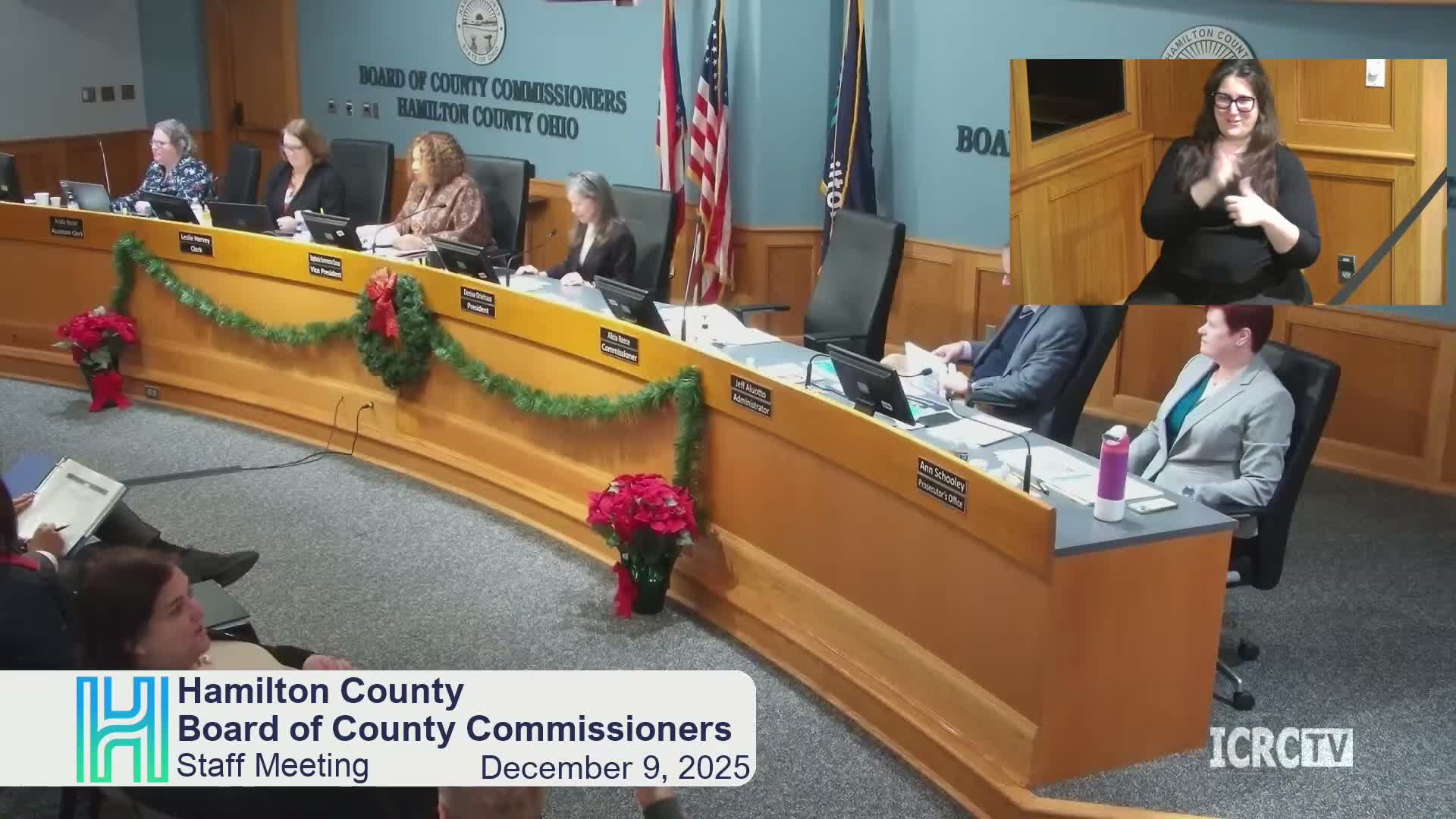
Summary
Court leaders told commissioners they need increased juror pay, more funding for interpreters and IT licensing and have shifted probation to a risk-based, field-officer model; the juror-pay proposal would raise daily pay from $19 to $30 and was estimated to cost about $100,000 annually.
Tom Bridal, speaking for the Hamilton County Court of Common Pleas, told commissioners on Dec. 9 that the court is seeking multiple budget increases aimed at improving juror participation, interpreter services, building security and court technology. “Our jurors currently receive $19 a day in jury pay,” Bridal said, adding the court is requesting $30 a day to help jurors afford parking and lunch and to improve retention.
Bridal said the state permits up to $40 per day but the court is not asking for the full amount; he estimated the $30 proposal would increase the court budget by roughly $100,000. He also described rising interpreter demand — including Arabic — and said contracted translation providers have raised fees, and that the Supreme Court has urged courts to expand translation services to ensure access to justice.
On facilities and technology needs, Bridal said the courthouse at 1000 Main Street has ongoing security upgrades (additional cameras and reinforced exterior doors) and that the court must replace expiring CMS/Microsoft licenses used across multiple courts. He said the court is coordinating with the clerk’s office and county administration to minimize costs.
Bridal outlined personnel steps for the probation department, which moved to a risk-based supervision model that categorizes probationers by risk and places officers in field roles for home, work and street visits. The probation office has increased pay 5% for those officers and is partnering with the University of Cincinnati to measure outcomes.
Municipal court administrator Andy Gillen said the municipal court’s requested budget is about $600,000 above the administrator’s recommended level, driven by interpreter cost increases (a provider notified the court of an 8.3% rate increase effective Jan. 1) and transition costs tied to newly elected judges and planned stationaries and furniture. Gillen said the municipal court handled roughly 7,000 cases among the two courts last year and expects interpreter demand to continue rising.
Commissioners pressed presenters on budget details, operational changes and community impact. Bridal and Gillen described steps already taken — text-message juror notifications to reduce unnecessary payments, staged hiring and internal IT migrations — and acknowledged constrained county resources. The courts and commissioners agreed to continue coordination during ongoing budget negotiations.
The most recent procedural step: commissioners heard these presentations as part of the county’s broader 2026 budget deliberations and did not take a formal vote on any court-specific appropriation at the meeting. The board scheduled a public budget hearing for 6 p.m. the same day.