Lafayette commission previews 2026 transportation work program, asks for more detail on countywide "smart signals" upgrade
Loading...
Summary
The Transportation and Circulation Commission reviewed a draft 2026 work program that lists capital projects (including a CCTA-led smart-signals upgrade and design funding for the Lafayette Aqueduct Pathway), multiple overlapping mobility studies and ongoing programs. The item was informational; no votes were taken.
The City of Lafayette Transportation and Circulation Commission on December 15 received an informational presentation on the draft 2026 work program, which lays out proposed capital projects, consultant-led studies, ongoing programs and grant-funded analyses the city expects to advance next year.
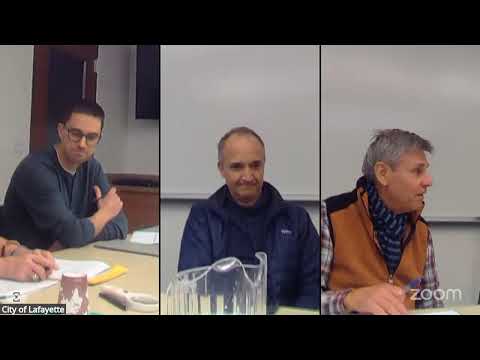
Commission Chair Bart Carr opened the discussion and emphasized the meeting was a preview: "This is just for being presented to us for our information," he said, underscoring that the commission was not being asked to approve policy at the session. Staff said the commission and council will discuss highlights at a joint meeting currently scheduled for Feb. 9.
Why it matters: the work program consolidates several projects and studies that overlap geographically and functionally in and around downtown Lafayette and the BART station area. Staff framed the agenda as a roadmap for 2026 work and a guide for pursuing grants and consultant assistance.
Major items and timelines outlined by staff included: - Smart signals: a countywide CCTA-led project to upgrade roughly 300 intersections countywide, including about 30 in Lafayette; staff said two large federal grants will cover most costs with a local match expected and that CCTA will be asked to provide a technical briefing in the first quarter. Commissioners asked for clarification on Lafayette’s role in on-going signal adjustments and how local input and operations would be coordinated with the countywide system. - Lafayette Aqueduct Pathway: funding was reported for a detailed design of a pathway segment from Dolores to Pleasant Hill; staff said public engagement and a 65% design review are expected next year but construction funding remains to be identified. - Consultant studies: staff described several overlapping studies that will be coordinated, including a downtown parking-management study (consultant-led, expected to return in January), the renamed Mount Diablo Corridor multimodality study (formerly downtown mobility plan), a right-turn-on-red review and Moraga Road resurfacing/circulation analysis folded into the downtown study. - BART station access and circulation analysis: staff said the city received an MTC grant (no local match) to analyze pedestrian and bicycle access around the BART station and will receive an MTC-selected consultant once funds are released, with a 2026 kickoff anticipated. - Active transportation planning and task force: staff proposed creating an active transportation task force with representatives from the Transportation Commission, Planning Commission, Design Review Commission, council and members of the public to coordinate the various studies and avoid duplicated work. - Ongoing programs and construction: annual traffic calming reviews, TAR (transportation action request) follow-ups, an ebike safety subcommittee and upcoming construction or ribbon-cutting timelines were noted; staff said BART Town Center construction is expected to begin in January or February and other projects (Connecting Lafayette) are slated to begin in spring.
Staff described the work plan as a planning and grant-seeking document rather than a set of adopted policies; the commission posed questions and requested additional technical briefings on projects funded or led by outside agencies. The chair reiterated that commissioners could ask for follow-up information and modifications as studies proceed.
Next steps: the work program will remain informational at the commission level and the city anticipates bringing consolidated recommendations and additional technical briefings to the commission and council in coming months. No formal actions or votes on the work program were taken at the meeting.
The meeting adjourned with holiday remarks from the chair.