
Housing Solutions Alliance pushes homelessness blueprint as federal grant rules shift
Get AI-powered insights, summaries, and transcripts
Subscribe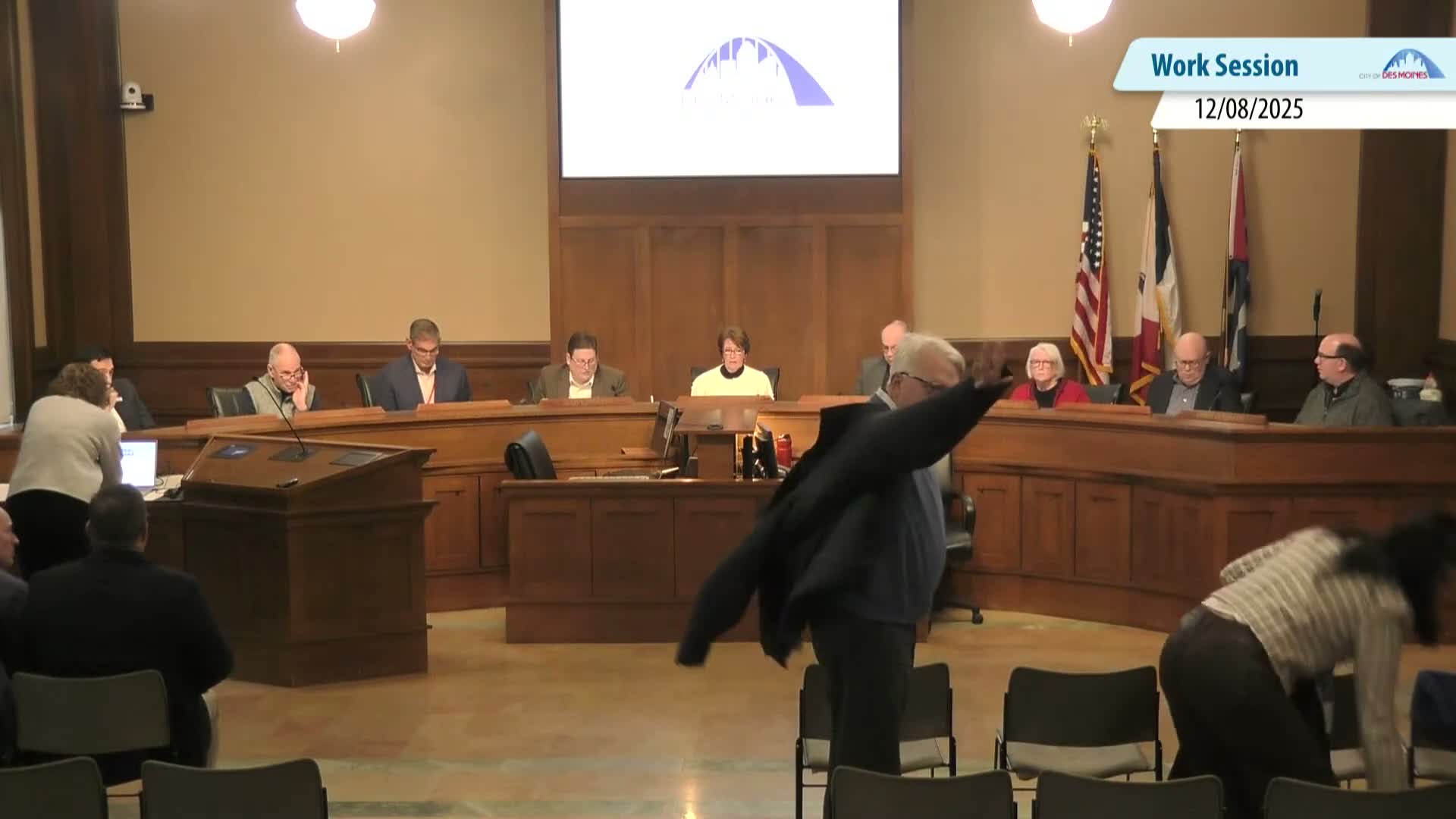
Summary
HSA leaders told council they are operationalizing a seven‑area blueprint and pursuing an urgent local grant competition this week for noncongregate shelter and other programs after Continuum of Care funding priorities shifted, potentially reducing allocations for permanent supportive housing.
Des Moines — Housing Solutions Alliance (HSA) leaders on Dec. 8 briefed the city council on implementation steps for a metro homelessness blueprint and urged rapid action after federal Continuum of Care guidance shifted priorities and a local competition deadline approached.
Scott Geena, co‑chair of the HSA and president and CEO of EMC Insurance, told council the alliance has translated a consultant blueprint into a new public‑private organization and is preparing to implement 25 improvement strategies across seven focus areas. "We are charged with implementing the blueprint," Geena said.
Doug Romig, HSA executive director, described the seven focus areas — including prevention/diversion, crisis response capacity, and accelerating exits to stable housing — and said the board will adopt bylaws, a budget and an approval process for the improvement strategies at a meeting scheduled later that day. Romig said staff plan to present prevention/diversion recommendations for board consideration in 2026 and emphasized measurement: the alliance will track whether individuals reenter the homelessness system at one, three and five years as a key outcome metric.
Noncongregate shelter pilot and federal funds: Lisa Krebs from the city's Federal Funds Division said staff identified two ideas via the Bloomberg Harvard program: a "quick win" pilot to provide lockers for unsheltered individuals and a "big bet" to develop a noncongregate shelter with private sleeping spaces for about 50 individuals. Amber Lewis, the city's homelessness policy administrator, summarized three models under consideration — an Avivo Village‑style indoor pod model, outdoor pallet‑shelter villages, and converted motels — and said stakeholders repeatedly emphasized pet‑friendly spaces, onsite supportive services and 24‑hour staffing.
Krebs said the city has roughly $1,000,000 remaining in HOME‑ARP funds that could be committed to a noncongregate shelter, and she flagged a major change in Continuum of Care grant priorities: staff stated the share of Continuum of Care funding dedicated to permanent supportive housing has been reduced from an historical range of about 80–90% to roughly 30% under the new guidance, which shifts what the city can fund through that program. "We still have approximately 1000000 dollars left," Krebs said of HOME‑ARP funds; she added that the next CoC grant round emphasizes transitional housing and supportive services.
Council urgency and next steps: Several council members and staff described an imminent local competition deadline this week (the local competition feeds into the federal application due in January) and discussed whether the city should provide letters of support, land, lease commitments or other forms of backing to prospective applicants. Council members signaled support for staff to move quickly and suggested the possibility of a special meeting to authorize city commitments if needed.
Staff emphasized roles and process: Homeward (the local Continuum of Care entity) manages the local competition and recommendation process; the City of Des Moines serves as the collaborative applicant and retains final authorization to submit and accept grants on behalf of the continuum. Staff said they will provide a list of anticipated applicants and the local scoring sheet when available and will return to council if the city’s formal authorization is required.
There was no formal council vote in the work session; councilors concluded by thanking HSA leaders and directing staff to continue coordination to meet local and federal deadlines.