Get Full Government Meeting Transcripts, Videos, & Alerts Forever!
Get email alerts on the Automated Enforcement topic
No spam. Unsubscribe anytime.
Board approves funds to sustain automated speed enforcement; DOT cites crash reductions and revenue
Summary
DOT requested and the Board approved funding to continue the Automated Traffic Violation Enforcement System (ATVES). DOT said the program expanded from 32 cameras in 2018 to 165 in 2025, produced measurable crash reductions at camera sites and generates net revenue used for operations and safety investments.
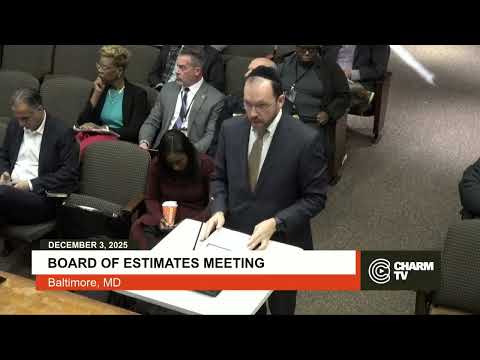
The Board of Estimates voted Dec. 3 to continue funding the city’s Automated Traffic Violation Enforcement System (ATVES), which DOT officials said has expanded and delivered measurable safety benefits at deployed locations.
Director Macbeth told the board the city has expanded camera coverage from 32 fixed cameras in 2018 to 165 cameras as of 2025 and that fixed and mobile cameras process more than 1,000,000 events annually. DOT presented crash‑reduction estimates of roughly 20–35% at corridors where cameras have been deployed and said school‑zone enforcement reduced vehicles traveling 12+ mph over the limit by 85–95% in targeted locations.
DOT asked for about $16.6 million to support operations: camera operations, data processing, quality assurance review, citation management, field maintenance, relocations and compliance with Maryland Transportation Article section 21‑809. The department said the I‑83 special fund generated approximately $6.3 million annually on average and that combined program revenue was about $31 million per year before recent legislative changes.
Board members asked about an audit of camera calibrations and signage; DOT said it had audited the specific areas raised by a councilmember, refunded 27 erroneous tickets tied to incorrect signage, and that Verra Mobility and DOT have since calibrated cameras and matched signage throughout the program. Tristan Masley Ellis, manager of strategic partnerships for Verra Mobility, confirmed cameras are automatically calibrated and that the vendor performs physical calibrations periodically.
Mayor and board members discussed out‑of‑state collections on I‑83 citations and noted statutory limits on mailing and collection; DOT said reciprocity and legislative options remain a longer‑term part of its strategy and that the administration plans an RFP to evaluate market options and vendor competition.
A motion to approve the funding request was moved and seconded and the board approved the item by voice vote.