
Davis County School District presents community feedback; board begins narrowing strategic‑plan focus areas
Get AI-powered insights, summaries, and transcripts
Subscribe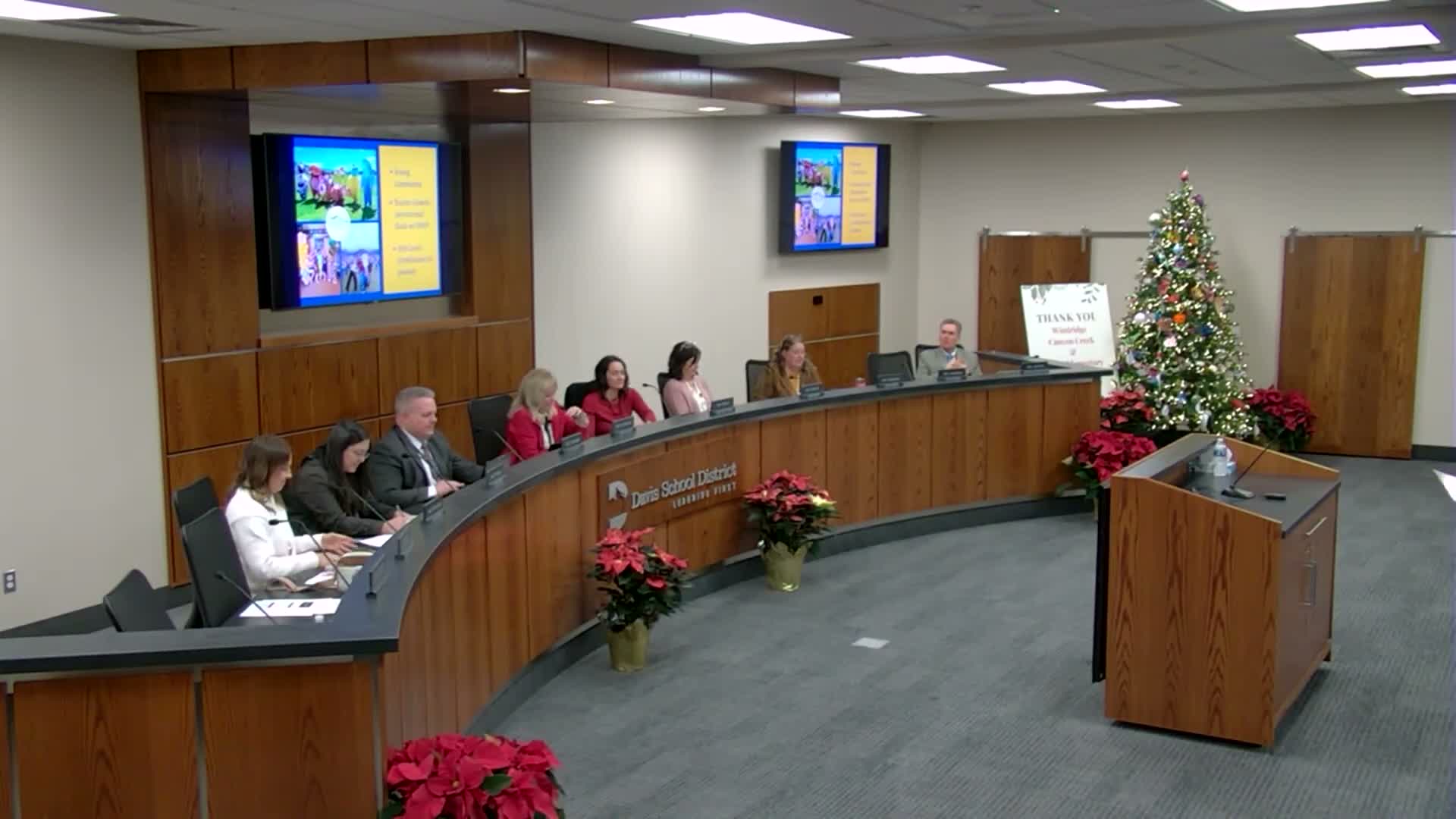
Summary
District researchers summarized feedback from 35 focus groups and nearly 33 hours of recordings, identifying relationships, communication/transparency, advanced opportunities and social‑emotional supports as top themes; the board discussed prioritizing those themes and will narrow focus areas for a January parent meeting.
District research staff presented a synthesis of community and student feedback to the Davis County School District board, reporting that the November focus groups produced nearly 33 hours of audio and roughly 6,000 relevant statements, and that "relationships" was the most frequently cited theme across conversations.
Doctor Toon and Doctor Montero described the methodology: 35 focus groups with students and community councils, transcription and speaker‑segmentation tools (WhisperX and PYNO), selective coding, sentiment analysis and thematic synthesis informed by qualitative methods. Montero said the team used an LLM to surface theme wording and extract representative sample comments included in the board handout.
The presenters summarized top themes. They said relationships and connections dominated the responses, followed by district communication and transparency, family partnerships, advanced learning opportunities (AP, concurrent enrollment, CTE) and social‑emotional learning and supports. Montero summarized the central narrative for future priorities as a “formula” combining high‑quality teaching, mental‑health support, meaningful relationships and consistent expectations.
Board members responded with a whiteboard exercise to identify focus areas the board should carry forward. Members repeatedly nominated academic excellence/student growth; belonging and community engagement (including mental‑health supports and communication); quality staffing and teacher retention; fiscal responsibility; and advanced opportunities/workforce preparation. Several members emphasized the need to balance district‑level priorities with local school autonomy and clearer parent communication about available pathways and resources.
The presenters and superintendent asked board members to list top priorities and agreed to distill the input. Next steps: staff will prepare a condensed set of focus areas and materials for January parent meetings and further drafting work with board committees. No formal motions or votes were taken during the workshop segment.
Board members and staff repeatedly stressed that AI tools had been used to assist theme labeling and sample extraction, and presenters offered to provide raw counts and supporting data if board members requested them.
The workshop section closed with staff committing to prepare focused conversation materials and to return with narrowed options for the board’s review ahead of broader community engagement in January.