Get email alerts on the Housing Incentives topic
No spam. Unsubscribe anytime.
County to workshop residential development incentive after board questions thresholds
Summary
Commissioners pressed staff on a residential development incentive’s $5 million threshold, 4× median-income eligibility metric and rebate mechanics; staff will schedule a workshop to collect revisions and return a revised draft.
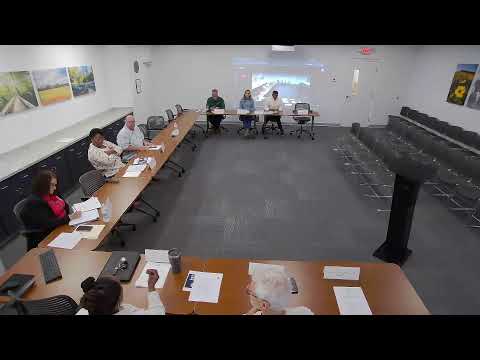
During the Sept. 18 Columbia County meeting, commissioners focused extended discussion on a draft residential development incentive program and asked staff to return with clarifications and proposed revisions.
Speaker 4 noted the draft’s $5,000,000 minimum investment threshold and said the revised incentive included a 70% tax abatement; Speaker 6 questioned whether the 4× median-household-income eligibility metric would exclude most local projects given Columbia County’s relatively low median income. ‘‘The household income median is low,’’ Speaker 6 said, warning the metric could make the program inaccessible to local builders unless the multiplier or scoring was adjusted.
Speaker 7, who described developer-facing aspects of proposals, said the incentive is designed for market‑rate workforce housing that would not seek state or federal subsidies. He explained the rebate mechanics: full tax is paid annually and then a rebate is returned to the developer for five years, with the county receiving a share during that period.
Board members suggested several changes to better fit local conditions, including adding points for projects that retain developers as long‑term owners and for proposals that commit to renting at market‑oriented workforce levels rather than selling units piecemeal. Speaker 1 proposed a workshop to review the draft; staff (Jennifer) will circulate the original incentive plan and compile member comments ahead of a scheduled session (Teams or in‑person).
The board also requested clearer verification requirements for promised local hiring and capital investment; Speaker 6 asked staff to validate employment counts and other commitments at the next meeting. Because some motions on incentives were approvals to finalize contract language (not new incentive authorizations), the board emphasized that policy revisions should be completed in workshop form before adopting changes affecting future applications.
Next steps: staff to send the original incentive packet and schedule a workshop; board members to submit suggested edits in advance for consolidation.
AI generated
The text on this page is AI generated. Summaries, highlights, analysis, and video transcripts are all produced from the original source material.
AI can make mistakes, so if you spot one, and we will fix it for everyone.
Note: the source content is unaltered by us. Any content source we link to, be it a video, an audio recording, or a document, is presented exactly as its publisher released it. That publisher is usually a government body, sometimes an individual official or another organisation.