Get Full Government Meeting Transcripts, Videos, & Alerts Forever!
Get email alerts on the Child Welfare topic
No spam. Unsubscribe anytime.
Appeals court hears challenge to DCF termination of mother's parental rights
Summary
In a heavily litigated, impounded child‑welfare appeal, counsel disputed whether termination was required or whether less‑restrictive alternatives should have been pursued; the Department of Children and Families defended the trial court's finding of ongoing parental unfitness and the court reserved decision.
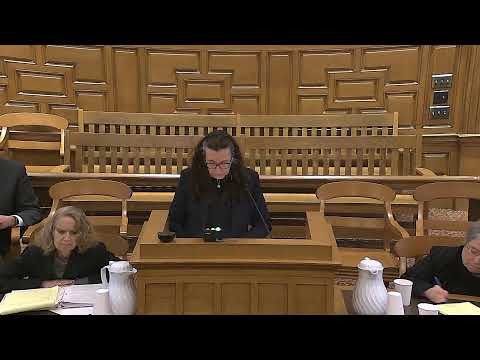
A long, impounded appeal considered whether the trial court erred in terminating a mother’s parental rights in a case brought by the Department of Children and Families (DCF). The panel heard arguments from multiple parties including counsel for the mother, the department, father, and the children’s counsel.
Mother’s counsel argued that termination was "egregious" and urged application of least‑restrictive alternatives, noting that the mother had engaged in visitation and services and that post‑removal supervised visits had generally gone well. Counsel urged the court to weigh the mother’s progress and to consider family‑court remedies and guardianship options rather than final severance of parental rights.
DCF counsel Carol Frisoli told the panel the trial court permissibly found ongoing risk from repeated domestic‑violence relationships, inconsistent engagement in substance‑use treatment, unstable housing, and an overall pattern of conduct that made reunification unlikely: "the trial court rightfully found that mother was unfit...and that it was in the best interest of the children to terminate mother's parental rights," Frisoli said. Father’s and children’s counsel emphasized the children’s need for permanency and stability and supported the result in light of the record of services and the finding that the father had become a fit, stable placement.
The court recognized the complexity of the case and the emotional stakes for the family, asked detailed questions about least‑restrictive alternatives and statutory standards, and took the matter under advisement.