
Appeals court hears challenge to admissibility of graphic video in Bowens homicide appeal
Get AI-powered insights, summaries, and transcripts
Subscribe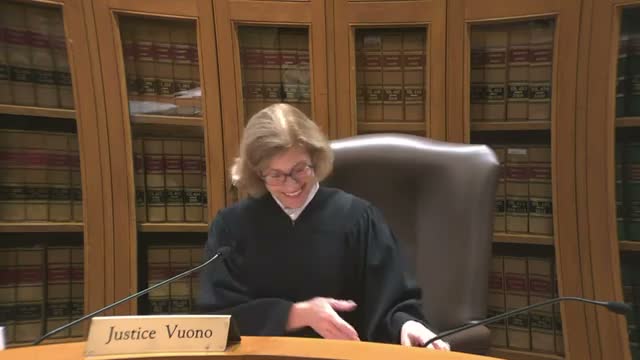
Summary
Defense counsel argued trial admission of a composite video showing post‑altercation medical aid and the victim’s decline was unduly prejudicial and lacked probative value; Commonwealth urged the footage was relevant to identification and the severity/rapidity of injuries. Court took the case under advisement.
A three‑justice panel of the Appeals Court heard arguments over whether trial courts properly admitted video evidence in Commonwealth v. Gerald Bowens (2024‑0213).
Adrianna Contretezzi, counsel for the defendant and appellant, told the panel the composite video shown at trial included roughly 14 minutes that depicted the victim dying and that those minutes had “no probative value at all.” She said the most inflammatory segments — repeatedly played, paused for commentary, and then sent back with jurors — could have swayed the jury away from an impartial assessment of the self‑defense issue and therefore warranted a new trial.
The Commonwealth, through ADA David McGowan, responded that the exhibits were relevant to identification and to the extent and rapidity of injuries, facts that go directly to whether the defendant’s response exceeded the bounds of justified self‑defense. McGowan acknowledged the footage could be uncomfortable and said the trial judge limited what was published, prohibited still photographs from the contested portion, vetted jurors, and instructed them about impartiality. He estimated the compilation ran about 8 minutes 22 seconds, while defense counsel described a longer segment; the judges pressed both sides on exactly which portions were played and when.
The defense highlighted that closing arguments encouraged jurors to view the footage frame‑by‑frame and that expert or lay commentary during playback (including firefighter testimony) amplified the material’s emotional effect. The Commonwealth emphasized that, although judges may reasonably disagree on close calls, the video carried probative weight on the central factual disputes about force and causation.
After extensive questioning on the record about the portions played during witness testimony and what jurors actually saw in the jury room, the panel took the matter under advisement. The court’s decision will determine whether the evidentiary rulings stand or whether the case must be retried.