Get Full Government Meeting Transcripts, Videos, & Alerts Forever!
Get email alerts on the Duke Park topic
No spam. Unsubscribe anytime.
Consultants propose three Duke Park options to address flooded fields and regional demand
Summary
Legacy Sports and StructurePoint presented three options for Duke Park — full redesign/expansion, relocate Newpark diamonds to Duke, or turf/upgrade existing diamonds — saying a comprehensive redesign with turf and lighting could attract tournaments but would require multi‑million dollars and years of planning.
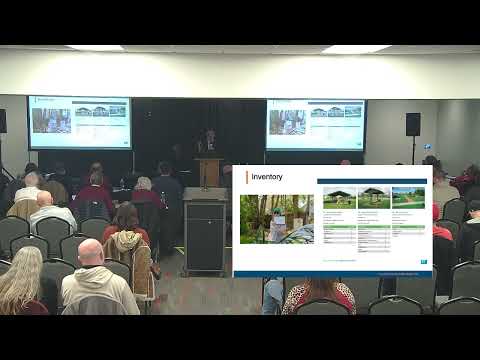
Consultants told Troy officials that Duke Park — the city’s busiest sports complex — needs changes to address recurring flooding, insufficient practice fields, parking and restroom access, and to create a venue that can serve both local leagues and regional tournaments.
William Knox, president and CEO of Legacy Sports Group, summarized three development scenarios. The most aggressive option (1A) calls for a comprehensive redesign and expansion using city‑owned land north and south of the current park to create concentric zones for rectangular multipurpose fields and diamond fields, add parking and concessions, and consolidate amenities for operational efficiency. Knox said that approach would be most attractive for tournaments if it includes synthetic turf and lighting. “If we could concentrate anywhere between, you know, 10 to 16 diamonds…and 7 to 12 multipurpose fields in one location, it is absolutely…a significant draw,” Knox said.
Alternatives include option 1B — relocating existing diamonds at Newpark into Duke to create better playability without full redesign — and option 1C — upgrading existing Duke diamonds (for example, turfing infields), which would be less disruptive but provide fewer long‑term operational efficiencies.
Why it matters: consultants said turf fields extend playability and are a primary factor in drawing tournaments, which can generate tourism dollars for hotels and downtown businesses. But they warned of trade‑offs: more fields increase maintenance and operational needs, and the city must consider staffing, phased construction and displacement during buildout. Consultants estimated a realistic earliest groundbreaking for a large Duke Park option around 2028 and said construction could take 24–36 months depending on scope.
Public response: sports organizers and many residents praised the Duke Park concepts, citing the need for reliable playing surfaces and consistent scheduling. Some council members signaled early support for an ambitious option, while others emphasized funding constraints and the need to preserve core maintenance funding elsewhere in the system.
Next steps: staff and consultants will refine designs, cost estimates and operational models; any decision will be subject to further public engagement and a separate budget and implementation plan.