
Elk River School Board Adopts Scenario 2 as Budget‑planning Target for 2026‑27
Get AI-powered insights, summaries, and transcripts
Subscribe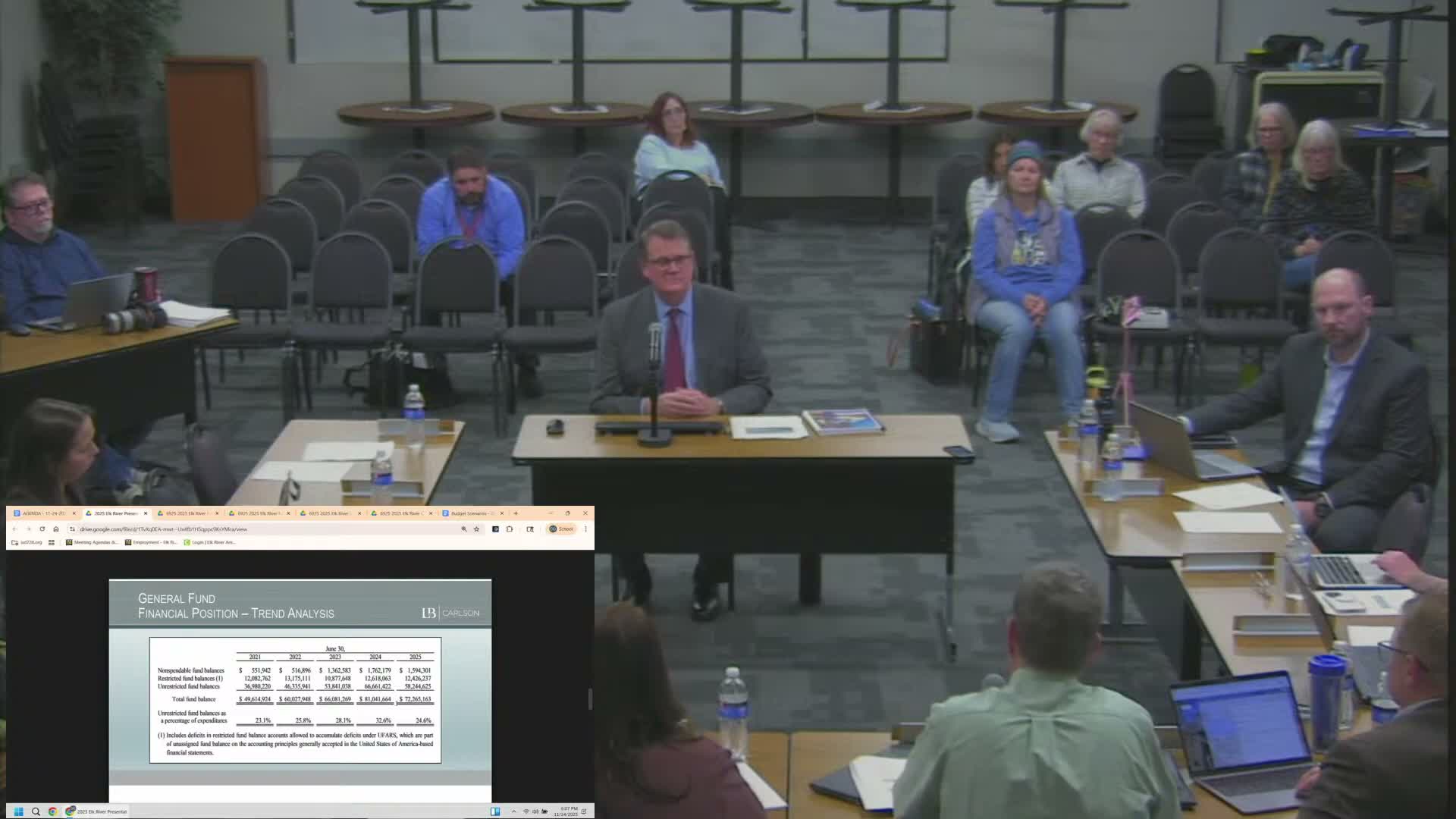
Summary
After discussing three multi‑year budget scenarios, the board voted by voice to accept Scenario 2 as the planning target for the 2026‑27 preliminary budget; staff will prepare detailed projections and return with numbers in February and April.
The Elk River School District Board voted Oct. 27 to adopt Scenario 2 as the district—s planning target for the 2026‑27 preliminary general fund budget.
Board member 2 moved to accept Scenario 2 and the chair seconded; the motion carried by voice vote. The motion gives staff direction to build the preliminary budget using the Scenario 2 assumptions, which board members described as a middle ground intended to preserve an 8% reserve target while limiting deep program cuts.
District staff and the superintendent told the board that Scenario 2 implies multi‑year reductions in the range of roughly $3 million to $6.5 million depending on assumptions about enrollment, state funding and contract outcomes; the packet shows variants where up to about $3,000,000 of fund balance could be applied to the scenarios (the "orange" variants). Staff cautioned that detailed revenue and expenditure projections require substantial analysis and said the board would receive more specific numbers in February (a 50,000‑foot review) and again in April ahead of final budget actions.
Several board members pressed for clarity about the district—s current position: the audit presentation earlier in the meeting reported an $8.8 million deficit on a preliminary basis as of June and an unassigned fund balance of roughly 6.5%. Members asked whether assigned or committed funds could be moved to meet the 8% target; staff said shifting money between assigned/committed/unassigned categories requires board action and that many assigned dollars (site carryovers, curriculum/technology) are earmarked for specific purposes.
Board member 2 argued that Scenario 2 provides reasonable reductions now while preserving flexibility to adjust in February and April after contract negotiations and updated enrollment counts. Other members asked for the basic projected revenue and expenditure figures that underlie each scenario; staff replied those forecasts exist but that the board needed to give direction on assumptions (for example, whether to assume current enrollment or add 200–300 students).
The vote was taken by voice; the clerk recorded "Aye" responses and the chair announced the motion carried. The board then moved and carried an adjournment motion.