
Auditor Gives Elk River School District an Unmodified Opinion; $18 million Compensated‑leave Restatement Noted
Get AI-powered insights, summaries, and transcripts
Subscribe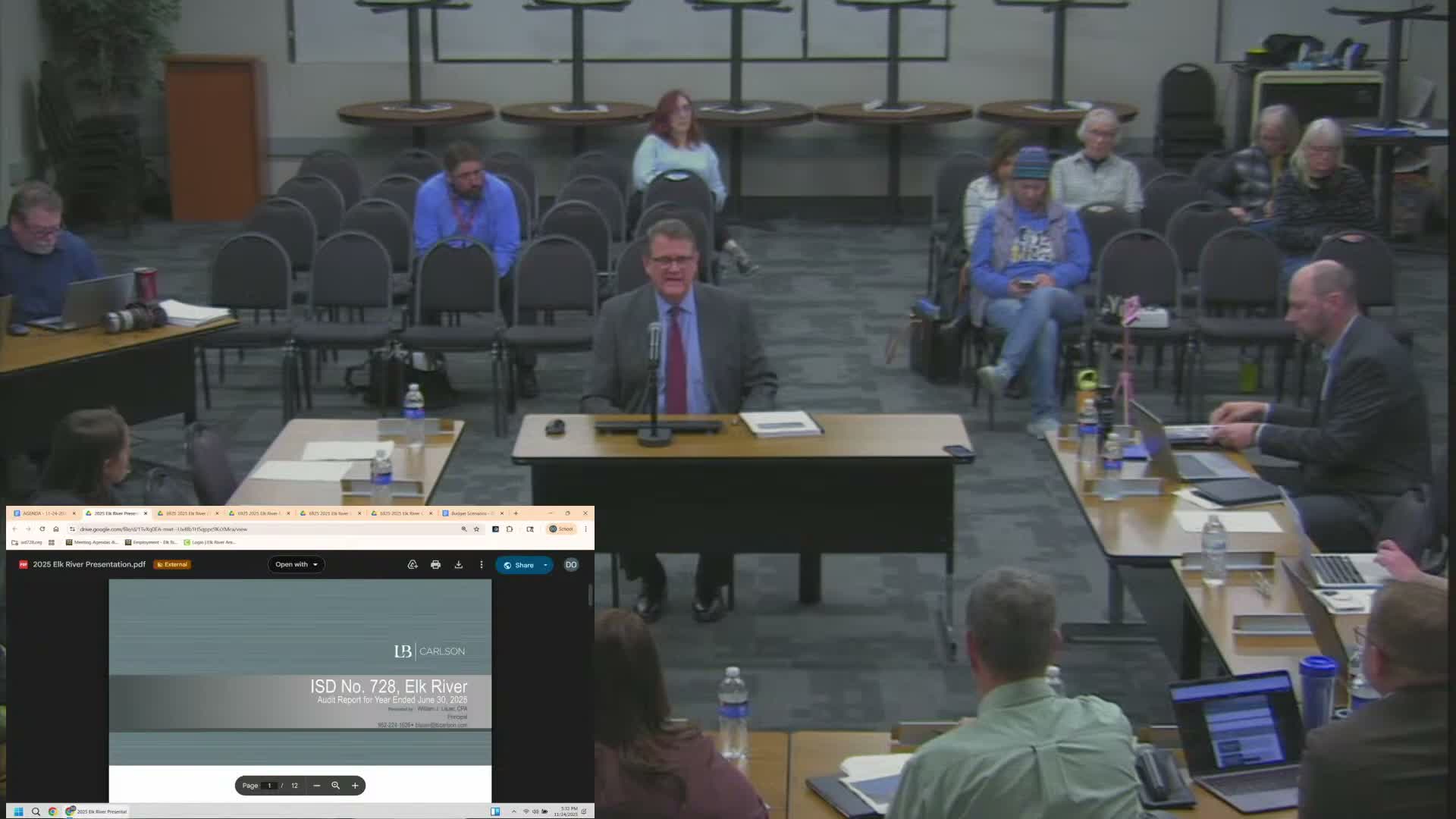
Summary
External auditor Mr. Reagan told the board the district received an unmodified opinion on its 2025 financial statements but must restate entity‑wide net position by about $18 million after implementing new GASB guidance on compensated absences; one compliance finding related to invoice timing was reported.
Mr. Reagan, the district—s external auditor, told the Elk River School District Board on Oct. 27 that auditors issued an unmodified opinion on the district—s 2025 financial statements and found no internal control weaknesses.
The auditor also said a change in accounting for compensated absences under GASB guidance required the district to report an additional long‑term liability for sick leave and similar benefits. That change produced an estimated restatement to the district—s entity‑wide net position of about $18,000,000. Mr. Reagan said the adjustment affects the district—s full‑accrual (entity‑wide) statements and does not change how the general fund is budgeted or how cash is spent at the building level.
The auditor summarized key fund‑level figures: the general fund had roughly $92,000,000 in cash and total fund balances near $72,300,000 at year end; unassigned fund balance was about $17,800,000 (roughly 6.5% of budgeted expenditures). Enrollment drove revenues higher: average daily membership was about 14,250, producing roughly 15,500 pupil units and contributing to general fund revenues of about $228,000,000 (approximately $2,000,000 over budget).
Mr. Reagan said revenues rose from state aid increases and an operating referendum, while federal revenue declined as one‑time COVID grants wound down. Expenditures were nearly $237,000,000, with personnel savings from open positions and variances from timing and carryovers accounting for much of the difference against final budget amounts.
On compliance, the auditor reported one routine finding: an invoice selected in testing was not paid within the 35‑day statutory window because it had been received at a remote building and not promptly routed to the business office. Once the invoice reached the business office, it was paid.
The auditor also reviewed the capital project fund, noting bond proceeds of roughly $34,000,000 in 2025 and completed projects near $17,300,000, and recapped the entity‑wide picture (capital assets, outstanding debt and the district—s share of statewide pension plan shortfalls such as PERA and TRA). He said those pension and OPEB allocations (about $98,000,000) are outside local control and affect the entity‑wide liabilities the district reports.
Board members asked for clarification on how the restatement affects budgeting. Mr. Reagan reiterated the restatement is an accrual‑basis presentation and does not change the general fund—s cash position or how the district budgets for day‑to‑day operations. He said more detailed, reconciled numbers are typically available during the revised‑budget process in January or February.
The board did not take formal action on the audit report at the meeting; the presentation concluded before the budget‑scenario discussion that followed.