
Wyoming council approves owner‑occupied Brownfield housing plan, rejects Wilson Avenue rental TIF
Get AI-powered insights, summaries, and transcripts
Subscribe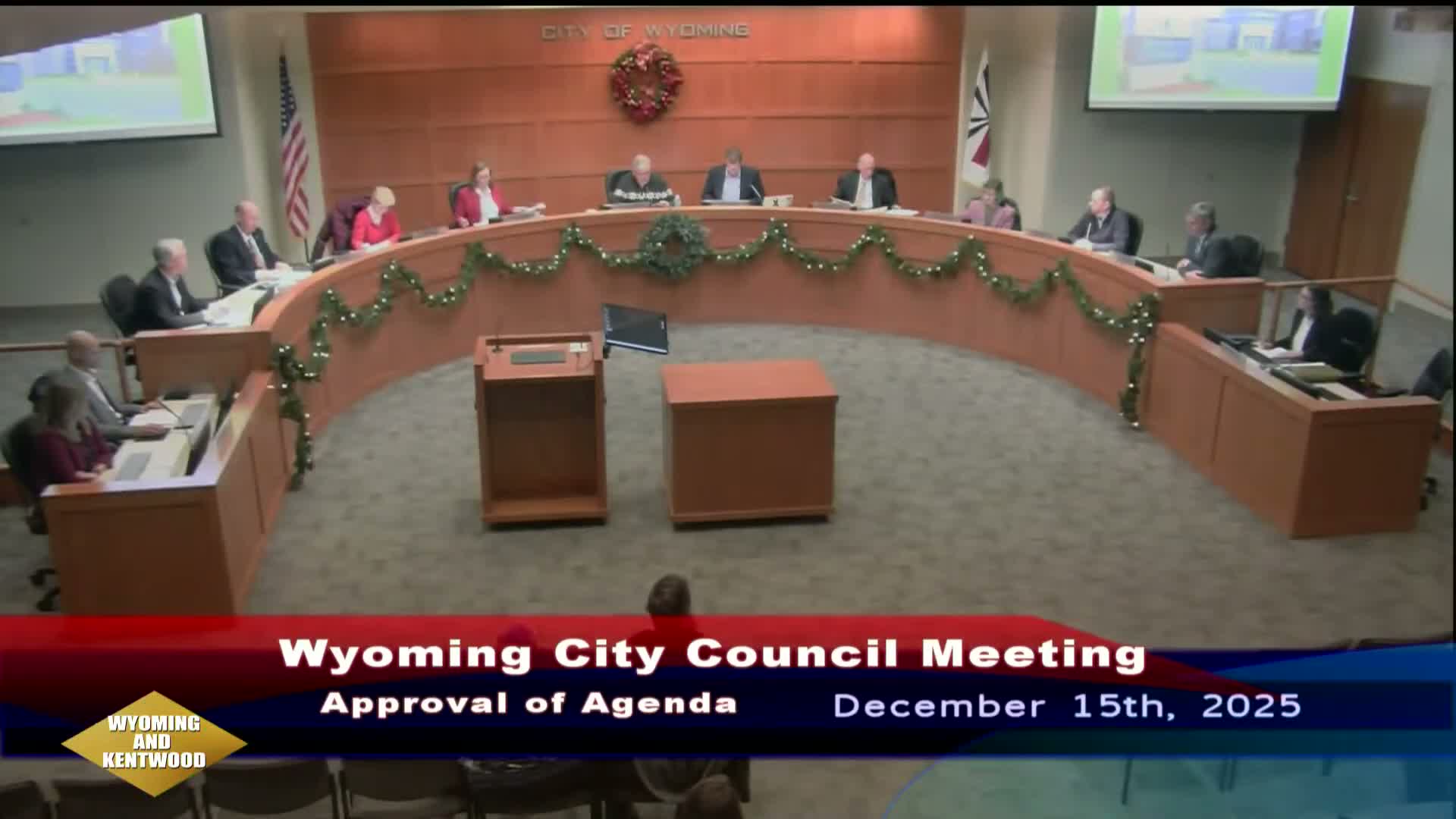
Summary
On Dec. 15, 2025 the Wyoming City Council approved a combined Act 381 Brownfield plan and reimbursement agreement for a 205‑unit owner‑occupied community (Solomon/Salmon View) while rejecting a separate Act 381 reimbursement for a 56‑unit rental at 5840 Wilson Avenue after split council debate over affordability and precedent.
The Wyoming City Council voted Dec. 15 to approve a combined Act 381 Brownfield plan and reimbursement agreement for a planned 205‑unit owner‑occupied community while declining a separate reimbursement agreement for a 56‑unit rental on Wilson Avenue.
Developers and nonprofit partners told the council the owner‑occupied project would include about 124 townhomes and 81 single‑family homes and that, through a partnership with ICCF and Housing Next, up to 10% of the homes would be reserved for income‑qualified buyers under a community land trust model. Michael McGraw of Eastbrook Homes and Paramount Development described the project as focused on ‘‘homeownership offers stability, community connection, long‑term financial security’’ and said the developer will sell some units to ICCF at reduced margin to support the set‑aside.
City staff described the owner‑occupied development as roughly a $87 million total investment with about $6.5 million of eligible infrastructure costs proposed for reimbursement under the Brownfield plan, with a tax‑capture structure that delays capture for three years and then captures revenue for roughly nine years with approximately a 70/30 reimbursement/retain split. City staff said those infrastructure reimbursements are aimed at roads, sewer, sidewalks and utilities rather than direct purchase subsidies for buyers.
The companion proposal for 5840 Wilson Avenue, a 56‑unit rental project, sought approximately $1.7 million in infrastructure reimbursement over roughly a 10–11 year period. Jared Belko, representing the Wilson development team, described the request as ‘‘infrastructure only’’ and said the TIF was necessary to make the project pencil amid high interest and construction costs; Ryan Schmidt of the development team said the rental project would add needed multifamily housing to the city.
Council debate focused on whether the housing‑TIF tool was being used in a way that both advanced affordable housing goals and protected taxpayers. Multiple council members said a 10% affordable set‑aside felt too small and warned against setting precedent for routine use of TIFs on private housing that benefits developers. One council member said the 10% figure ‘‘just kinda feels like checking off a box,’’ while others noted the Brownfield Redevelopment Authority and staff had reviewed the applications and recommended approval under the city’s recently adopted housing‑TIF policy.
After separating the two resolutions for individual votes, council approved the owner‑occupied Brownfield plan and reimbursement agreement and later rejected the Wilson Avenue reimbursement agreement. Staff and developers had emphasized time sensitivity for construction scheduling if decisions were delayed, but several council members said they would like a future workshop to refine priorities for the housing‑TIF program.
The council’s action means the Solomon/Salmon View owner‑occupied project may proceed with the approved infrastructure reimbursement plan; the Wilson Avenue project will need to reevaluate financing options or return with revised terms. The Brownfield board had unanimously recommended both projects; the council’s split vote reflects differing views among members on how the new housing‑TIF authority should be prioritized.
Next steps: staff will work with the developers of the approved owner‑occupied project to implement the reimbursement schedule; council members requested additional review and potential policy guidance on when and how housing‑TIF dollars should be used to support affordable units and private development.