
Grand County commissioners tighten 2026 tentative budget; agree to yearlong hiring freeze and 4% admin assessment
Get AI-powered insights, summaries, and transcripts
Subscribe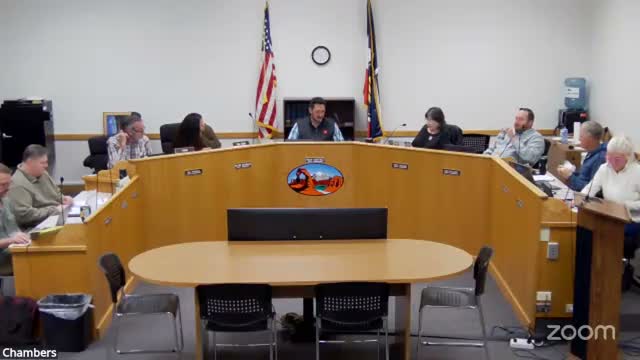
Summary
At a Dec. 9 budget workshop, Grand County commissioners tentatively adopted a year-long hiring freeze and agreed by straw poll to apply a 4% administrative assessment across identified restricted funds while keeping a $200,000 affordable‑housing allocation; several department requests (solid waste, museum, Rec SSD) were also approved for the tentative budget, with staff tasked to verify final numbers.
Commissioner Winfield called the Grand County budget workshop to order at 9:30 a.m. Wednesday and opened a half-day session focused on closing gaps in the county's tentative 2026 budget.
The commission’s early decisions centered on personnel and accounting offsets. "If we were to institute the hiring freeze for the entire year, we'd be looking at 1,400,000 right there," Commissioner Martinez said during a recap of the commission’s assumptions. That hiring-freeze scenario — coupled with a proposed 4% administrative assessment on most restricted funds and a conservative voluntary reduction-in-force estimate — forms the foundation of the tentative numbers the board agreed to use.
Staff presented updated budget documents and a live scenario worksheet dated Dec. 8 showing a projected draw from general-fund reserves in the low seven figures. Dave, a county staffer who distributed the materials, said the packet and linked calc sheet were intended to let commissioners “track decisions and their impact on that budgeted draw in real time.” Auditors and HR staff cautioned that methodology and exact fee calculations must be verified before final adoption.
After extensive discussion about mechanics and audit visibility, the commission agreed by straw poll to apply an administrative assessment of $4 across the identified non‑general funds for the 2026 tentative budget and to form a subcommittee to set the permanent policy. "I would suggest we go with the 4 at the top," Commissioner Winfield said while urging a later, more detailed policy review.
The board also moved to present the hiring freeze as a full‑year policy for budgeting purposes, while preserving quarterly reviews and the ability to restore positions if revenues improve. Commissioners framed the arrangement as a conservative stance that could be adjusted midyear.
Several department and program funding requests were resolved for the tentative budget. The museum’s request was left in at $114,525 after commissioners discussed whether promotional activity could instead run through the county tourism office to reduce direct county ad spending. A large solid‑waste request prompted debate about rising transfer‑station costs; commissioners ultimately supported a $500,000 tentative allocation, noting the political tradeoffs for property taxpayers who also pay increased service fees.
Commissioners weighed the available TRT/TRCCA mitigation revenue (staff presented projections of roughly 4.6 million in TRT mitigation and 1.5 million in TRCCA revenue) and confirmed $4.9 million was currently allocated to law enforcement costs in the draft. Staff noted that those mitigation lines can fund specific eligible uses but that moving money between funds has implications for audits and reporting.
On discretionary spending, the commission agreed to reduce its discretionary line from the roughly $90,000 discussed down to $40,000 and to move recurring small community contributions (multicultural center, homeless services, Humane Society) into dedicated line items so they are transparent and easier to track.
Affordable‑housing funding remained on the tentative budget at $200,000 amid objections from a commissioner who opposed using general‑fund dollars for developer loans. Other commissioners noted the item had been approved in prior deliberations and declined to reopen the full debate at the workshop. Staff and the county attorney were asked to verify whether fee‑in‑lieu funds could be used instead if available.
A separate decision clarified Rec SSD and OSTA funding flows: commissioners agreed the county would ensure OSTA maintenance-and-operations funding (roughly $100,000) and leave approximately $37,000 from Rec SSD for project grants that the Rec board may allocate.
Staff warned that with the tentative additions the budget would show a small deficit (around $6,709 under the current scenario) and described that outcome as manageable given options to adjust midyear, use mitigation grants, or draw reserves; commissioners asked staff to prepare a final packet for a follow-up workshop and for public presentation at a meeting ahead of the Dec. 16 deadline.
The commission set a follow-up workshop for 3 p.m. to present the finalized tentative budget numbers and adjourned after brief closing remarks. The county will ask staff (including Chantel in HR and budget staff Gabe/Dave) to verify calculation details, the methodology for administrative assessments, and the qualification of fee‑in‑lieu housing funds before the board’s final action.