Woburn School Committee unanimously approves elementary school improvement plans
Summary
The School Committee voted unanimously to accept school improvement plans from the district’s elementary schools after principals presented goals for reading growth, math curriculum implementation and instructional leadership teams.
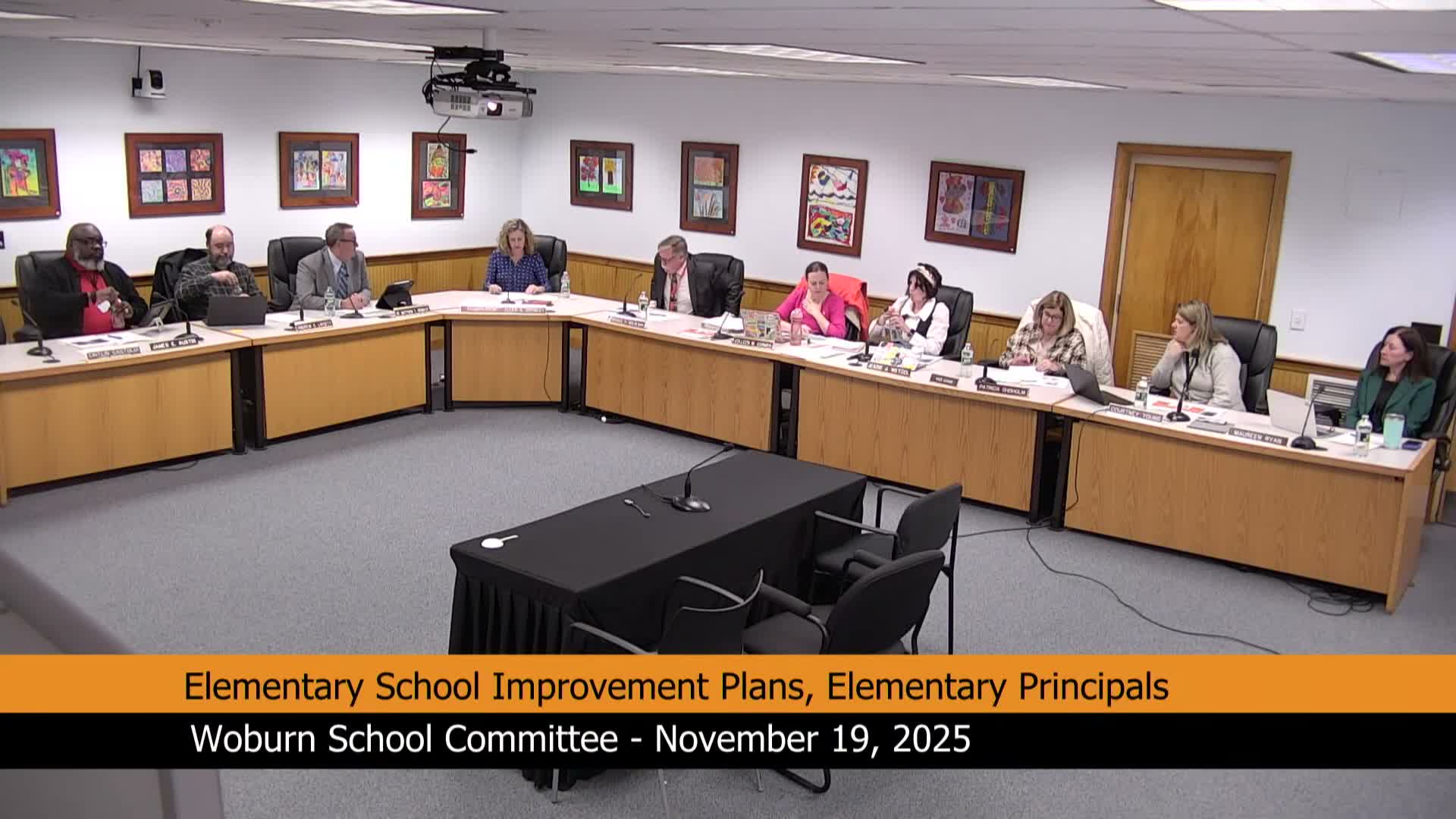
The Woburn School Committee unanimously approved elementary school improvement plans during its Nov. 19 special meeting.
Principals from six of seven elementary schools presented goals aligned to the district strategic plan. Presentations emphasized four recurring priorities: tailored reading growth tied to the district’s comprehensive literacy plan, implementation of a new Reveal Math curriculum with the ALEKS online platform, building instructional leadership teams (ILTs) to drive data-informed instruction, and a Playful Learning Institute (PLI) grant-driven focus at Reeves.
On reading, principals described a structured data cycle using DIBELS screeners and three benchmark data meetings (beginning, mid and end of year) with progress-monitoring meetings used to adjust interventions. "The first goal is titled, Tailored Reading Growth," one presenter said, noting year-to-year benchmarks and individualized intervention groups.
On math, principals described teacher cohorts, summer curriculum work and ongoing PD to ensure Reveal Math and ALEKS are implemented with fidelity. Principals and a content specialist cited teacher leaders and monthly walkthroughs as evidence that instruction is being monitored and adjusted.
Reeves’ principal outlined PLI goals supported by a DESE grant — including mentoring newer districts, peer observation, and collecting enjoyment/engagement data — and said the district may continue effective practices beyond the grant year if funding changes.
After presentations and committee questions, a member moved to accept the plans from all elementary schools; the motion was seconded and approved by unanimous voice vote.
What comes next: With plans accepted, principals and central administration will continue the scheduled benchmark and progress-monitoring cycles and report on implementation as part of regular updates to the committee.