
Budget hearing spotlights homelessness funding, commissioners consider repurposing commission dollars
Get AI-powered insights, summaries, and transcripts
Subscribe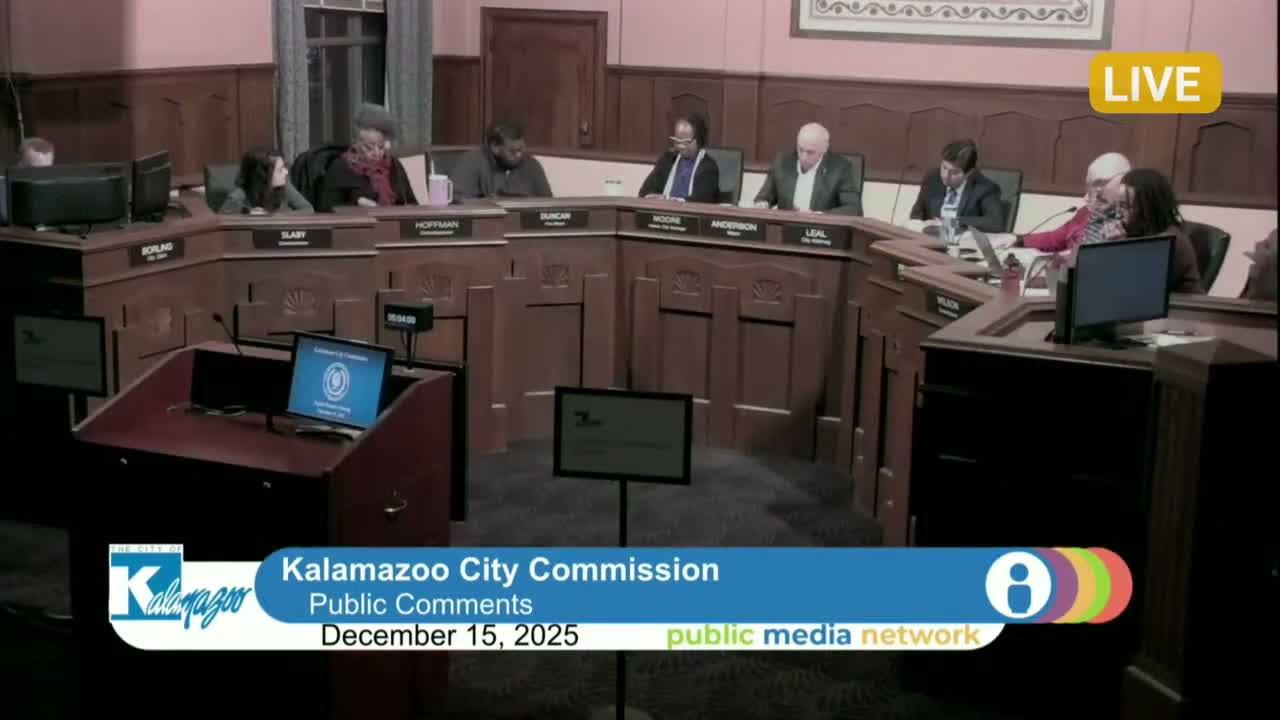
Summary
Public comment on the FY2026 proposed budget centered on homelessness, shelter access and transportation gaps; commissioners discussed using remaining commission funds (~$88,000), neighborhood 'quick‑win' grants, and creating subcommittees to explore targeted expenditures before the Jan. 5 budget vote.
The public hearing on the FY2026 proposed budget drew sustained public comment focused on homelessness, shelter access, and the timing of the budget vote. Speakers urged the commission to push the budget decision later to allow more community input and to earmark funds immediately for warming shelters, transportation and survival gear.
CFO Steve Lisonbee and Director Steve Brown summarized the budget timeline and existing programs. Lisonbee reminded the commission the proposed budget was released on Nov. 25 and the formal approval is scheduled for Jan. 5. Director Brown described the youth mobility fund — which provides up to 400 transit passes for eligible high‑school students — and said staff had topped up the program to cover the next service window but did not have a precise year‑end dollar balance at the hearing.
Commissioners proposed several budget options. Commissioner Slabey suggested reinstating a neighborhood 'quick win' fund ($5,000 per approved neighborhood plan) to support sustainability projects and community initiatives; that option would cost about $45,000 for nine neighborhoods. Others suggested reallocating part of the roughly $88,000 remaining commission fund toward transportation to warming shelters and immediate shelter support.
City Attorney Liao warned that Michigan constitutional and statutory limits require municipal expenditures to serve a public municipal purpose and be authorized by law; he advised staff and the commission to check legal authority before directing general fund dollars to private organizations. Commissioners agreed staff should return with legal and budget options and worked to form a subcommittee to explore feasible allocations.
Members of the public continued to press for concrete action: speakers recommended straightforward measures such as placing current warming‑shelter information on public boards near Bronson Park and City Hall, updating the city's 3‑0‑1 information script, and purchasing survival gear for direct distribution.
The commission did not adopt budget amendments at the hearing. Staff and commissioners agreed to examine legal constraints and possible allocations and to report back before the January adoption date.