Get Full Government Meeting Transcripts, Videos, & Alerts Forever!
Get email alerts on the SEDA Specific Plan topic
No spam. Unsubscribe anytime.
Planning commission forwards SEDA specific plan and EIR to council, asks to combine alternatives to preserve more farmland
Summary
After a lengthy staff presentation and more than three hours of public comment—much of it opposed—the commission voted 4–3 to forward the Southeast Development Area (SEDA) specific plan and programmatic EIR to City Council, asking council to consider combining the Consolidated Business Park and Farmland Conservation alternatives to reduce conversion of prime farmland.
The Fresno City Planning Commission voted 4–3 to forward the Southeast Development Area (SEDA) specific plan and its programmatic environmental impact report (EIR) to City Council with a recommendation that council consider incorporating the Consolidated Business Park and Farmland Conservation alternatives to preserve more prime farmland.
Planning staff opened the presentation with historical context, describing SEDA as a long-identified growth area with plan-level capacity for tens of thousands of dwelling units and jobs. Sophia Pagalatis, planning staff, said the plan and EIR follow the city general plan and include goals such as fiscal responsibility, housing choice, transit access, parks and environmental stewardship. "The Southeast Development area or SEDA area...was identified to accommodate growth," staff said during the presentation.
Adrienne Azzedorian Gilbert (planning staff) outlined the specific plan’s land-use framework: a hierarchy of town centers (regional, community and neighborhood), mixed-residential and neighborhood residential types and employment/institutional areas. The plan materials cited SEDA capacity figures in presentation slides (staff referenced plan-level numbers of roughly 40,000 to 45,000 dwelling units and a materials figure of 44,092 dwelling units in plan documents).
Phil Alt, the EIR consultant from First Carbon Solutions, explained the programmatic EIR process under CEQA and said the programmatic analysis identified several significant and unavoidable impacts that would require findings of overriding considerations if the plan advances as proposed. Alt highlighted air quality, noise, aesthetics, and the conversion of agricultural land as program-level impacts. "The environmental impact report identified that the full impact would be significant and unavoidable and would require a finding of overriding considerations to approve the environmental impact report," Alt said.
Staff and consultant also discussed alternatives analyzed in the EIR. The Consolidated Business Park alternative was identified in the EIR as the environmentally superior alternative because it consolidates research-and-development and flexible employment uses and reduces housing capacity by a modest amount (the presentation cited the alternative as accommodating about 2,100 fewer homes and 1,000 fewer jobs than the proposed map). The Farmland Conservation alternative was shown to conserve 648.61 acres of farmland in the plan area compared with the proposed project.
Public comment stretched for hours and included both property owners and long-time farmers who urged adoption of the Consolidated Business Park alternative, and a larger set of residents and community groups who opposed the plan’s timing and scope. Speakers opposing the plan raised several recurring concerns: loss of prime farmland (public speakers cited various acre figures), potential costs to rural property owners for connecting to city water and sewer (some speakers gave $50,000–$100,000 estimates), the sufficiency of the EIR’s vehicle-miles-traveled analysis, the adequacy and transparency of financing options, and equity impacts that could divert resources from underinvested neighborhoods.
Planning staff responded in a staff question-and-answer session. On farmland, staff said prime farmland within the SEDA study area totals 2,475 acres (and noted other farmland categories such as farmland of statewide importance and unique farmland). On financing, staff cited a financing-options report that identified approximately $61.2 million of upfront infrastructure needs if South SEDA were developed as a Phase 1, and explained funding tools that could be considered (community facilities districts (CFDs), enhanced infrastructure financing districts (EIFDs), impact fees or project-level developer financing). Staff reiterated that a specific plan itself does not rezone or annex property and that project-level proposals and code updates would be required to carry development forward.
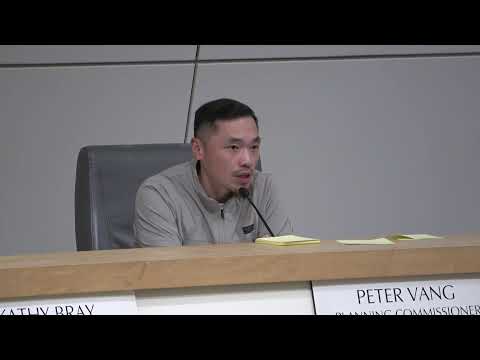
During deliberations, commissioners described the record and their concerns. Several commissioners said they were not convinced the fiscal impacts, long-term general fund implications, infrastructure funding and equity impacts were sufficiently resolved. Others said a carefully structured plan and phasing with adequate protections is preferable to leaving the area unplanned and risking uncontrolled development by other jurisdictions. After discussion, the commission voted 4–3 to forward the plan to City Council with a recommendation that Council consider combining the Consolidated Business Park and Farmland Conservation alternatives to reduce prime farmland conversion and to prioritize South SEDA as a potential Phase 1 with financing options to be further specified at the council level.
Next steps: the commission’s recommendation and the EIR will go to City Council for public hearing and action; council will consider staff recommendations, the two alternatives requested by the commission and any additional fiscal analysis or code updates required to implement phasing and financing.