Get Full Government Meeting Transcripts, Videos, & Alerts Forever!
Get email alerts on the Education Elementary topic
No spam. Unsubscribe anytime.
Niagara-Wheatfield elementary leaders cite safety upgrades and rising literacy scores
Summary
Elementary school leaders told the Niagara-Wheatfield board that new safety procedures and technology for reunification are in place, and they presented ELA proficiency gains and a drop in students identified as high risk, while piloting new grades 3–5 literacy curriculum.
Elementary-school leaders told the Niagara-Wheatfield Central School District board that renewed safety planning, new technology for reunification and a districtwide focus on literacy are producing measurable improvements in student outcomes.
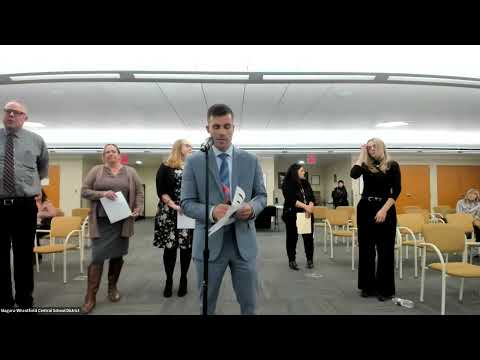
In a presentation to the board, Jeff Kacisha, principal of Colonial Village, and members of the elementary curriculum team outlined three goals: a safe and inclusive school environment, accelerated student learning and increased family engagement. "So when we're looking at the safe and inviting inclusive facility ... it starts with our safety team," Kacisha said.
The presenters described updated reunification plans, tighter after-school lockdown procedures and a new cardiac arrest plan they said is required to be implemented in January. Jessica Smith, assistant director of technology, demonstrated newly prepared emergency "go bags" that include Chromebooks, tablets, hotspots and a portable command center to support communications during drills and emergencies. Smith said the district also completed a ParentSquare rollout to send emergency notifications to guardians and uses the Raptor platform to track reunifications.
On instruction, the curriculum team described multi‑tiered systems of support (MTSS/RTI) and professional learning communities (PLCs) as central to aligning curriculum and targeting interventions. A presenter identified as Darren highlighted reduced numbers of students labeled "high risk" under the district’s intervention framework, saying the district identified about 318 high‑risk students in an earlier cohort and "This year, we're down to 198." The team attributed the change to consistent interventions, PLC work and targeted reading supports.
The presenters also reviewed literacy alignment to the New York State Education Department’s updated guidance, which the district framed around six pillars: oral language, phonemic awareness, phonics, fluency, vocabulary and comprehension. For grades 3–5 the district is piloting two curricula (Mossflower and Benchmark Advance) and expects to decide on a final option in January. "Our teachers in PLCs are taking standards apart and creating units to address where students are struggling," a presenter said.
District leaders emphasized technology’s role in instruction and assessment readiness. The board and staff praised Mike Johnson, the district’s technology integrator, who was described as working directly in classrooms to model instruction and train teachers on classroom technology.
The presentation concluded with discussion of social‑emotional programs, community partnerships that provide food and counseling supports, and expanded family engagement efforts such as newsletters and varied parent‑meeting formats. The board voted on routine agenda items later in the meeting; no formal action on the CSAT presentation was required.
Board members thanked the presenters and said they will follow up on specific data and the planned January curriculum decision.