Get Full Government Meeting Transcripts, Videos, & Alerts Forever!
Get email alerts on the Housing Policy topic
No spam. Unsubscribe anytime.
Developers pitch 30-year tax exemption tied to affordable-housing conversion; council questions timing
Summary
Applicant counsel said converting an existing mixed-use project to Chapter 188 affordable housing and a 30-year tax exemption would increase the city’s service charge to about $3.8 million over the term and add affordable units; council members pressed for timing, fiscal tradeoffs and tenant-protection details.
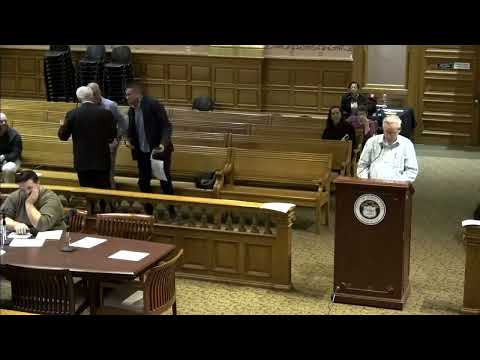
Jim McCann, attorney for an applicant seeking a 30-year tax exemption and financial agreement for properties on Newport Parkway, told the council the project is an existing affordable-housing development that would be converted to a formal Chapter 188 affordable housing arrangement.
McCann said the conversion would raise the city’s service charge from roughly $2 million under the current arrangement to about $3.8 million under the proposed financial agreement and would increase the affordable set-aside from 15% to 20% (adding approximately 18 affordable units). He provided a handout with NW Financial’s calculations that included sample very-low-income rents as low as $654 per month and two-bedroom rents of $841 for some units.
Councilmembers asked why the exemption request was being considered years before the current abatement expires in December 2028; McCann said the applicant prefers an early city-level agreement to avoid a lengthy HMFA (Housing Mortgage Finance Agency) process and to preserve the property as affordable housing rather than seeing it transition to market-rate housing when abatement expires.
Questions focused on the fiscal tradeoffs (conventional tax revenue versus abatement terms), the timetable for conversion, tenant protections and whether the city would receive more long-term revenue under the proposed agreement. McCann said conventional taxes would have yielded an estimate of $6.3 million in conventional taxes over the same period and that the city’s share under conventional taxes would be different; he argued that preserving the project as affordable housing provides both community benefit and a larger service-charge revenue stream for the city than a conversion to market-rate housing.
The caucus did not vote on the tax-exemption ordinance during the session; councilmembers requested additional fiscal detail before the scheduled Wednesday vote.