
Appeals Court Weighs Whether Police Had Reasonable Suspicion in Stop After Confidential Tip
Get AI-powered insights, summaries, and transcripts
Subscribe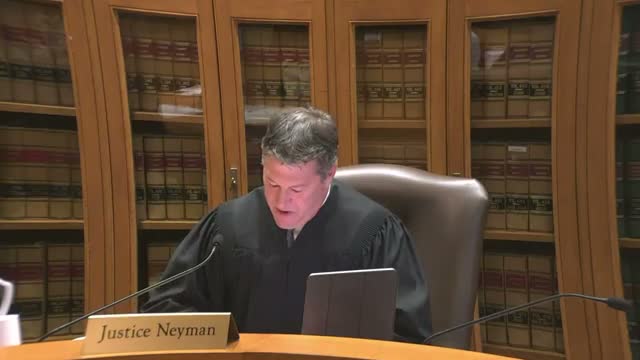
Summary
In an appeal from a stop and pat‑frisk, counsel disputed whether an uncorroborated tip that a young man displayed a gun provided reasonable suspicion; the Commonwealth cited rapid officer recognition on bodycam and raised reasonableness and inevitable‑discovery analogies.
The Appeals Court heard argument on a Fourth Amendment challenge in docket 25P299, where defense counsel Patrick Levin argued police lacked reasonable suspicion to seize and detain Daryl Dershen based on a confidential tip that a person matching a description had a gun.
Levin said the tip lacked the corroborative non‑obvious details courts require and relied on precedents (Barrows, Gomez) holding that matching generalized descriptions without independent corroboration does not support an investigatory stop. He emphasized the officers did not observe the suspect on the bicycle described in the tip and that clothing descriptions were inconsistent.
Commonwealth attorney Brooke Hartley acknowledged the case is difficult for the prosecution on the record the court received, but stressed reasonableness is a fact‑specific inquiry. Hartley pointed to bodycam footage showing an officer who recognized the defendant as someone believed not to have a license to carry within seconds of the initial physical contact and argued that rapid recognition—together with seeing a firearm—colors the reasonable‑suspicion analysis. She also raised an 'inevitable discovery' style argument that another officer in pursuit would have had the same observations seconds later.
The panel pressed both sides to distinguish recent controlling decisions, including Morales, and asked whether the brief time interval between the initial grab and Walsh’s recognition is decisive for Fourth Amendment analysis. After extended questioning, counsel rested and the case was submitted.