Appeals Court Hears Challenge to Trial Rulings in Commonwealth v. Forrester
December 11, 2025 | Judicial - Appeals Court Oral Arguments, Judicial, Massachusetts
This article was created by AI summarizing key points discussed. AI makes mistakes, so for full details and context, please refer to the video of the full meeting. Please report any errors so we can fix them. Report an error »
Kerhan said the defense “was trying to show a negative” by having several building staff testify they had not observed the behaviors alleged, but that only two witnesses were permitted to testify, one of whom was the defendant’s niece. “When you restrict this to two of them, one of them being his niece, you don't really show that,” Kerhan said, arguing the exclusions undercut the defense theory.
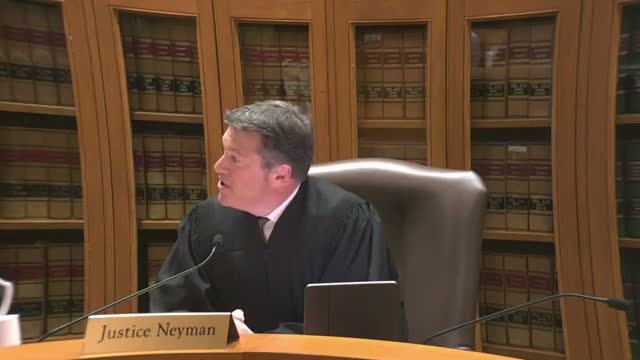
The panel asked whether defense objections were properly preserved for appeal. Justice Eric Nyman pressed whether counsel formally objected to the three rulings that limited testimony; Kerhan conceded it was unclear that explicit objections were made every time but argued the trial judge’s repeated sustaining of prosecutor objections preserved the issue.
On closing‑argument issues, Kerhan criticized a curative instruction in which the trial judge singled out defense counsel by name, saying it risked signaling bias to jurors. “When you look at the cumulative effect of everything that went on during the course of trial, I think the judge clearly had her thumb on the scale in this case,” Kerhan said.
Commonwealth attorney Ryan Rall replied that many of the arguments were not preserved and that, even if errors occurred, they were harmless in light of the record. Rall noted the split verdicts and corroborating evidence on the counts of conviction and said jurors received additional corroboration in testimony about conduct in limited locations. On the curative instruction, Rall said targeted instructions are sometimes necessary when given immediately after a particular counsel’s closing, and he disputed that naming counsel was materially prejudicial in this circumstance.
The panel pressed both sides on whether the court should remand for fact development or decide the preservation question on the existing record. Justices repeatedly observed the case was “well briefed” before the court and submitted the matter for decision.
The court did not rule from the bench; the case was submitted at the conclusion of argument.
Don't Miss a Word: See the Full Meeting!
Go beyond summaries. Unlock every video, transcript, and key insight with a Founder Membership.
30-day money-back guarantee
Sponsors
Proudly supported by sponsors who keep Massachusetts articles free in 2026

