Get Full Government Meeting Transcripts, Videos, & Alerts Forever!
Get email alerts on the Stone Crab Sightings topic
No spam. Unsubscribe anytime.
Scientists report Florida stone‑crab sightings in Lower Bay; committee seeks public photos and study ideas
Summary
VIMS staff reported multiple confirmed stone‑crab sightings in the Lower Bay and proposed a community reporting program, identification and declawing guidance, and small studies to track interactions with blue‑crab catches and oyster restoration areas.
Scientists and staff told the advisory committee that Florida stone crabs have been documented in the Lower Bay and are likely overwintering in some sheltered areas.
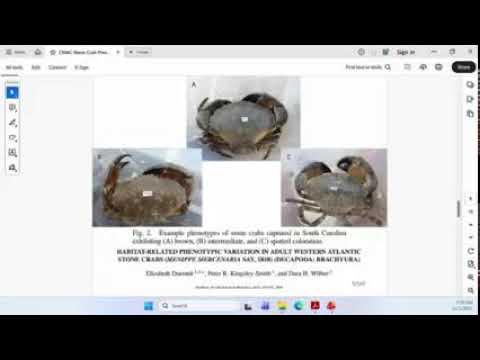
Speaker 5 said VIMS and agency staff have received photographic reports and live specimens from locations including Willoughby Spit, Ocean View Fishing Pier, Cape Henry, and Lynnhaven. The earliest documented presence appears to date to 2021, and current findings include primarily large males; an egg‑bearing female photo is reported but unconfirmed, and juveniles have not yet been documented.
Staff plans include maintaining a catalog of photos and live samples, setting up a public reporting website with photo galleries, producing an identification guide to distinguish juvenile stone crabs from Atlantic mud crabs, and developing a declawing best‑practice guide for possible future harvesting. Speaker 5 suggested small collaborative studies with crabbers to examine whether stone crabs in pots reduce blue‑crab catch, and staff said they will pursue modest fisheries research grants to support community‑based sampling.
The committee encouraged caution and documentation. Staff asked that anyone who captures or photographs a suspected stone crab send pictures (top and underside) or text VIMS staff; contact details were provided for submissions. The presentation noted possible ecological implications tied to warming temperatures and oyster‑reef restoration, but staff emphasized that both distribution and population dynamics of stone crabs in the bay remain under investigation.
The committee did not propose regulatory changes at this meeting; staff will continue monitoring and outreach.