
Stratham presents fall benchmark results; MTSS framework credited with early gains
Get AI-powered insights, summaries, and transcripts
Subscribe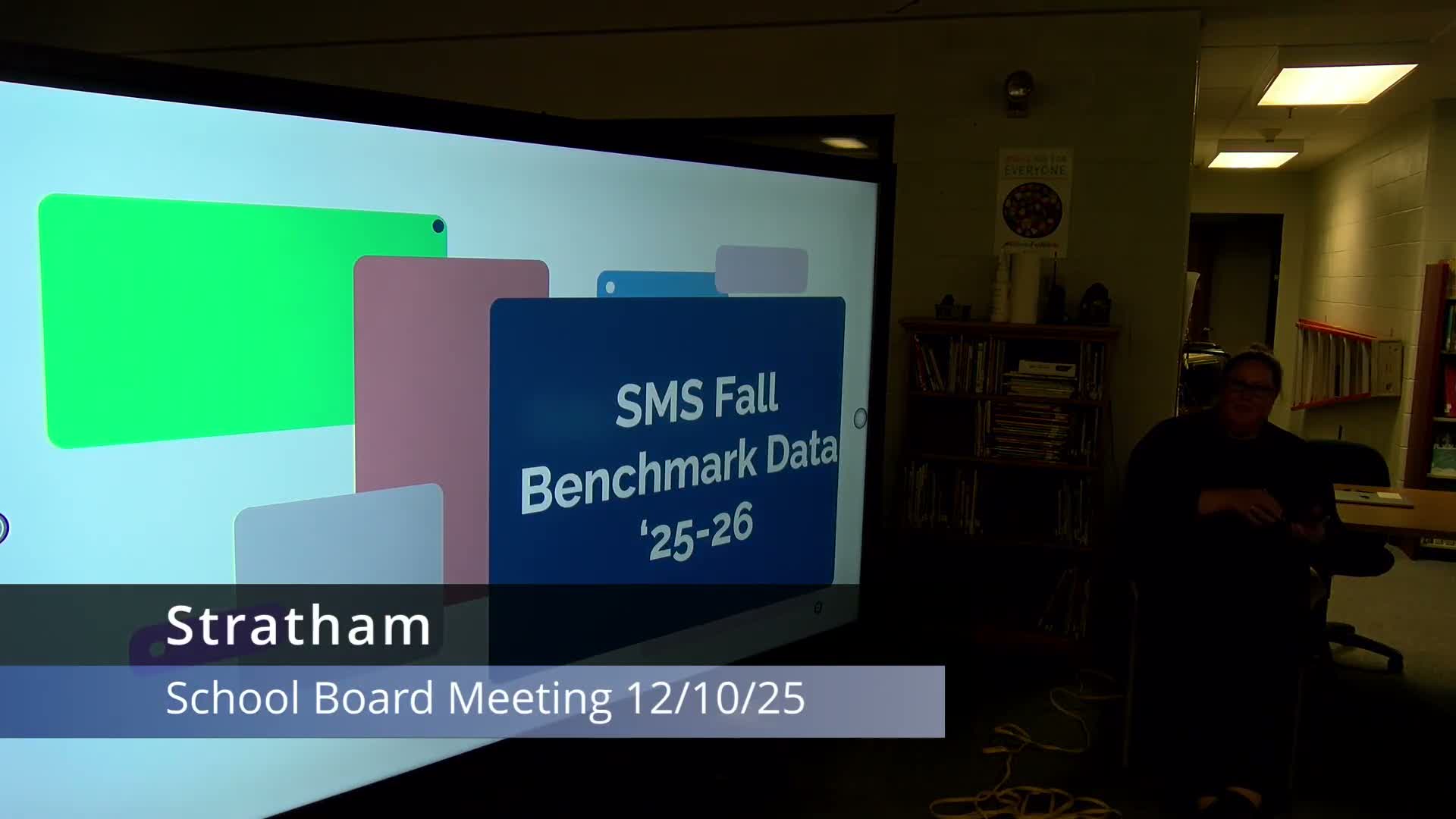
Summary
District specialists presented fall benchmark and screener results and said the MTSS framework is helping teachers identify and support students early, reducing the number of students scoring in the lowest bands and informing curricular adjustments.
Brianna Martin, the district MTSS coordinator, and her specialists presented fall benchmark data for kindergarten through fifth grade on Dec. 11, describing the battery of screeners the district uses (Acadience/Acadience composites, i-Ready diagnostics, number-sense performance tasks and social-emotional screeners).
"It is very much worth celebrating," Brianna said of the fall results while outlining how green/yellow/red/blue bands show student progress toward grade-level expectations. She and math and reading specialists explained that the universal screeners and diagnostics are designed to give both a snapshot (universal screeners) and an end-of-year expectation comparison (i-Ready), which helps staff differentiate instruction and target interventions.
The presenters emphasized that MTSS is a whole-school framework: classroom instruction, targeted interventions and specialized supports are all intended to work together to move students toward proficiency. Staff said sustained use of consistent assessments across grades allows the district to identify trends—such as recurring support needs in early grades—and adjust curriculum, interventions and scheduling accordingly.
Board members and public commenters praised the results and asked for clarity about year-to-year changes, whether gains are reflected in both computerized diagnostics and teacher work samples, and how the district supports students who are anxious about testing. Presenters noted that classroom evidence and performance assessments sometimes show growth not yet reflected in standardized diagnostics and described teacher-level strategies to reduce testing anxiety.
What’s next: The district will continue semester benchmarking and refine groupings and interventions based on the next round of data. Staff said MTSS monthly meetings across SAU 16 will monitor progress and align practices between schools.
Provenance: Presentation and Q&A occurred during the SMS administrative report and the dedicated MTSS/assessment segment of the Dec. 11 meeting.