Get Full Government Meeting Transcripts, Videos, & Alerts Forever!
Get email alerts on the Door To Door Solicitation topic
No spam. Unsubscribe anytime.
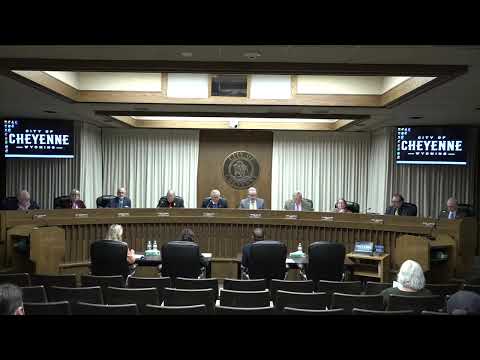
Cheyenne council rejects major rewrite of door-to-door solicitation rules after hours and pamphleteering amendments
Summary
After extended public comment and a floor debate, the Cheyenne City Council approved two amendments (changing start time to 8 a.m. and allowing literature to be left at residences with a "no soliciting" sign) but the main ordinance failed to pass on second reading, ending the proposed rewrite for now.
Cheyenne City Council members spent more than three hours on updates to the city's residential solicitation code, ultimately failing to advance the proposed ordinance on second reading.
The package would have expanded the types of activity treated as "soliciting," amended allowable hours and clarified prohibited practices. A motion by Councilmember Layborn to change the start time from 7 a.m. to 8 a.m. passed after a voice vote. The council also voted to strike language that would have prohibited leaving pamphlets or campaign literature at residences that post a "no soliciting" sign.
Seth Floyd, a Ward 1 homeowner who identified himself during public comment, urged the council to distinguish commercial from noncommercial canvassing and to protect noncommercial speech: "I prefer to keep soliciting for commercial purposes separate from noncommercial purposes," he said, and asked the council to ensure religious and political materials are treated consistently.
A state-level elected official who spoke during public comment warned the council that restrictions on political and religious canvassing have been litigated in the U.S. Supreme Court and suggested a content-based prohibition could be legally vulnerable. The official said, "The Supreme Court has ruled that it is a fundamental First Amendment right when it comes to religion and free speech for political organizations and canvassing for candidates." (speaker identified in the record only as "Representative").
Councilmembers debated the balance between homeowners' privacy and First Amendment protections. Councilmember Escobel argued striking subsection B4/B5 would preserve grassroots campaigning and reduce incumbency advantages: "If we want to take the money out of politics, we should allow grassroots campaigning still," he said. Councilmembers Aldridge and Moody expressed concern about allowing pamphleteering because of litter, mailbox rules and accessibility for residents who cannot retrieve literature.
A later motion seeking to delete subsections B4 and B5 in their entirety failed, and when the council returned to the main ordinance the motion to approve second reading failed on the floor.
The council's city attorney, John Brody, advised members that the city's existing handbill and distribution provisions intersect with the solicitor code and recommended closer committee review if council wants to reconcile conflicting sections of code.
Next steps: Councilmembers said the issues will be further discussed in committee, with some members indicating they will draft alternate language for clearer, content-neutral rules that address both privacy and legal risk.