Get Full Government Meeting Transcripts, Videos, & Alerts Forever!
Get email alerts on the School Safety topic
No spam. Unsubscribe anytime.
Lincoln board hears SRO report showing fewer calls for service but ongoing discipline disparities
Summary
Board received the annual School Resource Officer report showing a 19% drop in calls for service, four complaints (three exonerated, one warning), an average of about 53 training hours per officer, and continued concern about disproportionality in student discipline; the report included four recommendations for training, outreach and capacity review.
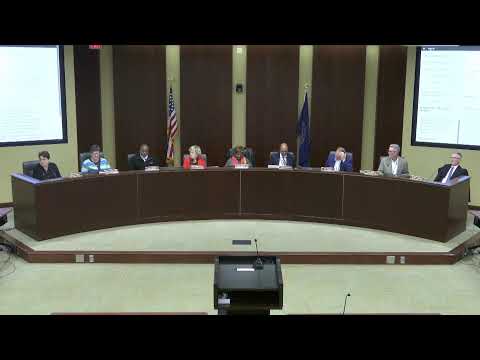
The Lincoln Board of Education on Nov. 25 received an annual report on the district’s School Resource Officer program that showed calls for service have declined 19% from the prior year and for the third consecutive year.
A presenter summarized the 24–25 data, saying the program documented four complaints against SROs in the year (three classified as exonerated and one that resulted in a warning) and 12 commendations. The presenter said the program averages about 53 training hours per officer, above a 20-hour statutory minimum cited in the presentation.
The report emphasized six program goals: clarify that administrators—not SROs—are responsible for student-discipline decisions; minimize discipline referrals to juvenile justice; promote accountability and training; apply best practices to reduce disproportionality; provide consistent training for staff and officers; and improve data collection and reporting.
On equity, the presenter and board members said the district has seen decreases in the absolute number of students requiring SRO contact but that disparity ratios remain high for some groups — including students who identify as male, Black, Hispanic or two or more races, and those in special education or on free and reduced-price lunch. The district’s strategic plan includes targets to reduce disparity ratios to 1.2 or less for all groups and to cut total suspensions by 20% by 2029.
Board members praised the depth of the seven-year data set and urged using the numbers to target services, improve survey response rates and examine the threat-assessment team’s capacity. The report’s recommendations included maintaining robust training for officers and administrators, increasing survey response rates, continuing work to address disproportionality, and reviewing the threat-assessment team’s capacity because of an increase in assessments.
The board did not take formal policy action during the presentation; members thanked staff and asked for follow-up materials and that the full report and detailed slide deck be made available as referenced in the presentation.
“Training has made a difference,” one board representative said, while another called the report “eye opening” and urged continued work to reduce disproportionality.
Next steps noted by presenters included continued annual reporting, pursuit of higher survey response rates, and further analysis to inform targeted interventions.