Get Full Government Meeting Transcripts, Videos, & Alerts Forever!
Get email alerts on the Dakota Waste topic
No spam. Unsubscribe anytime.
Commission recommends PUD for Dakota Waste Solutions composting and recycling facility; MPCA permit pending
Summary
Lakeville Planning Commission unanimously recommended City Council approval of a PUD, preliminary plat and development-stage plan for Dakota Waste Solutions, a phased, indoor source-separated organics recycling and composting facility on a 37-acre site; staff emphasized coordination with MPCA and county licensing and identified gas-easement and permitting timing as outstanding issues.
The Lakeville City Planning Commission on Nov. 20 voted unanimously to recommend that the City Council approve rezoning of a southeast Lakeville site from I-1 (Light Industrial) to a Planned Unit Development (PUD) and to approve a preliminary two-lot plat and PUD development-stage plan for Dakota Waste Solutions LLC, a proposed indoor organics recycling and composting facility.
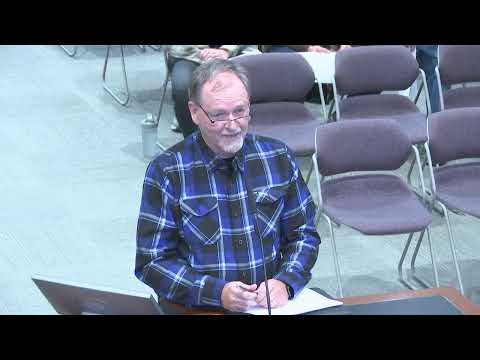
Applicant representative Mike Brant (Kinley Horn) described a phased facility on about 37 acres at the southeast corner of 215th Street and Kaparia Avenue with four buildings: material intake and depackaging, an in‑vessel greenhouse (negative-pressure, filtered composting), a yard/wood processing area and finishing/curing pads. Brant said the operation would accept source-separated organics, yard waste and wood products from local haulers and grocers, with most materials processed indoors to reduce odor and nuisance; he said the facility would not be open to the public for drop-off or pick-up.
Brant gave projected throughput figures that differed in the transcription: he said both approximately '15,000 pounds' and '15,500 tons' annually in different parts of the presentation and referenced monthly/daily numbers; those figures are recorded here as stated in the hearing and flagged for verification. He explained the facility’s odor-control approach—negative-pressure buildings with carbon and biofilters, temperature and moisture monitoring to meet MPCA standards—and said leachate would be collected and sent to the Met Council sewer with some reuse in the composting process.
Staff (Miss Goodrow) explained the PUD overlay gives flexibility to allow the facility’s nonstandard structures (hoop sheds and greenhouse-style in‑vessel buildings) while providing performance standards and conditions in a development contract. Staff and the applicant noted wetlands and buffers on the property would be avoided and preserved and that a gas transmission main crosses the site, constraining screening/berm placement. The gas company told the applicant the pipeline—installed circa 1954—will need replacement within one to two years; the gas company requested that the site not be paved over the easement until that replacement occurs. Commissioners asked the applicant and staff to add PUD language addressing interim surfacing, timing and sequencing if the pipeline replacement occurs after site development.
Commissioners also discussed truck traffic routing to 215th, noise-mitigation measures and the facility’s employment of indoor processing to minimize odor complaints. Commissioner Swenson moved the recommendation to council, citing findings dated Nov. 20, 2025 and stipulations in the planning memo dated Nov. 13, 2025; a second was made and the roll call vote was unanimous. Staff said the MPCA permit has been submitted and county licensing will follow; the matter was scheduled to go before City Council (per staff calendar) and later PUD/final-plat steps will return to the commission for final PUD review and development contract approval.
Next steps: staff will finalize PUD ordinance language and stipulations—particularly to address gas easement/paving sequencing and final designs for hoop-shed structures—before the item goes to City Council.