Get Full Government Meeting Transcripts, Videos, & Alerts Forever!
Get email alerts on the Responsible Charge topic
No spam. Unsubscribe anytime.
Tennessee board narrows "responsible charge" rule, adopts "meaningful oversight" language
Summary
The Tennessee Board of Examiners for Land Surveyors adopted rule amendments on Nov. 20, 2025 that remove a strict officer/principal requirement and allow any registrant who can provide "meaningful oversight" to be in responsible charge, with accompanying updates to professional development requirements and filing steps.
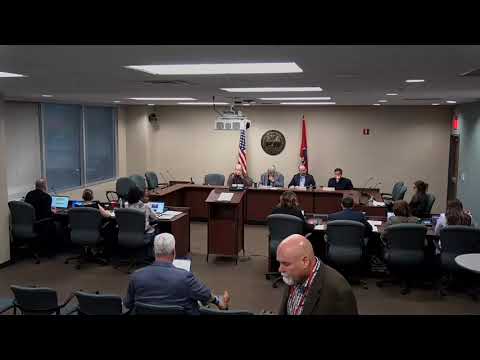
The Tennessee Board of Examiners for Land Surveyors voted Nov. 20 to amend rules governing which registrants may be "in responsible charge" of a surveying firm's practice, replacing a narrow officer/principal requirement with an oversight standard.
Kyle Johnson, associate general counsel for the Department of Commerce and Insurance, read the proposed amendments at the board's rulemaking hearing and said the change "would state: only registrants who can provide meaningful oversight at each firm location and who hold an active Tennessee registration can be in responsible charge of the firm's practice" (as read into the record). The board voted by roll call to adopt the hearing rules language as amended; all four voting members recorded "Aye."
The amendments remove the prior strikeout language that tied responsible charge to a firm's principals and replace it with the registrant-based approach. They also clarify that a registrant who renders occasional part-time or consulting services may not be designated in responsible charge of a firm's practice but may still be in charge of any survey they are qualified to oversee. The package includes other changes: a new basic-requirements rule requiring 30 professional development hours (PDHs) per biennial renewal, a minimum of two PDHs in surveying ethics and Tennessee standards of practice, and a carry-forward cap of 15 PDHs to the next period.
Board members debated multiple guardrails during the hearing — for example, whether to keep a 30-hour-per-firm numeric test, use a percentage of firm hours (a 75% proposal was discussed), or instead rely on the "meaningful oversight" standard. Chair Gary Clark said the meaningful-oversight language "puts the burden" on registrants and warned that complaints alleging rubber-stamping could be investigated under the new wording.
Industry commenters who joined by phone and in person generally supported the formulation. David Young, participating via Microsoft Teams, told the board the oversight approach "might take care of the situation where you have an office that has 100 field crews and only one land surveyor" by ensuring there is real oversight, not just a name on a disclosure.
Kyle Johnson explained next steps: the adopted amendments will be filed on form SSDash7039 to the governor’s office for review, then to the Attorney General for legality review and finally to the Secretary of State for publication; rules typically become effective 90 days after filing if the joint government operations committee issues a positive recommendation. The board also read and adopted the regulatory flexibility addendum and the required statements for the joint government operations committee during the same meeting.
The board said staff will finalize red-line language for the record and will monitor any additional written comments submitted after the hearing. The change is intended to modernize regulation for remote work and multiple-firm practice while preserving investigatory power to act on complaints of inadequate oversight.