Get Full Government Meeting Transcripts, Videos, & Alerts Forever!
Get email alerts on the Bond Election topic
No spam. Unsubscribe anytime.
Lansing board directs staff to prepare March bond resolution, splits athletic upgrades onto separate contingent question
Summary
The Lansing school board voted to direct financial advisors to draft a resolution for a March bond election and to present a base package for core facility repairs with a second, contingent question for athletic upgrades; board members stressed the need for clearer long-term maintenance planning before asking voters to borrow.
The Lansing school board on Monday directed advisors from Raymond James to draft a bond-resolution for consideration in December and set a March election timeline, while asking staff to present a base bond package for core repairs and a second, contingent ballot question limited to athletic upgrades.
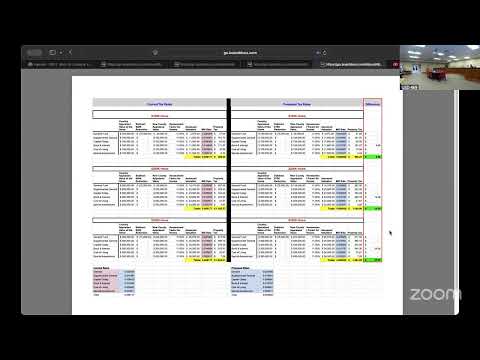
Raymond James analyst Greg Varenberg told the board a $30 million bond could be financed on a 20-year schedule, under the firm’s assumptions, while holding the district’s mill levy near its current level "at 14.94 mills through 2038," if assessed-valuation growth and state-aid assumptions hold. Varenberg also showed a two-question scenario (30M base + 5M athletic question) that would likely increase the mill levy slightly under the same assumptions.
Board members voted to ask Raymond James to draft a resolution for the board to consider at the Dec. 8 meeting so the district can meet the county and state filing deadlines needed to place a bond on a potential March ballot. The motion to direct staff and the advisor to prepare the resolution passed with a majority in favor and recorded no votes from members who said they wanted a more robust long-term maintenance plan before asking voters to approve debt.
During deliberations, several trustees said they preferred separating athletic projects from core facility work so voters could approve essential renovations without the athletic upgrades affecting the whole package. The motion the board approved requires that the second question on athletics be contingent: if the base package fails, the athletic question would also fail.
Board members pressed staff to provide voters with clear, district-specific tax-impact examples (for $300,000 and $400,000 homes) and asked the district to spell out whether an election would be conducted as a walk-in (in-person) election or via mail ballots when the board adopts the resolution. The board later voted to pursue a walk-in (in-person) voting format for the March question.
What happens next: Raymond James will prepare draft resolution language and repayment scenarios and return to the board at the Dec. 8 meeting. The district must also submit the bond application and project information to the State Department of Education and publish the required election notices if it proceeds.
Votes and formal actions: The board recorded a motion and subsequent votes to (1) ask Raymond James to draft a bond-resolution for the Dec. meeting, (2) pursue a walk-in election in March, and (3) present a base package with a separate, contingent athletics question. At least two trustees recorded no votes on the draft-resolution motion, citing the board’s unfinished maintenance plan; the package/contingency motion passed with multiple yes votes and at least two no votes.