
District public defender outlines post‑transition staffing, says child‑protection costs now routed through state
Get AI-powered insights, summaries, and transcripts
Subscribe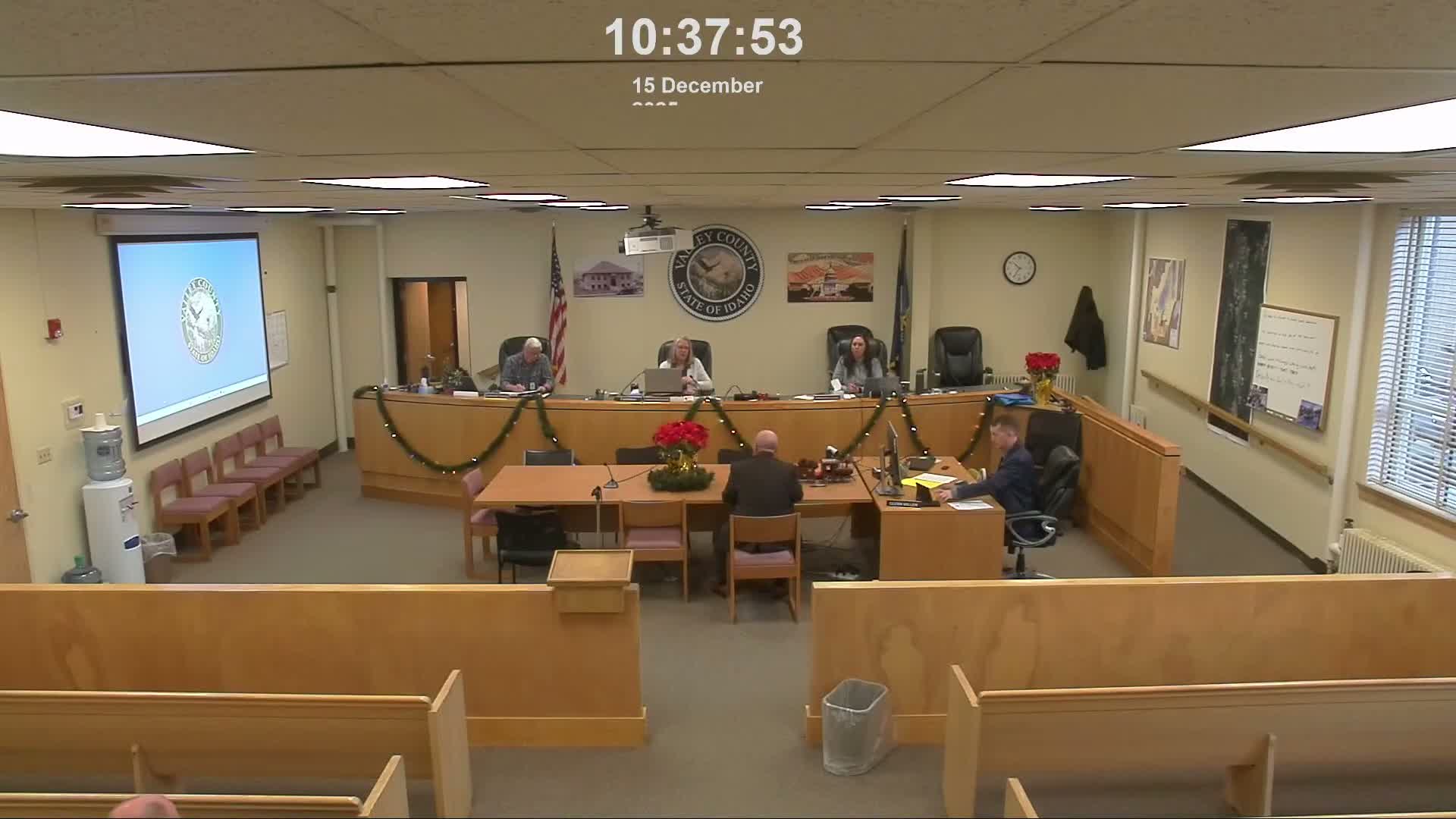
Summary
Tony Geddes, district public defender for Idaho’s 4th Judicial District, told Valley County commissioners the state public defender agency has stabilized since last October, that contractors and institutional salaries were adjusted to improve recruitment, and that child‑protection cases are now assigned through the state's Alternate Counsel Division.
Tony Geddes, district public defender for the 4th Judicial District, introduced himself to the Valley County Board of Commissioners and described how the state public defender transition has affected rural coverage and contractor participation.
Geddes said the agency experienced chaos at the October transition but has since stabilized. He told the commission he has used contractors and district coverage to handle Valley County cases and that an institutional office in Valley County is unlikely given current caseloads. "I come up regularly now to Valley County... I really enjoy it a lot," Geddes said.
He said some local attorneys initially declined the state contract over an indemnification clause that the state later removed; the agency also increased contract hourly rates and institutional salaries, which helped bring attorneys back. Geddes said institutional salaries in some places now exceed prosecutors’ pay, a factor that has aided retention.
On child‑protection cases, Geddes said the legislature clarified that those cases are included in state public defense and are handled through the Alternate Counsel Division (headed by Shannon Romero), which assigns conflict cases to contractors. "So you no longer have responsibility for those costs," Geddes said, while noting a narrow category — private terminations — may still be treated differently by judges and could, in some circumstances, have county cost exposure.
A county official noted the county has paid approximately $1,500 for one active case; commissioners said they will follow up with the judge as needed. Geddes said he plans to visit Valley County at least annually to brief the commission on public‑defense coverage and answer questions.
What this means for Valley County: the state public defender agency is handling most responsibilities, contractors are being recruited back into service after rate and contract changes, and the county’s routine financial exposure for public defense should be limited, with the exception of narrow private‑termination issues that may be treated differently by judges.