Get Full Government Meeting Transcripts, Videos, & Alerts Forever!
Get email alerts on the Council Rules topic
No spam. Unsubscribe anytime.
Aurora council restores public comment, adjusts dais rules and meeting procedures
Summary
The Aurora City Council unanimously adopted amendments restoring 'public invited to be heard' at both the start and end of meetings, expanding speaker time to three minutes, and changing who may be seated on the dais; the vote follows public testimony calling for greater access and accountability.
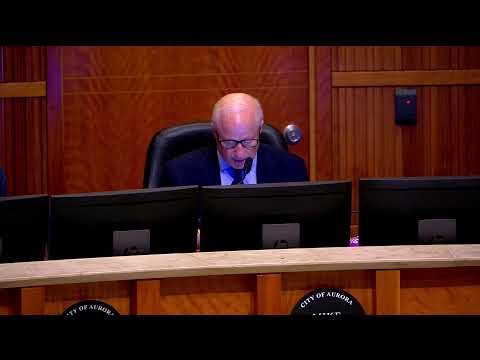
The Aurora City Council unanimously adopted a package of rule changes Dec. 1 that restores the public comment period to both the start and end of meetings, increases per-speaker time from two to three minutes and revises who may be seated on the dais.
Council member Coombs introduced the resolution, saying it was intended "to undo the disastrous changes made by the previous council" and to "give the microphone back to the people." The measure, moved and amended on the floor, also reorders the meeting to place the invocation and land acknowledgment before formal business and proposes moving regular meetings back to a 6 p.m. start.
The resolution wording presented in the record includes a read-aloud identifier noted by the clerk; the formal text as adopted includes: reinstatement of public invited to be heard at the beginning and end of the meeting (with up to one hour available at each position and preference for individuals who have not yet spoken at the meeting), an increase to three minutes per speaker, and a revised seating rule that allows the mayor, council members and their family members if needed, the city manager and the city attorney to be on the dais unless an exception governed by a reasonable-accommodation section applies.
During public comment, Ali Duwills Marcano, a Ward 4 resident, praised the change and accused the prior council and the mayor of actions that she described as "intimidating" toward speakers. "I am standing here tonight to declare my individual and emphatic support for Council Member Coombs' resolution to restore public invited to be heard and undo the disastrous changes made by the previous council," Marcano said. She told the council she had received what she viewed as retaliatory contact when, she alleged, the mayor forwarded her email from his official account to her workplace.
Council members debated the dais seating language and whether removing the existing restriction would raise security or process concerns. Council Member Bergen asked how security would be handled if the restriction were removed; the city manager said council members would be allowed to bring a child when necessary but that security would continue to prevent unassociated members of the public from accessing the dais. The city attorney cautioned that keeping a cross-reference to the reasonable-accommodation section (A9) preserves administrative accommodations under the Americans with Disabilities Act, the Colorado Civil Rights Act and the federal Family and Medical Leave Act.
On amendments, the council accepted a friendly change clarifying that family members of the mayor and council members may be seated on the dais when needed and added three regional entities (Arapahoe County, Adams County and Douglas County via Region 9's Opioid Abatement Council) to a list of quasi-governmental agencies in the resolution's text. A proposal to limit the end-of-meeting public-comment window to 30 minutes was discussed but not adopted; instead the body accepted language giving preference at the end of the meeting to speakers who had not yet spoken.
The clerk called the roll for the final vote on the amended item; the motion passed unanimously.
The council did not adopt new limits on total public engagement beyond the reinstated schedule, and members said further refinements could be considered in a rules committee convened by the mayor pro tem. The resolution as adopted restores earlier public-comment access while leaving several implementation details (for example, exact administrative processes tied to A9 and security logistics) to staff and the forthcoming rules committee.