
Walpole Public Schools reports strong AP results but flags subgroup gaps in MCAS performance
Get AI-powered insights, summaries, and transcripts
Subscribe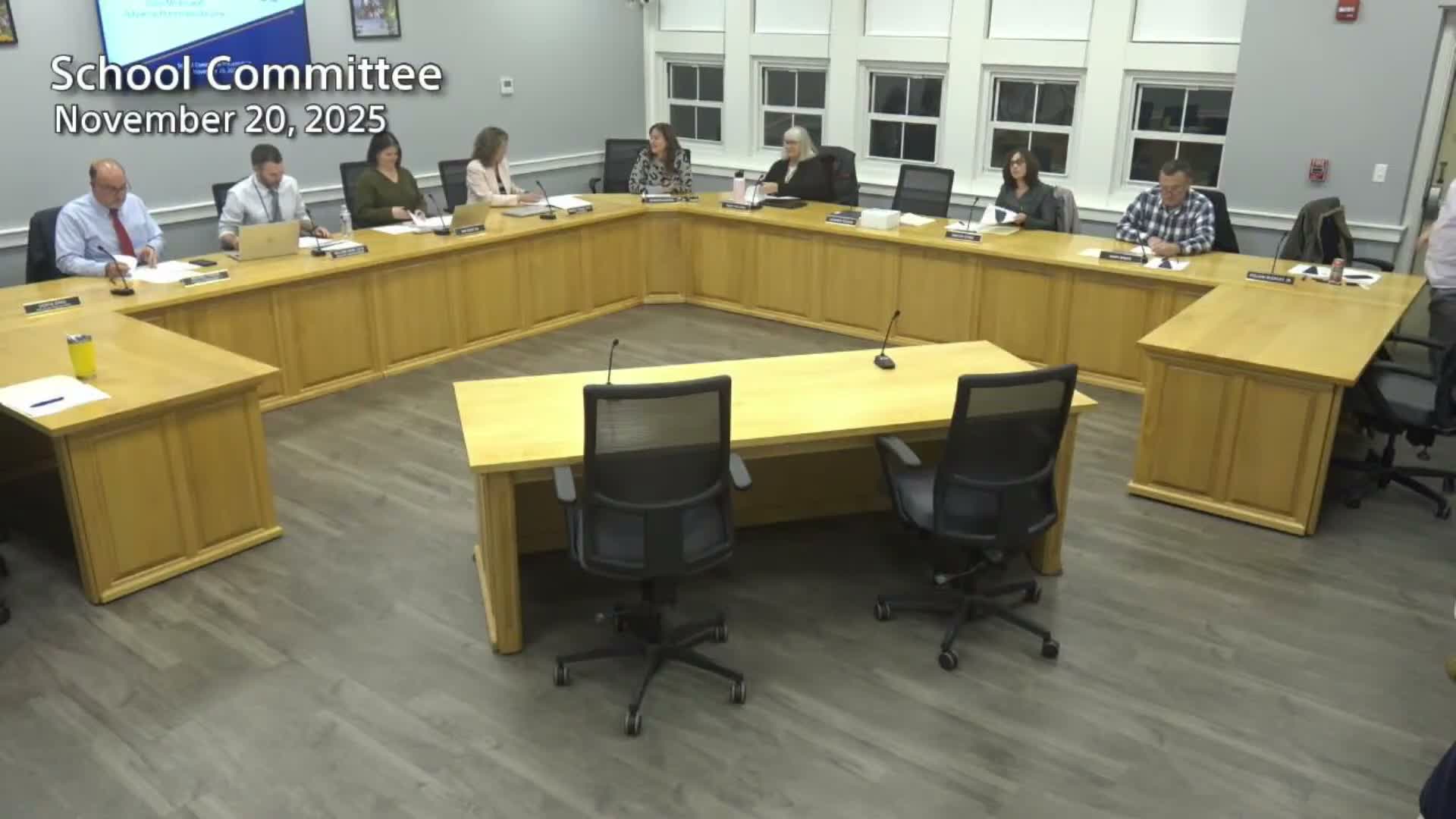
Summary
District presenters told the school committee Walpole outperformed state averages in most tested grades and subjects and expanded AP access (19 courses; 40% participation), while noting persistent gaps for students with disabilities and other subgroups that will guide curriculum and intervention work.
WALPOLE, Mass. — District presenters told the Walpole School Committee on Monday that Walpole Public Schools outperformed state averages in nearly every tested grade and subject on the 2025 MCAS, even as the district noted persistent achievement gaps for some student groups and work to do in middle-school science and 10th-grade English-language arts.
The presenter, during an overview of 2025 MCAS results and Advanced Placement outcomes, said the district views the results as one of several indicators of student learning and emphasized a “balanced approach” using multiple assessments to guide instruction. "Our focus remains on ensuring that every student in Walpole is supported, challenged, and able to thrive," the presenter said.
Why it matters: The committee heard both headline strengths and specific concerns. Walpole reported modest gains in grades 3–8 ELA (from 55% to 56% meeting or exceeding expectations) and math performance near pre-pandemic levels; grade 10 ELA declined from 64% to 57%, and middle-grade science was identified as an area needing focused work. The presenter said student growth percentiles remain within typical ranges but highlighted the need for targeted supports for students approaching graduation.
The school’s AP program was one of the presentation’s brighter notes. Walpole High School now offers 19 AP courses (up from 16), and participation among grades 10–12 is about 40 percent. The presenter reported that 93 percent of AP exams taken by Walpole students earned a score of 3 or higher, a rate that surpasses state and national averages.
Committee members urged attention to subgroup outcomes. "There are some pretty significant gaps," committee member (Nancy) said, citing high percentages of students with disabilities not meeting expectations in grades 3–8 ELA and large declines for some racial and ethnic subgroups. Nancy also pointed to AP participation and outcomes as a positive counterpoint, noting roughly 133 students took AP English and saying, "100% of the kids who took [AP] lit got a score of 3 or better." The presenter acknowledged these disparities and described steps the district is taking, including curriculum review, expanded Title I support in middle and high schools, and evaluating curriculum through a lens of access for marginalized students.
Curriculum moves and interventions: The presenter outlined a three-year roll-out of OpenSciEd at the middle-school level to strengthen hands-on science learning; said the district is reviewing middle-school math materials; and described a tiered (MTSS) approach to interventions and expanded Title I supports. The presenter told the committee that curriculum review now explicitly asks whether a material meets the needs of students with higher support needs.
What’s next: Department chairs will provide deeper, course-level data in upcoming curriculum presentations, and the committee asked for demographic breakdowns of AP enrollment to better assess access. The presenter said those details will be supplied in subsequent meetings.
The committee did not take formal action on instructional policy at this meeting; the presentation closed with a pledge to continue targeted work on literacy, middle-school math, and science instruction.