Get Full Government Meeting Transcripts, Videos, & Alerts Forever!
Get email alerts on the Fairgrounds Governance topic
No spam. Unsubscribe anytime.
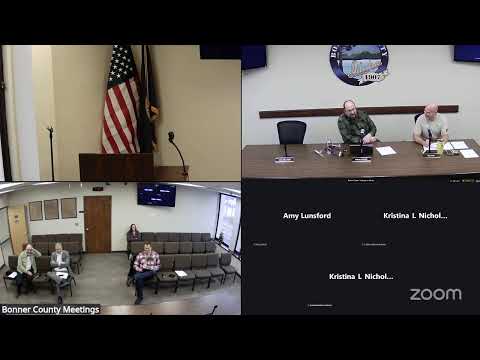
Bonner County commissioners direct HR to clarify fairgrounds staff supervision, limit fair board role to fair event
Summary
At a Dec. 4 special meeting, Bonner County commissioners concluded state law allows them to retain responsibility for county fairgrounds and directed HR to revise job descriptions to make clear that fairgrounds employees report to the Board of County Commissioners; the board voted to notify the fair board of the intent and pursue a formal framework.
Bonner County commissioners on Dec. 4 agreed the county — not the volunteer fair board — is the owner of the fairgrounds and directed human resources to revise job descriptions so fairgrounds staff clearly report to the Board of County Commissioners.
Director Holmgren, Bonner County’s human resources director, told commissioners the current arrangements have created confusion. “County fairgrounds personnel are county employees, not fair board employees,” Holmgren said, and told the board that some county workers had reported frustration and uncertainty about who supervised their work. Holmgren cited Idaho Code §31-807 and Title 22 provisions as the statutory backdrop for the discussion and recommended an operating framework that keeps county employees under BOCC supervision while allowing the fair board to coordinate on the annual fair.
The prosecutor’s office reinforced that position. “The fairgrounds are owned by the county. Period, full stop,” Robert Abel of the prosecutor’s office said, urging the board to tie any delegation to explicit time frames and written agreements so the fair board’s duties are limited to “fair purposes” as described in Title 22.
Nate Adams of the prosecutor’s office said the county can delegate more authority to a fair board if the BOCC chooses, but any expansion should be documented. “If the commissioners give a more expansive authority to the fair board…that is dependent on the grant of authority from the commissioners,” Adams said, noting a different approach would require addressing employment, insurance, and tax-identification issues if the fair board were to employ its own labor.
Commissioners debated two operational models: (1) retain county ownership and county employees to manage and maintain the fairgrounds year-round while the fair board hires seasonal staff for the annual event, or (2) allow the fair board to employ seasonal workers directly under a separate entity arrangement. Commissioners and counsel agreed the first approach — formalizing the BOCC’s supervisory role while leveraging volunteer expertise for the fair itself — would reduce employment-law risk and provide clearer accountability.
An unnamed commissioner offered a motion stating that Bonner County employees assigned to the fairgrounds should “answer only to the Board of County Commissioners,” may coordinate with the fair board, and that the BOCC should define and document the fair board’s role going forward. The board seconded the motion, held a roll call and declared the motion passed.
As immediate next steps, commissioners agreed to ask the human resources department to redraft the fair manager and related job descriptions to: specify that fairgrounds staff are county employees supervised by the BOCC (or designated county supervisors), remove language implying direct reporting to the fair board, and set coordination expectations with the fair board for the annual fair. The county’s prosecutor’s office said it will reach out to similarly sized counties to gather examples and counsel the county on implementation options.
The board also agreed to notify the fair board in advance of the planned changes and to have county representatives attend the fair board’s next meeting to explain the BOCC’s intentions. No case law was identified that definitively resolves the statutory ambiguities, so the board opted to clarify policy and job descriptions locally rather than await litigation.
The special meeting adjourned after commissioners said they had exhausted the agenda and established the next procedural steps: HR and legal will prepare formal documentation and an implementation plan to return to the board for approval.