Cowlitz County grapples with budget shortfall; commissioners weigh 1‑year budget and steep court cuts
Loading...
Summary
Facing a projected deficit for 2027, Cowlitz County commissioners debated across‑the‑board reductions to the 2026 general fund— including a proposed 20% reduction to Superior Court—while considering a shift to a one‑year budget and other temporary steps to protect reserves.
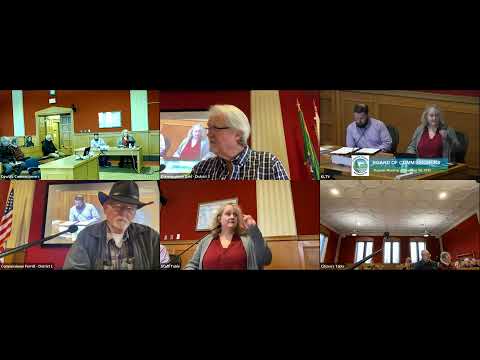
Commissioners in Cowlitz County convened a budget workshop to address a growing shortfall that could shrink county reserves from roughly three months to about one month if proposed cuts are adopted.
Kathy Funk Baxter, the county finance director, presented a recap of suggested reductions for the 2026 budget, including a scenario that would reduce Superior Court funding by about 20% from the 2026 OFM number she cited ($2,647,707). She told the board the reductions assume additional cuts on top of steps departments have already taken and illustrated dollar impacts and possible reserve outcomes.
The finance presentation prompted vigorous debate over what level of reserves the board should preserve and which programs are essential. Chair (Speaker 1) said one‑time reductions are not durable and pressed for a reserve target higher than the roughly $6.2 million shown under one scenario. Commissioner 3 and others argued the county must balance preserving services against putting new taxes on residents.
Michael Evans, assistant presiding judge for Superior Court, testified that a reduction of the scale suggested—about $1.5 million or roughly 20–24%—would “not be merely impractical, it is destructive,” potentially eliminating court commissioners, halting appointments of guardians ad litem and attorneys for minors, and shutting down dockets that protect victims, children, and the elderly. Evans warned that such cuts could leave the judiciary unable to meet constitutional obligations.
Brad Thurman, Cowlitz County sheriff, told the board recent staffing gains included three new deputies in the academy and restorations of prior positions; he said proposed cuts at current levels would “result in loss of deputies” (his estimate was up to seven or eight) and reduce the county’s ability to respond to emergencies. Thurman and others noted parts of the sheriff’s budget reflect court security and other expenses outside his direct control.
Commissioners discussed alternatives to immediate deep cuts: two commissioners voted to continue drug court for one year using opioid funds while seeking alternative funding, staff proposed a $1 million reduction to the capital improvement transfer to bolster reserves (acknowledging deferred maintenance), and staff were directed to ask legal whether the county could adopt a one‑year budget instead of the statutory biennium practice. Finance said adopting 2026 with a placeholder for 2027 and creating a task force to dig into structural reductions could buy time to implement larger changes before 2027.
The board instructed staff to post revised agenda materials quickly for a Dec. 23 public hearing and to consult legal on changing budget policy. No final vote on the 2026 budget was taken during the workshop; the board adjourned with direction to continue work on reserves and alternative revenue and reduction strategies.
Ending: The board will ask legal whether a one‑year budget can be adopted, pursue the capital transfer option and other near‑term reductions, and hold a public hearing on Dec. 23 as it works toward a balanced 2026 budget and a plan for 2027.