
Advisory committee hears public praise for executive director, holds closed session on evaluation and reports no action
Get AI-powered insights, summaries, and transcripts
Subscribe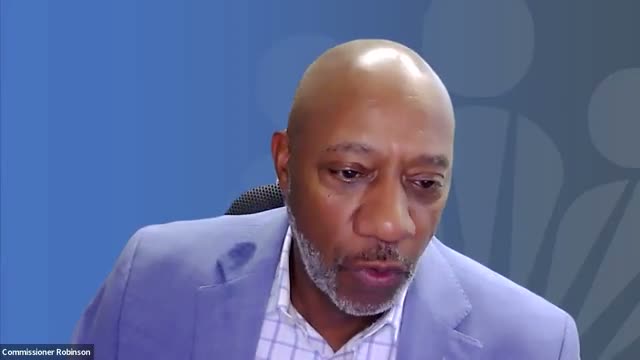
Summary
The Workplace Optimization Advisory Committee, which focuses on staff culture and workplace efficiencies, heard public comment praising the executive director and asking about committee scope, then met in closed session to continue the executive director’s performance evaluation and returned to report no action taken.
The Workplace Optimization Advisory Committee of the Mental Health Services Oversight and Accountability Commission met virtually and heard public comment before moving into a closed session on the executive director’s performance evaluation; when the meeting resumed the committee reported that no action had been taken.
Chair Jay Robinson opened the meeting and said the committee’s work centers on workplace culture and efficiencies so staff can “deliver the best work and and support the mission.” He conducted a standard roll call and confirmed a quorum with several commissioners participating remotely.
During the public-comment period, a community member identified as Stacy said she was “just here to support you,” asked whether the committee’s discussions would be confined to personnel matters and noted that public materials did not clearly describe the committee’s scope. Later, during the public comment period opened specifically for the executive director’s performance item, Stacy offered praise: “the executive director has been extremely welcoming, opening, transparent, wanting to build communication and relationships with people in the community,” and thanked the director and staff for restructuring efforts.
Chair Robinson responded that the committee is “really around, how do we make sure that we are establishing a culture so everybody can deliver the best work and and support the mission,” and reiterated appreciation for public engagement.
For agenda item 3 the committee entered a closed session to continue discussions on the executive director’s performance evaluation process; commissioners were asked to leave the public Zoom and join a second link. Staff informed the public the meeting would return at 11:55. When the committee reconvened publicly, Chair Robinson stated, “No action was taken during the closed session,” and adjourned the meeting.
No votes, motions, or formal decisions were recorded in the public portion of the meeting. The committee’s stated focus on workplace culture and staff support suggests its work will be organizational and advisory rather than personnel discipline; minutes and any staff reports would be needed to learn next steps or follow-up actions.