Manhasset board flags transportation cost risk as central factor in 2026–27 budget
Loading...
Summary
At its Dec. meeting the Manhasset Board heard a budget presentation showing a $115 million plan heavily funded by local taxpayers and warned that rebidding transportation contracts could add $1.2M–$1.8M in costs, forcing tough tradeoffs under the state tax cap.
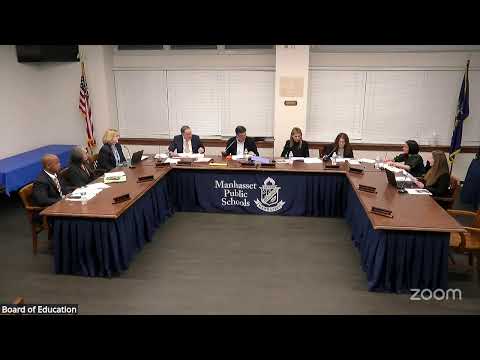
The Manhasset Board of Education on Dec. 15 opened its budget season with a presentation that framed transportation contract uncertainty as one of the largest financial risks for the 2026–27 spending plan.
Gerard Antoine, the district’s assistant superintendent for business, told the board the district’s $115,000,000 budget is overwhelmingly locally funded — about $102,000,000, or roughly 89 percent — and that roughly $5,000,000 comes from state aid. Antoine said district leadership also recently received an $800,000 IRS rebate that is a one‑time benefit and cautioned that federal grant funding (just over $1,000,000 in prior years) is subject to change.
The board’s transportation vendor, Beacon Mobility (formerly Huntington Coach), has indicated it will not renew contracts at CPI, Antoine said. If the district must rebid on the open market, he warned, bids could increase 20–30 percent — a rise that would add an estimated $1,200,000 to $1,800,000 in annual cost to the district’s roughly $6,000,000 transportation budget. "If we incur a 20% increase, it's about $1,200,000; a 30% increase is $1,800,000," Antoine said during the presentation.
Board members pressed for options. Administrators said state law requires transportation be provided to eligible students and that families may not legally "give away" a student's right to transportation, limiting the district’s ability to lower costs by reallocating unused seats. The board discussed pursuing a regional RFP with neighboring districts, running an early RFP to encourage competition, and other efficiency steps. Antoine said the district has reached out to Roslyn and East Williston and is working with a consultant to expedite an RFP.
The board also discussed longer‑term alternatives such as owning a fleet. Members cautioned that state mandates to purchase electric school buses would require significant upfront capital for both vehicles and charging infrastructure, making a district‑owned fleet unrealistic in the near term.
Other budget pressures noted included contractual salary and benefit commitments, a reported 9 percent increase in the district’s NYSHIP health‑insurance costs next year, and continuing commitments to instructional programs and facilities. Antoine said 74–80 percent of the budget is typically salaries and benefits, and emphasized the importance of reserves to cover unexpected repairs.
Antoine outlined the budget calendar: internal presentations in January, tax‑cap and fund‑balance discussion on Feb. 12, a preliminary budget in March, final state aid around April 1, followed by public hearings and a May 19 budget vote.
The presentation framed transportation as a near‑term budget priority that could require the board to make tradeoffs among personnel, programming and capital if vendor pricing spikes.