
Stafford CTE coordinator tells Senate panel differing graduation rules limit access and strain center resources
Get AI-powered insights, summaries, and transcripts
Subscribe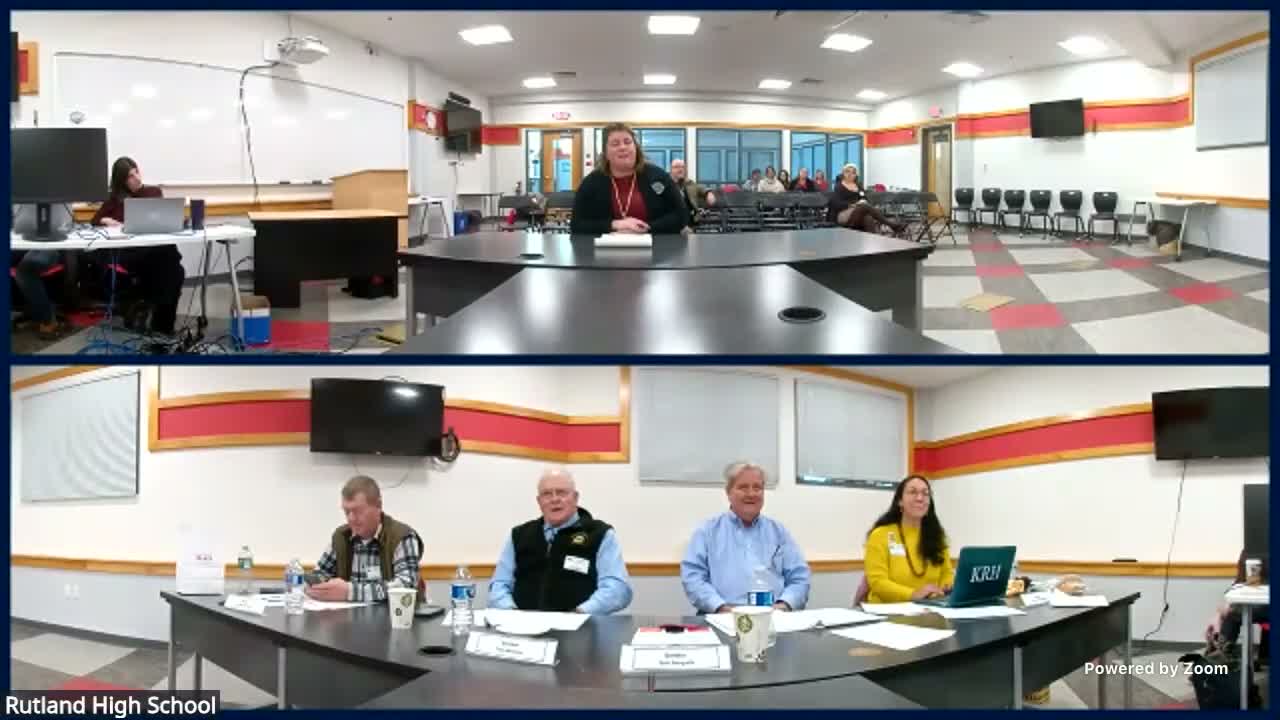
Summary
Stafford Technical Center staff told the Senate Education Committee that varying district graduation requirements and inconsistent course sequencing create inequitable student access, lead to costly program scheduling, and contribute to persistent wait lists; staff urged common statewide standards and more space and staffing.
Stafford Technical Center staff told the Senate Education Committee on a site-visit public hearing that inconsistent district graduation requirements and course sequencing across the state impede students’ access to career and technical education programs and place planning and financial burdens on regional CTE centers.
"All of our partner schools have different requirements for graduation," said Melissa Feese, a school counseling coordinator at Stafford Technical Center. "Students coming from schools that have less requirements typically have more time to access their program and co-op, which...creates a much more robust experience for those students." She urged the committee to consider common graduation requirements and course sequencing so CTE centers can better plan and students can access equitable pathways.
Feese and center leadership described operational constraints that limit enrollment: lab capacity and federal worker-safety limits, the different staffing models between full-day and half-day centers, and cyclical demand that leaves some programs with wait lists in certain years. "We have limits to the number of students that can be in a heavy lab at a time," Feese said, and noted an OSHA-driven maximum student-to-instructor ratio in some classes.
The witnesses said solutions would require more space and staff. Feese said the center has board permission to conduct a feasibility study for a new building or modular labs to expand programs such as electrical and construction; local boards have hesitated to commit capital while statewide governance and funding for CTE remain uncertain.
Committee members raised pay and certification as recruitment issues. One member asked whether a consistent wage scale for CTE instructors would reduce “poaching” between districts. Feese said salary schedules vary by district and certification, and that a statewide schedule competitive with industry wages could help retention and recruitment.
The Senate committee also discussed how different high-school schedules (full-day versus half-day CTE models) affect curriculum needs and whether the Agency of Education’s statewide planning processes have included CTE voices. Feese said CTE centers must plan for distinct program models and that any uniform policy should account for those differences.
The committee did not take formal action at the visit. The hearing concluded after additional public comment on separate topics.