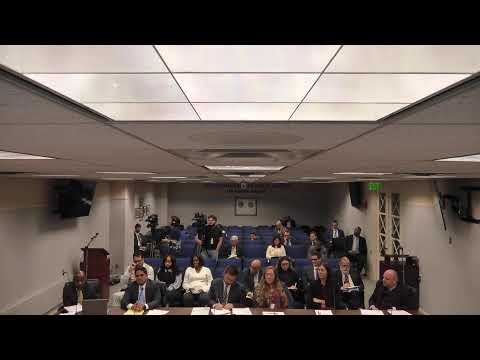
PSC takes Maryland American Water PFAS bill-credit tariff under advisement after split views
Loading...
Summary
Staff recommended rejecting Maryland American Water Company's tariff that would give customers one-time bill credits from PFAS litigation proceeds, arguing it would shift long-term plant costs to future customers; the Office of People's Counsel and the company urged immediate credits. The commission took the matter under advisement for further review.
The Public Service Commission on Dec. 17 heard conflicting recommendations over how Maryland American Water Company (MAWC) should use litigation proceeds from PFAS-related settlements. Staff recommended rejecting a tariff that would distribute proceeds as one-time bill credits and instead directing MAWC either to apply proceeds against future PFAS-removal plant costs or place proceeds in a deferred account until project construction begins. MAWC and the Office of People's Counsel urged immediate bill credits to give customers tangible short-term relief.
Staff's presentation, led by David Valcarangio, described the commissionapproved CER mechanism and noted staff had reviewed an updated tariff filing and the company's calculations. Staff warned that applying settlement proceeds as immediate bill credits could transfer future plant costs to customers who pay rates over many years and might be inequitable if customers who receive a one-time credit later leave the system while other customers pay for the removal facilities. Staff cited approximately $418,000 in net proceeds on hand and estimated that returning those proceeds as a one-time credit would require higher rates later to pay for the plant, potentially increasing annual costs per customer over time.
Brock Miller, representing the Office of People's Counsel, urged approval of the company's bill-credit approach, arguing it is simple to administer and delivers an immediate benefit to customers rather than burying modest benefits over decades. MAWC counsel David Bewelman said the company filed tariff revisions on Dec. 9 and submitted an analysis showing that distributing proceeds as immediate credits provides net-present-value results comparable to applying proceeds against plant costs, while delivering a direct customer benefit now.
Commissioners pressed staff and the company on the accounting difference between booking proceeds to plant, creating a deferral account, and issuing credits; they also questioned timing, customer notice and how multiple settlements over time would be handled. After extended questions and responses from staff, OPC and MAWC, the commission took the filing under advisement and said it would issue a decision after further review. No formal vote was taken at the administrative meeting.
Next steps on this tariff include further review of the parties' filings and analyses and a future commission action to accept, modify or reject the tariff. The record includes staff's recommendation to credit proceeds against plant costs or hold them in a deferral account if projects are not yet initiated, and the company's alternative proposal to apply periodic bill credits as settlement proceeds become available.