
Madison redevelopment panel pledges $280,000 to help fund new Early Learning Center
Get AI-powered insights, summaries, and transcripts
Subscribe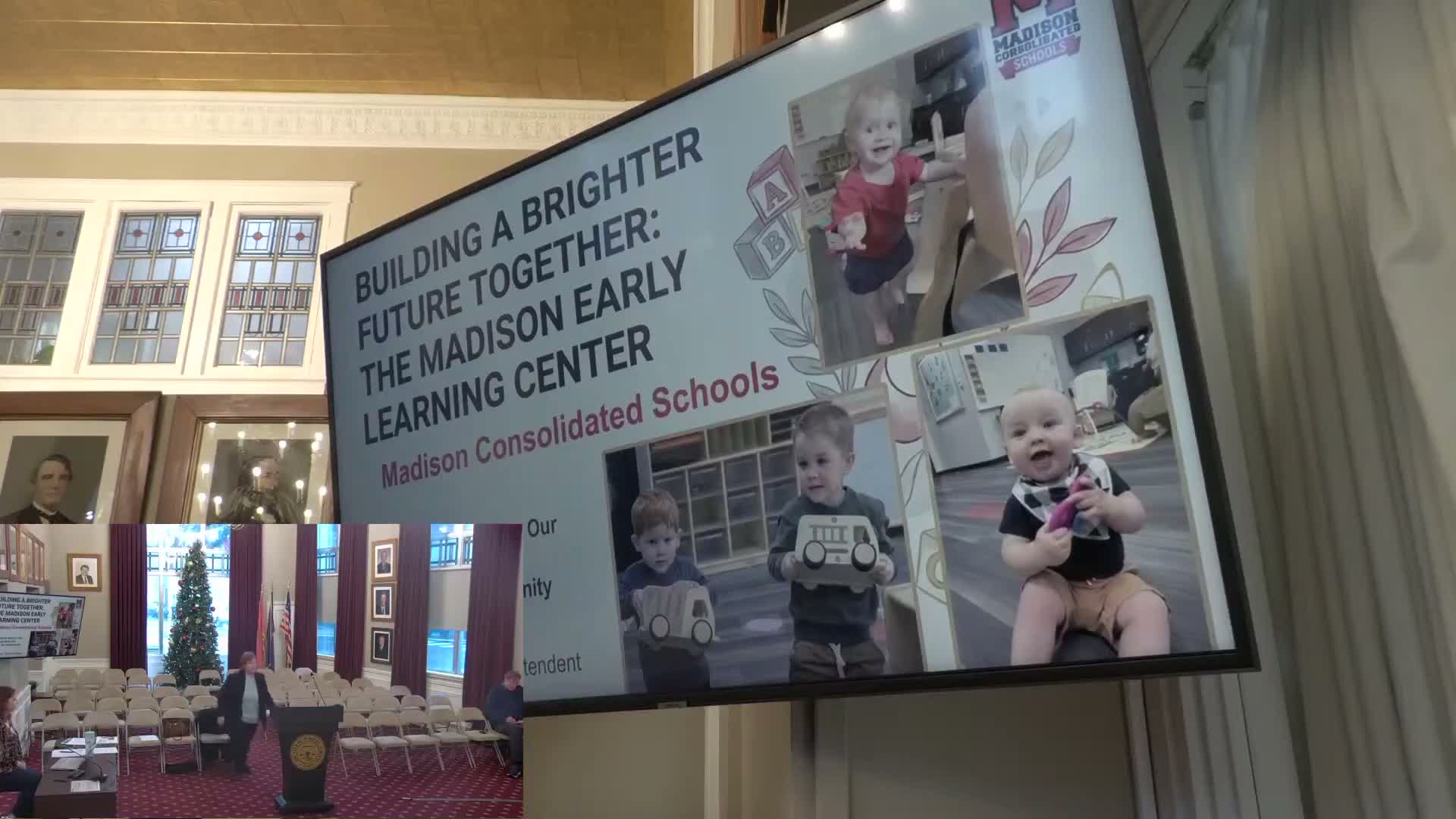
Summary
The City of Madison Redevelopment Commission voted to pledge $280,000 from its 2026 plan to help close a funding gap for a proposed Madison Early Learning Center, after a multi-part presentation from district leaders and partners describing local childcare shortages, project scope and remaining financing needs.
MADISON — The City of Madison Redevelopment Commission voted to pledge $280,000 from its 2026 plan to help the Madison School Corporation finish funding a proposed Madison Early Learning Center.
Dr. Brown, the school leader who presented the plan, told the commission the center would serve birth through preschool with an intended capacity of about 366 children in roughly 54,945 square feet, including infant, toddler and preschool classrooms and an indoor playground and sensory room. "For every dollar invested for early learning, you have a 13% return through improved education outcomes," Dr. Brown said, summarizing the economic and educational rationale she presented.
The school district provided local cohort data and external research to justify the investment, saying students who attended the district preschool outperformed peers on state assessments by as much as 20–30 percentage points in some grades. Dr. Brown said the district also faces a local childcare supply shortfall; she cited Brighter Futures Indiana data indicating a sizable gap between available licensed spots and children who may need care.
On financing, Dr. Brown described a multi-part plan that includes prior borrowing, planned additional borrowing this spring and philanthropic gifts. She said Bethany Legacy committed $3 million with an additional $1 million match expected, and the district has a $750,000 grant from the Family and Social Services Administration (FSSA) that seeded an interim childcare solution. Dr. Brown said the project still faced a remaining match shortfall and asked the redevelopment commission to help close a $280,000 gap.
Doctor Amanda Harsen, chancellor of Ivy Tech (speaking in support), said Ivy Tech received a statewide grant to expand early-childhood workforce training and pledged the college would help credential educators for centers like Madison’s. "Ivy Tech is deeply committed to being a part of the solution," Harsen said and noted a $21,900,000 Liberty Foundation grant for statewide workforce training that will supply credentialed staff.
Commission members discussed the budget timing and the use of tax-increment financing and other development revenues. A motion to pledge $280,000 from the commission's 2026 plan was made, seconded and approved by voice vote; commissioners responded "Aye." The motion was recorded as approved in the meeting.
The presenters described a timeline of final designs by February, additional fundraising and borrowing in March–April and a target groundbreaking in May with a 2027 completion target. The transcript contains an inconsistent numeric token in one place (see audit); project context in the presentation indicates a total project budget in the low tens of millions (the district cited a projected cost around $32 million and asked the commission to help with the remaining gap).
The commission asked staff to include the pledge in the January budget materials to show where the funds would come from.
The commission's approval was a funding commitment to help the district pursue construction, but the presentation also made clear continued fundraising and state funding uncertainties (notably frozen vouchers) remain a financial risk.
The commission discussion closed with thanks to school and community partners and confirmation the pledge would appear in the 2026 budget materials at the January meeting.