District presents annual achievement report and previews course-catalog changes
Summary
The Comprehensive Achievement and Civic Readiness report showed mixed results: kindergarten reading at 65.5% proficiency, MCA math 51.8% and reading 54.5%, 4-year graduation 92.5%, and a new lifelong-learner survey baseline; district also previewed course guide changes including a personal finance requirement and ethnic-studies planning.
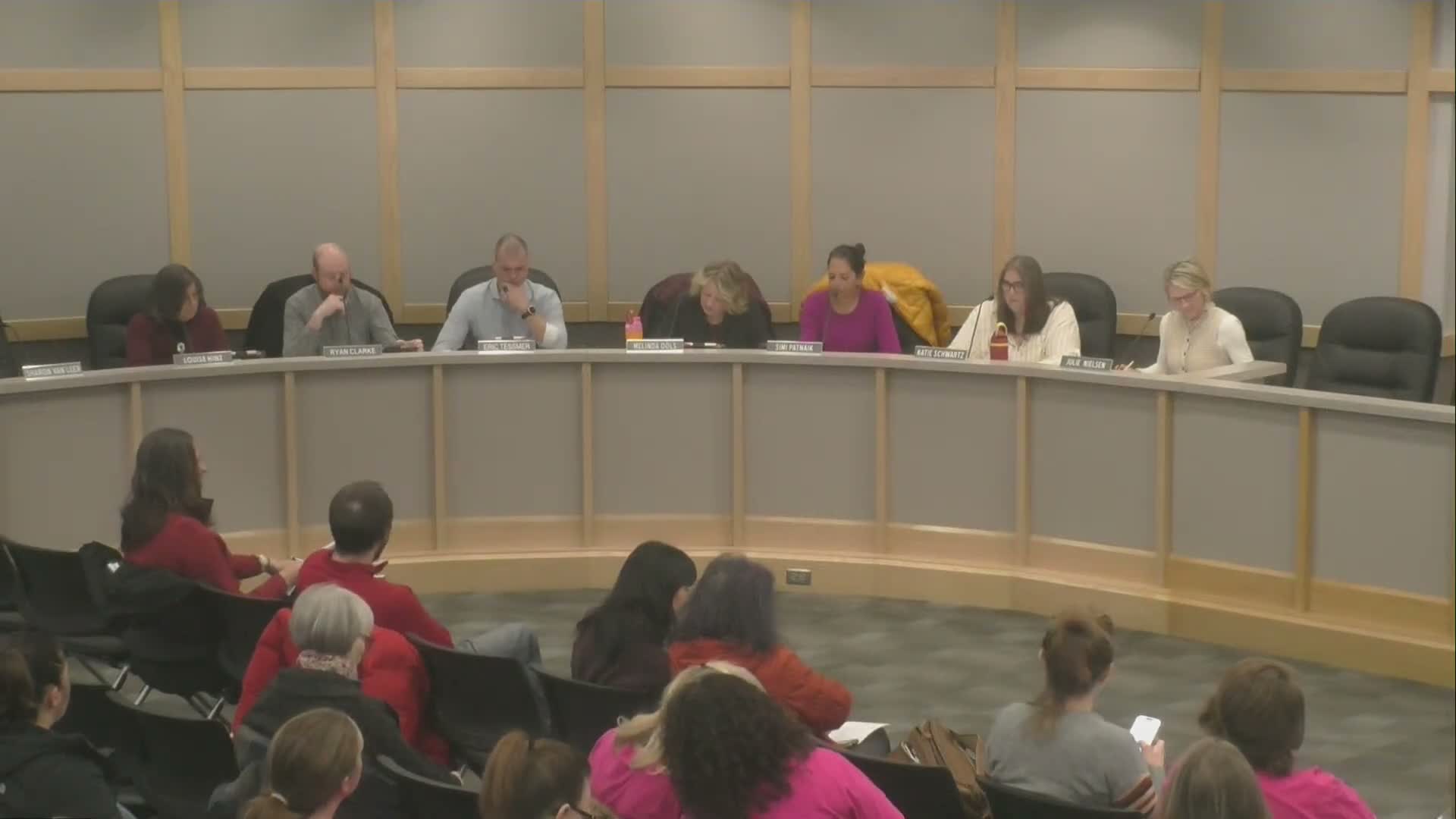
South Washington County Schools administrators presented the annual Comprehensive Achievement and Civic Readiness (CACR) report at the Dec. 11 board meeting, highlighting areas of progress and identifying where the district will target future work.
Assistant superintendent Kelly Jansen introduced the CACR and framed the district's obligations to report progress toward multi-year goals aligned with the Minnesota Department of Education. The report presented several headline measures for the 2024-25 school year: kindergarten reading proficiency on the district's IRLA/ANEAL assessment at 65.5% (with an additional 15% showing more than a year's growth), MCA math proficiency at 51.8% and MCA reading proficiency at 54.5%, and a 4-year graduation rate of 92.5% for the class of 2024. For college-readiness, the district reported that 48% of the graduating class met the ACT reading benchmark of 22 or higher.
Presenters described district strategies to address gaps, including a guaranteed and viable curriculum, common assessments, MTSS tiered supports, and built-in intervention time. The district also introduced a new fifth goal, "All students are prepared to be lifelong learners," and reported baseline survey results that place grades 5'10 at 98% developing or higher and grades 11'12 at 86% skilled or higher; the district said the survey and profile-of-a-graduate scale are unique to SoWashCo and will be tracked over time.
Administrators also previewed high-school course-catalog changes for 2026-27, including a new personal finance trimester credit required for students in the class of 2028 and beyond (using one elective credit), an ethnic-studies course pending Minnesota Department of Education guidance, Ojibwe language and culture offerings and expanded CTE and online course options. The district noted the current personal-finance course does not match the state's yet-to-be-finalized requirement and said a state-aligned course will be implemented for the affected cohort.
Board members pressed for details about what "partially meets" on MCA data represents in score terms and for documentation of test cutoffs; presenters said they will provide follow-up materials and that priority benchmarks will continue to guide instruction and intervention.