
Somers Point opens public hearing on multiple stormwater projects aiming to curb flooding
Get AI-powered insights, summaries, and transcripts
Subscribe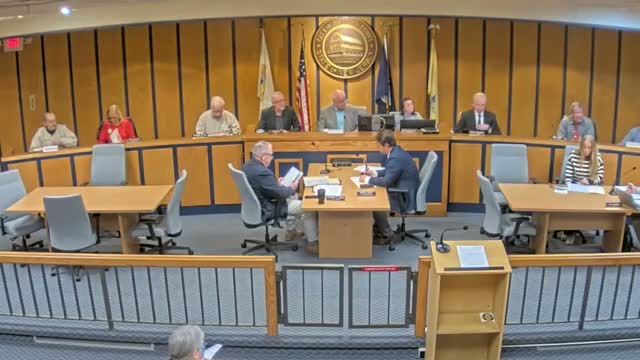
Summary
Council heard staff present several stormwater projects — including a new Exton Road pump station, shoreline stabilization and outfall cleanups — aimed at reducing recurrent flooding; residents urged quicker maintenance of clogged inlets and requested inclusion of local low-lying streets.
Somers Point opened a public hearing Dec. 17 on a slate of stormwater projects the city has applied for through the New Jersey Stormwater Infrastructure Bank aimed at reducing frequent flooding in low-lying neighborhoods.
City engineer consultant Mister Schneider described a series of projects proposed as the city’s level-2 submissions, which require a public hearing before state review. They include a new pump station at Exton Road with a wet well and generator built above the 500-year flood plain; a nearby living-shoreline and bank stabilization using gabion rock baskets and native planting; dredging and extension of three clogged outfalls that drain to Paco Creek; a new 36-inch storm pipe along DeFeo/Fayette Lane to increase capacity toward the creek; consolidation of multiple outfalls and a bioretention swell on Bay Avenue; a small pump station on Schoolhouse Lane with a tide check valve; Gulf Mill Road outfall consolidation with a proposed pump station; and a small pump station for the low area between Pearson Avenue and Dawes that would pump toward Bay Avenue. Schneider said the statewide program offers roughly $2 million in loan forgiveness per year and low- or no-interest financing that the city is trying to leverage for projects already anticipated in local planning.
During the public portion Margaret Needle, who said she lives on Exton Road, told council an inlet and an easement on her property have been clogged for decades and asked for a clear timetable for repair. Schneider responded that the city will include an inlet clean-out in the upcoming stormwater maintenance contract that is expected to be awarded in January and that the work would likely occur in spring.
Linda Bakeley Gager of Durant Avenue described chronic flooding in front of her house — saying, "We get a lake at 2 inches of rain" — and asked why her street was not included on the current list. Schneider said the projects advertised for the state program focus on environmentally sensitive wetland areas; he added that road-focused projects can be added to future lists and that the city can prepare an estimate for her street.
No final project approvals or construction contracts were signed at the meeting; council opened and closed the public hearing and will proceed with the state review process and internal prioritization. Schneider also noted that wetlands work will require permits and that some projects include tie-check valves, outfall extensions and road work in existing right-of-way.
Next steps: city staff said project concepts will advance to more detailed plans for state review and permitting, the maintenance contract will include targeted inlet clean-outs, and the city will bring additional candidate road projects back to steering and committee discussions for possible inclusion.