
Board hears TIF eligibility presentation for Triangle-area redevelopment; public hearing closed with no final vote
Get AI-powered insights, summaries, and transcripts
Subscribe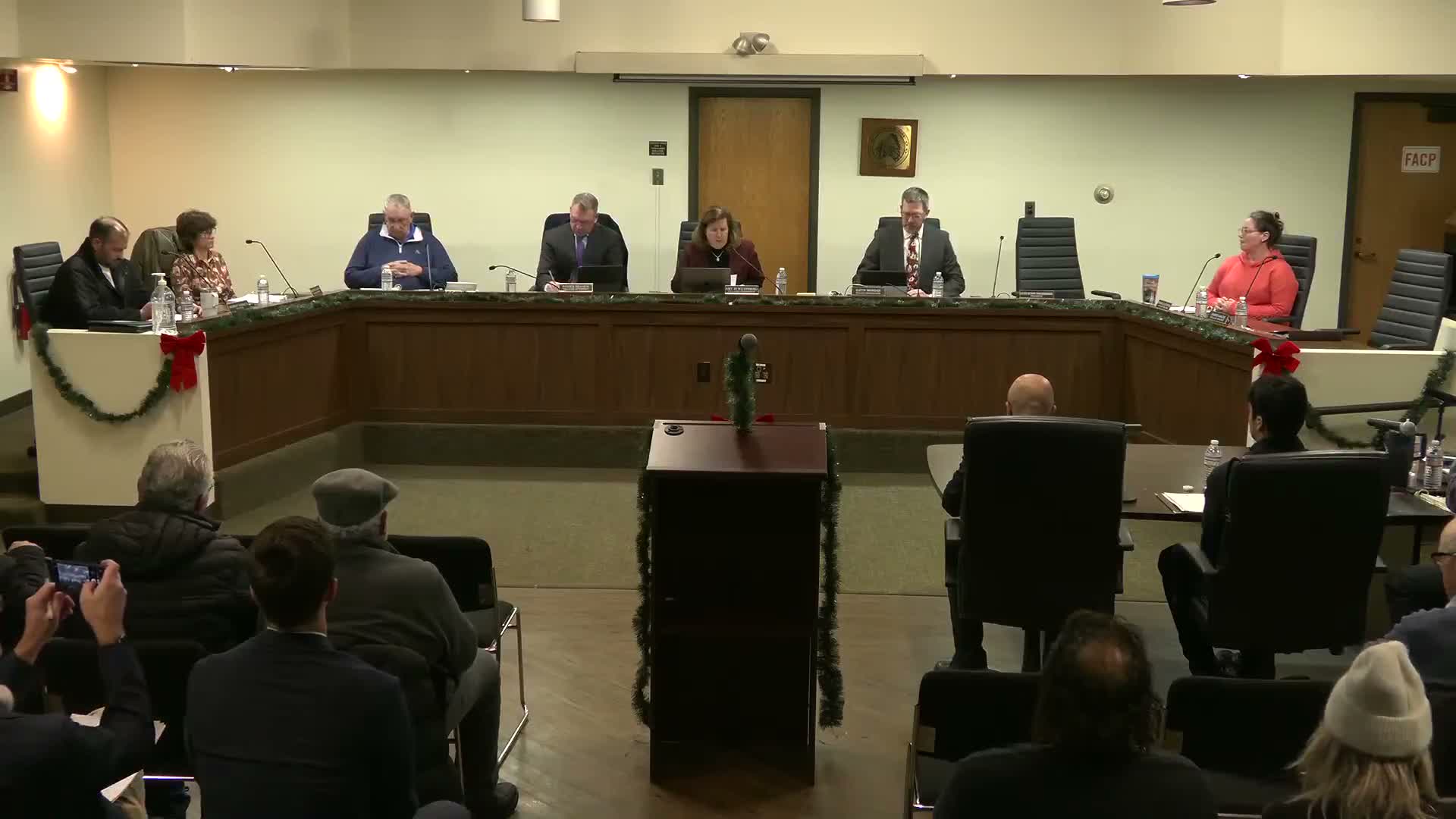
Summary
Consultants presented an eligibility study and draft redevelopment plan for a proposed Triangle tax increment financing (TIF) district, finding conservation- and blight-related factors that could justify designation. The board opened and closed a public hearing and scheduled any vote on TIF ordinances for the Jan. 8, 2026 meeting.
Andrew, a consultant with S.B. Friedman Development Advisors, told the Indian Head Park Board of Trustees on Dec. 11 that the Triangle-area redevelopment plan is meant to capture incremental property-tax growth within a defined set of parcels and reinvest that growth in local improvements. "TIF or tax increment financing is a common economic development tool used in Illinois and other states that is a way to reinvest property tax revenues into a specific target geography," he said.
The consultant said the proposed district contains 12 parcels — four improved, eight vacant — and that, for improved parcels, the study finds the area qualifies as a conservation area because more than half of the buildings are at least 35 years old and three statutory eligibility factors are present: lack of equalized assessed value (EAV) growth, visible deterioration, and structures that do not meet current minimum building codes. On the vacant parcels, he said the team found three factors (including obsolete platting and adjacent deterioration) that satisfy the statutory two-factor test for vacant land.
The redevelopment plan included a statement of objectives — building rehabilitation, infrastructure repair, streetscape and landscaping improvements, site assembly and marketing — and a budget table required under state law that sets an upper limit on redevelopment project costs funded by tax-increment revenues. "The bottom line number here is $37,000,000," Andrew said, adding that the figure is an upper limit required by statute and not an authorization to spend that sum.
Consultants and trustees emphasized that the TIF is a framework: it does not change tax rates for existing taxpayers, but it redirects increases in tax revenue from the specified parcels into a TIF fund for reinvestment in that area. Village President Amy Jo Wittenberg told residents the board would not vote on the ordinances to establish the TIF at the Dec. 11 meeting and scheduled formal action for the Jan. 8, 2026 board meeting.
During public questions, Studio Suites representatives asked whether the TIF would increase taxes across the village or only affect the designated lots. Board members and consultants clarified that overlapping taxing districts will receive the same base amount they get today for the duration of the TIF; only incremental growth in assessed value from within the district is captured for reinvestment in the Triangle area.
Trustees outlined next steps if the TIF is approved in January: hire consultants for economic analysis and marketing, hold joint review board meetings with overlapping taxing districts (as required by statute), and create application processes and program rules to evaluate and disburse potential TIF assistance. No displacement large enough to trigger a housing-impact study was identified in the consultant's presentation, and the consultant said a housing impact study was not required under the circumstances they reviewed.
The board opened the public hearing earlier in the meeting, took public questions, and then voted to close the hearing; no ordinance establishing the TIF was adopted on Dec. 11. The board directed staff to continue outreach and return with materials and any required documents for consideration at the January meeting.
The board will consider adoption of any TIF ordinances at its Jan. 8, 2026 meeting; until then, the presentation and eligibility analysis remain informational and part of the public record.