
After hours of testimony, Douglas County directs staff to study tenant right-to-counsel options and possible pilot funding
Get AI-powered insights, summaries, and transcripts
Subscribe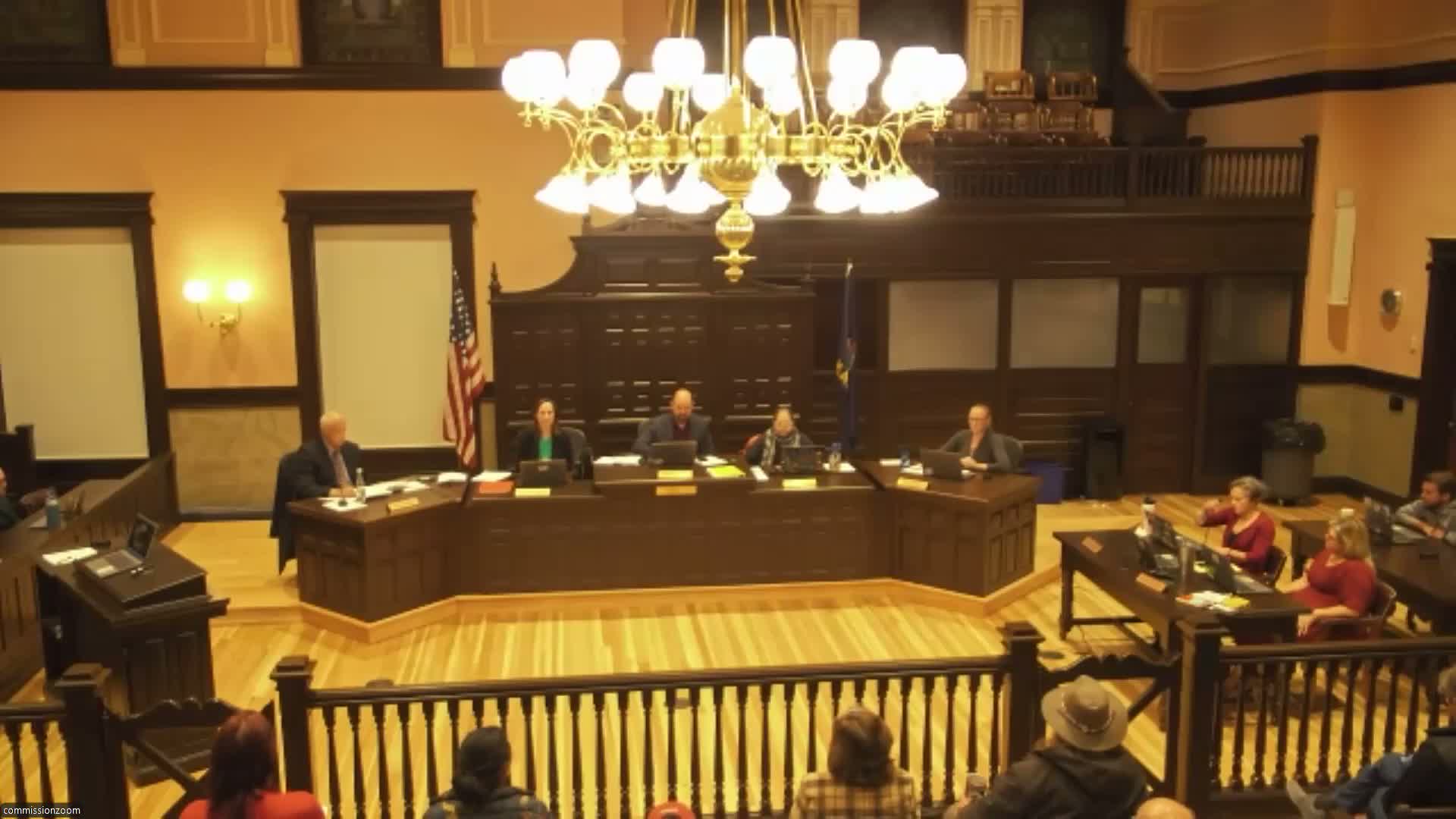
Summary
Following presentations and nearly three hours of public comment both for and against, the commission directed staff to study tenant-right-to-counsel and mediation models (including Topeka and Johnson County examples) and explore using a $40,000 set-aside for near-term pilot work; no ordinance was adopted.
Commissioners spent the longest portion of the Dec. 17 meeting on an update and public hearing about a possible tenant right-to-counsel program.
Staff summarized earlier research and outreach with local and state partners, then Shannon Owry, CEO of the Lawrence–Douglas County Housing Authority, described eviction drivers and program mechanics: "About 90% of all the eviction cases are nonpayment [of rent]," she said, and emphasized that rental assistance and early intervention are essential tools. Owry explained the mutual-release process the housing authority negotiates with landlords and described how eviction records can trigger HUD voucher consequences.
Hundreds of minutes of public comment followed. Landlords and property owners urged caution, warned that mandatory or county-funded tenant counsel could raise costs and push small owners from the market, and said mediation and increased rental assistance would be better uses of county dollars. "Mediation can be helpful, but it should be voluntary, not used as leverage," one landlord said.
Tenant advocates, legal-service providers and public-health professionals urged the county to implement a right-to-counsel program as a tool that levels the legal playing field and prevents homelessness. Speakers cited national and local data showing higher success rates for represented tenants, argued that representation uncovers illegal eviction practices, and framed the issue as a public-health priority. Kansas Holistic Defenders and other nonprofits described client outcomes from existing supports and asked the county to codify a guarantee of counsel for tenants facing eviction.
Commissioners then debated program design and budget trade-offs: whether to prioritize mediation upstream, to fund full representation at the district-court answer docket, or to combine approaches. Several commissioners noted that mandatory courthouse mediation would be a district-court policy, not a county one, and that state landlord–tenant law (including the fast Kansas timelines around nonpayment evictions) constrains options.
As a next step, commissioners asked staff to gather more detailed cost and operational estimates, to study Johnson County’s mediation program and Topeka’s partial-representation model, and to return with a plan. Commissioner Reed proposed using $40,000 already set aside for eviction-defense work to seed near-term pilot activity and to support local nonprofits that provide eviction defense. Commissioners signaled a majority interest in further study rather than immediate adoption; no ordinance or county-code change was enacted that evening.
Quote: "If landlords are following the law, they have nothing to be concerned about," a tenant advocate said. "When tenants have lawyers, they win the majority of eviction cases brought against them," another speaker added.
Next steps: Staff will prepare a budget estimate and pilot design and return to the commission in early 2026 with recommended metrics and cost projections, using the $40,000 set-aside as a possible near-term fund if commissioners approve.