Get Full Government Meeting Transcripts, Videos, & Alerts Forever!
Get email alerts on the Housing Incentives topic
No spam. Unsubscribe anytime.
School board approves 20-year, 90% tax-exemption pilot for Brookstone Apartments after lengthy debate
Summary
After extended public comment and board questioning, the Grand Forks Public Schools board approved a 20-year pilot granting Brookstone Apartments a 90% property-tax exemption; supporters cited affordable units and safeguards, opponents raised concerns about district revenues and process.
The Grand Forks Public Schools board voted to approve a 20-year, 90% payment-in-lieu property-tax pilot for the proposed Brookstone Apartments development, after more than three hours of public comment and board discussion.
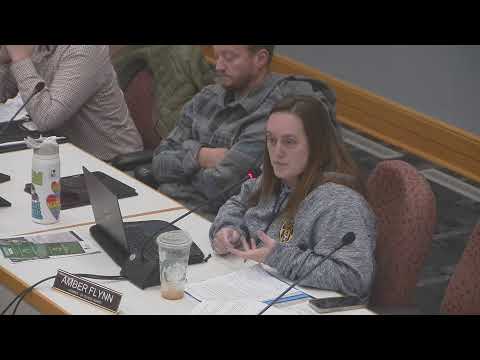
The motion, made by board member Jay Cleven and seconded by Mr. Palmasino, passed on a 7–2 roll call. Board members who voted yes were Larson, Cleven, Lund, Anderson, Flynn, Palmasino and Berger; Manley and Hodak voted no. The motion authorizes participation in the pilot as presented in the packet and discussed at the meeting.
Supporters — including Curtis Regan of Dakota Commercial, Lisa Ratvold of the Red River Community Housing Development Organization, and Terry Hansen of the Grand Forks Housing Authority — said the project would deliver 160 affordable units (possible phasing into two 80-unit phases), leverage federal Low-Income Housing Tax Credits (LIHTC) and the state Housing Incentive Fund (HIF), and include controls that keep all units income-restricted. Ratvold summarized the market study and affordability targets, saying the project would serve households at 60% area median income and below and that the study found the development would not harm existing rental housing supply.
Developer Curtis Regan explained the financing gap that led to the 90% pilot request and said the pilot is necessary to reach the debt-coverage ratio his lenders require. Regan said the project would include a community-flex space for service coordinators at no cost to nonprofits or school-based services.
Opponents raised fiscal and process concerns. Public commenter Bob Cowger urged the board to prioritize closing the district’s budget shortfalls before offering incentives, and questioned reported vacancy rates and prior tax-exemption totals. Several board members expressed frustration with the current incentives review process and asked for clearer rubrics and earlier cross-jurisdiction coordination; Mayor Buchenzky suggested joint pre-application review among city, county and school boards.
The board received estimated financial figures in the packet: a project cost of roughly $33,000,000; proposed rents described in packet averages (efficiency to three‑bedroom ranges were discussed by staff); an estimated 160 units; an estimated school-district share of property-tax receipts of about $119,000 in the first five years (packet analysis shows the district would receive roughly $23,300 in year one under the pilot calculations and increase slightly over the pilot term). Developers said rent and operating controls are part of the LIHTC and HIF programs, including reserve requirements and a cap on profit tied to a debt-coverage threshold.
The board’s approval included the terms presented in the application packet and the finance committee report; board members said they expect additional procedural changes and a more formal rubric for future incentive requests. The motion passed by roll call 7 yes, 2 no; there were no absences.
Votes at a glance: the meeting also approved routine items earlier in the agenda, including agenda and minutes approvals and the district’s general fund financial statement for 07/01/2025–10/31/2025; those items passed by roll call as recorded in the packet.
The board will return in December to discuss process changes for future tax-incentive requests and other pending items.