
BAR approves demolition COA for 210–216 West Market Street with archaeological and documentation conditions
Get AI-powered insights, summaries, and transcripts
Subscribe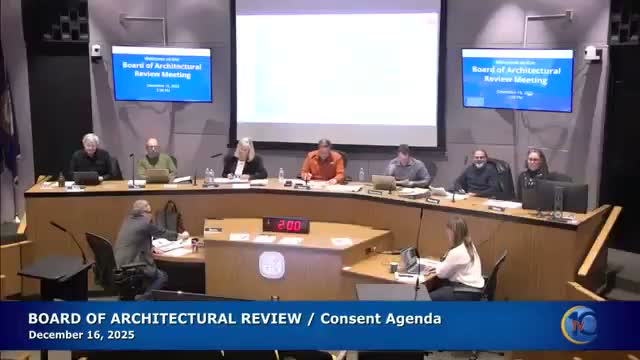
Summary
The BAR approved a certificate of appropriateness to demolish the structure at 210–216 West Market Street on condition the applicant secure a permit for temporary construction yard use, provide building documentation, and complete a Phase 1 archaeological investigation; staff noted the Phase 1 could prompt further work if burials or significant finds are discovered.
The Charlottesville Board of Architectural Review approved a certificate of appropriateness to demolish the building at 210–216 West Market Street, subject to conditions that require site stabilization and documentation. The approval included three required conditions: securing a permit for temporary use of the site as a construction yard, installation of a construction barrier appropriate for downtown per city standards, and submission of building documentation and a Phase 1 archaeological investigation of the parcel.
Staff said the project site (the lot formerly occupied by Brown's Lock and Safe) had been the subject of previous approvals and extensions. Staff and the applicant agreed the Phase 1 archaeological investigation will focus on documentary research and limited shovel test pits to determine whether deeper work is necessary. Staff warned the board that only state law can halt a project for discovered burials; otherwise the applicant is not obligated beyond the Phase 1 survey unless subsequent work is recommended.
Kevin Schafer of Design and Development Architects, speaking for the applicant, said the site would be used as a laydown area to support construction of the adjoining hotel at 218 West Market Street and that the team was amenable to staff's three conditions. Schafer also read a letter from the property's former owner, Mr. Brown, who described a long family presence at the address and wrote that the building "retains almost nothing of the original structure and character" and supported demolition and reuse as a staging area for the adjacent Marriott construction.
Board members asked clarifying questions about the Phase 1 process, what kinds of field work it might include, and whether a discovery could delay permitting. Staff explained Phase 1 is a data‑gathering step (documentary research and limited shovel test pits) that informs whether additional archaeological survey or mitigation should occur; the applicant is required only to complete Phase 1 as a condition of the COA.
A motion to approve the COA with the conditions described in the staff report passed; roll call votes were recorded and one member abstained from the consent/demolition vote because they were not present at the earlier meeting referenced in the minutes.
The approval allows demolition tied to the temporary construction‑yard permit, and staff said when the construction yard is no longer needed the site must be stabilized and seeded per the permit conditions. If archaeological work under Phase 1 identifies significant finds (particularly human remains), state law and further review would guide next steps.