
District releases bias-incident data, expands training with WestEd partnership
Get AI-powered insights, summaries, and transcripts
Subscribe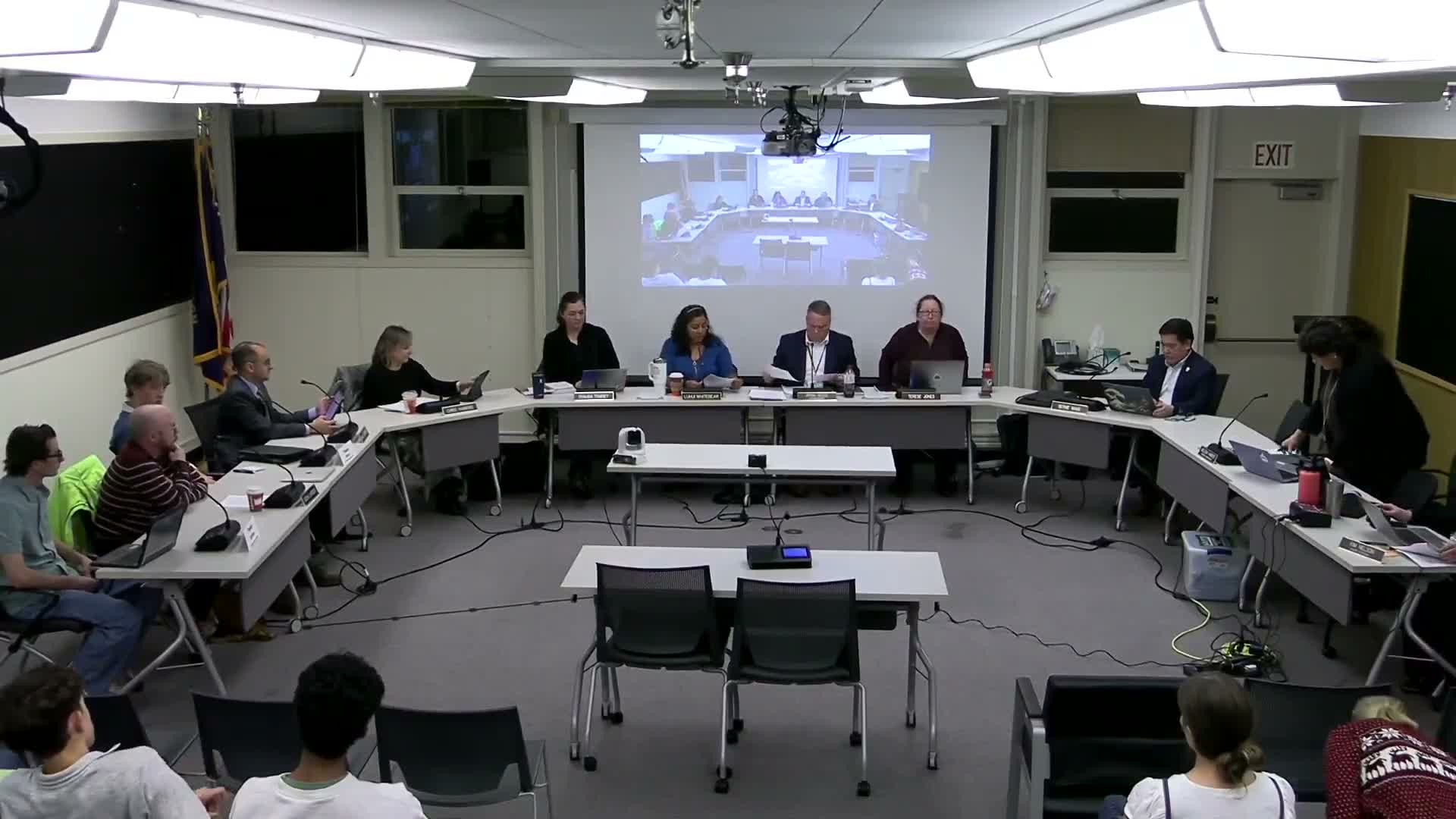
Summary
Corvallis School District reported 293 founded bias incidents last year with 52% categorized as race-related and announced a WestEd-supported professional learning series and further data analyses and staff training to address disproportionality and responses.
Corvallis School District presented a midyear update Dec. 11 on bias-incident reporting, including trends, demographics and next steps for training and data-informed responses.
Assistant Superintendent Melissa summarized the district report and said there were 293 founded bias incidents last year; staff reporting increased and elementary-school reporting rose to 38% of reporter share. "Fifty-two percent of our bias incident reports were related to race," she said, and noted that one commonly repeated form of racial harm was use of the n-word. Melissa's team analyzed 62 incidents that involved a student using that slur, finding that in 28 reported incidents the harmed student was Black.
District actions and partnership: Byron described a four-part professional learning series for school leaders provided through a WestEd partnership funded by an Oregon Department of Education grant. The program includes culturally responsive self‑assessment tools and a model for schools to "learn, then make," enabling leaders to train staff with consistent materials and to track follow-up actions.
Tracking and follow-up: Melissa and Byron said the system now captures more detail (including anonymous reports), and the district is working to pull additional slices of data by bias type, action taken and reporter/harmed-party demographics. The district runs 30-day check-ins with harmed students and records narrative outcomes in behavior reports; staff said these are not yet standardized into click-box fields and require manual pulls for deeper analysis.
Why it matters: Board members pressed for evidence linking bias interventions to student outcomes and for tracking of which remedial actions (re-teaching, parent meetings, restorative repair) most often resolve particular incident types. The district signaled it would produce additional analytic extracts on outcomes, multi-category incidents, and the overlap of perpetrators and harmed parties to inform action planning.