Get Full Government Meeting Transcripts, Videos, & Alerts Forever!
Get email alerts on the Career Technical Education topic
No spam. Unsubscribe anytime.
Hardin County Schools reports surge in career-technical enrollment and employer placements
Summary
Teachers and board members described rapid growth in career-technical classes, with instructors reporting about 500 student requests for courses that began with roughly 20 students; presenters highlighted micro-certifications, employer partnerships, and student placement successes.
In a lengthy presentation to the Hardin County Schools Board of Education, construction and career-technical instructors described rapid expansion of locally offered workforce programs and rated the district—s employer partnerships as strong.
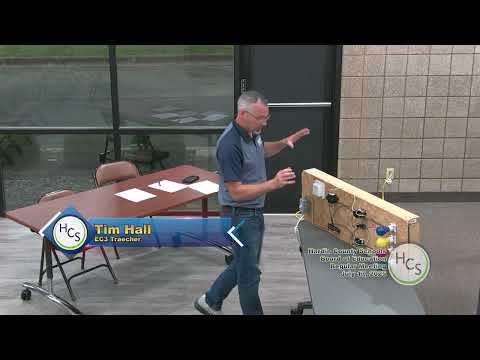
Tim Hall, who introduced himself as "the lead teacher for the construction program," told board members the program began with about 20 students in its first year and has since drawn roughly 500 course requests. Instructors described a stepped curriculum with introductory classes followed by specialty courses in carpentry, electricity, HVAC and heavy equipment. Presenters said students train on bench trainers and then on real units and that instructors run shops to replicate workplace roles such as foremen and safety officers.
Speakers emphasized employer ties and credentialing: presenters said EC3 (referred to in the meeting as "EC 3") sends instructors for train-the-trainer certification, and students can earn multiple micro-certifications recognized by employers. Board members and teachers cited placement outcomes, including one ex-student whose reported earnings were "$77,000 his first year out" and about "$86,000" in a later year, which teachers said illustrated the program—s potential to lead to family-sustaining wages.
Presenters also cited community support and donations from organizations including the United Way, Altec and local trade unions that donate materials and take program graduates on as employees or apprentices. Board members discussed growth planning and the need for larger facilities as enrollment increases.
The presentation was descriptive: no new program funding or policy changes were proposed at the meeting. Board members thanked instructors and encouraged continued coordination with industry partners.