
Wilsonville planning commission advances code changes to meet state housing law deadline
Get AI-powered insights, summaries, and transcripts
Subscribe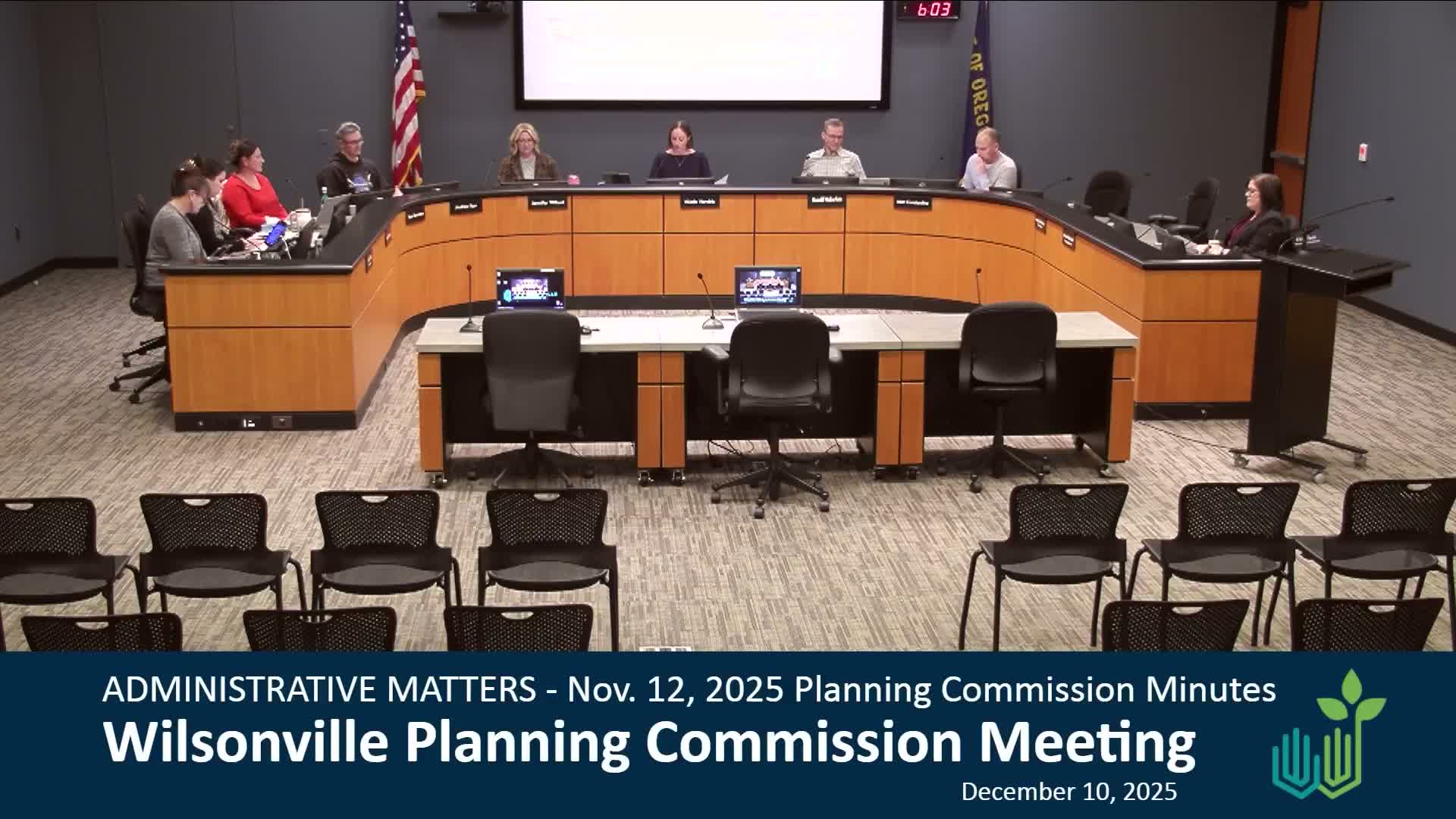
Summary
Wilsonville staff briefed the planning commission on a Housing Statutory Compliance project to align local development review rules with Senate Bill 974, proposing expedited annexation rules, shifting some residential reviews to administrative (class 2) processes, a 100-foot mailed-notice radius and changes to board roles; commissioners generally supported staff direction and asked staff to return with draft code amendments in March.
Wilsonville planning staff presented a work session on Dec. 10 to lay out code changes the city must make to comply with new state housing laws and to seek commission guidance before drafting amendments.
Kim Reibold, senior planner for the City of Wilsonville, told the commission the effort responds to multiple 2025 legislative actions and the city’s June housing production strategy. "This is called the housing statutory compliance project," Reibold said, and staff are accelerating work so changes will be effective in time to meet the statutory timeline. Reibold said the city must comply "by July 1." Heather Austin of 3J Consulting, who aided the city’s code audit, joined Reibold in explaining the required and optional changes.
Why it matters: Senate Bill 974 requires certain types of residential development applications be processed through an administrative review route rather than full quasi-judicial hearings. To meet that mandate and preserve transparency and customer service, staff recommended moving identified plan-development review stages and certain variances to a class 2 administrative-review process, consolidating related application pieces (site design review, tentative subdivision plat, tree plans) into single packages where appropriate, and amending notice procedures.
What staff recommended and commissioners’ reaction: Staff recommended using the existing Coffee Creek expedited hearing framework for annexations of master-planned areas rather than relying solely on Metro’s expedited decision process. Commissioners generally supported the Coffee Creek-style approach but asked clarifying questions about Metro’s role and eligibility criteria for expedited annexations.
On mailed notifications, staff recommended aligning Wilsonville’s mailed-notice radius with statute at 100 feet to reduce legal risk from inconsistent procedures. Commissioners were split: some favored keeping the city’s historical 250-foot radius to maximize resident notice and minimize perceived loss of transparency, while others accepted the need for consistency with state rules if advised by counsel.
Board roles and thresholds: Staff reviewed options for handling land-use decisionmakers given anticipated shifts to administrative review. Historically, planning commissions handle legislative work while the Development Review Board (DRB) adjudicates quasi-judicial applications. Staff presented options (retain a single DRB, eliminate the DRB and move hearings to the planning commission, or other combinations) and noted reduced hearing volume in recent years. Commissioners favored a measured approach—keeping one DRB and reassessing as workload changes—but asked staff to solicit DRB feedback during outreach.
Timetable and next steps: Staff said they will present the analysis to the city council at a work session next week, undertake outreach early next year, and return to the planning commission with draft code amendments in March, with the goal of a planning commission public hearing in April and council action in May to meet the July 1 compliance date.
Quotes from the meeting: Reibold said staff were "moving up action C" from the housing strategy to align with the statute. Heather Austin summarized the audit’s "should" and "could" items and noted staff consulted the city attorney about statutory interpretation. Commissioners repeatedly urged staff to seek legal advice on notice radii and called for clear drafting so appeal and call-up rights are preserved where required.
Formal actions: The commission approved the Nov. 12, 2025 planning commission minutes as distributed during the meeting and, at the end of the session, a motion to adjourn was made and seconded; the chair declared the meeting adjourned at 7:31 p.m.
What remains unresolved: The commission did not adopt binding policy in the session; instead it gave staff direction on preferences (expedited annexation like Coffee Creek, consolidate related applications, careful drafting on call-up/appeal, consult counsel on notice radius and thresholds). Staff will return with draft code language and refined recommendations in March.
The timeline for key deliverables: draft code amendments due March; planning commission public hearing in April; city council hearings in May; statutory compliance target July 1.