
Derry administrators review class-size data, warn of funding swings from special education and EFAs
Get AI-powered insights, summaries, and transcripts
Subscribe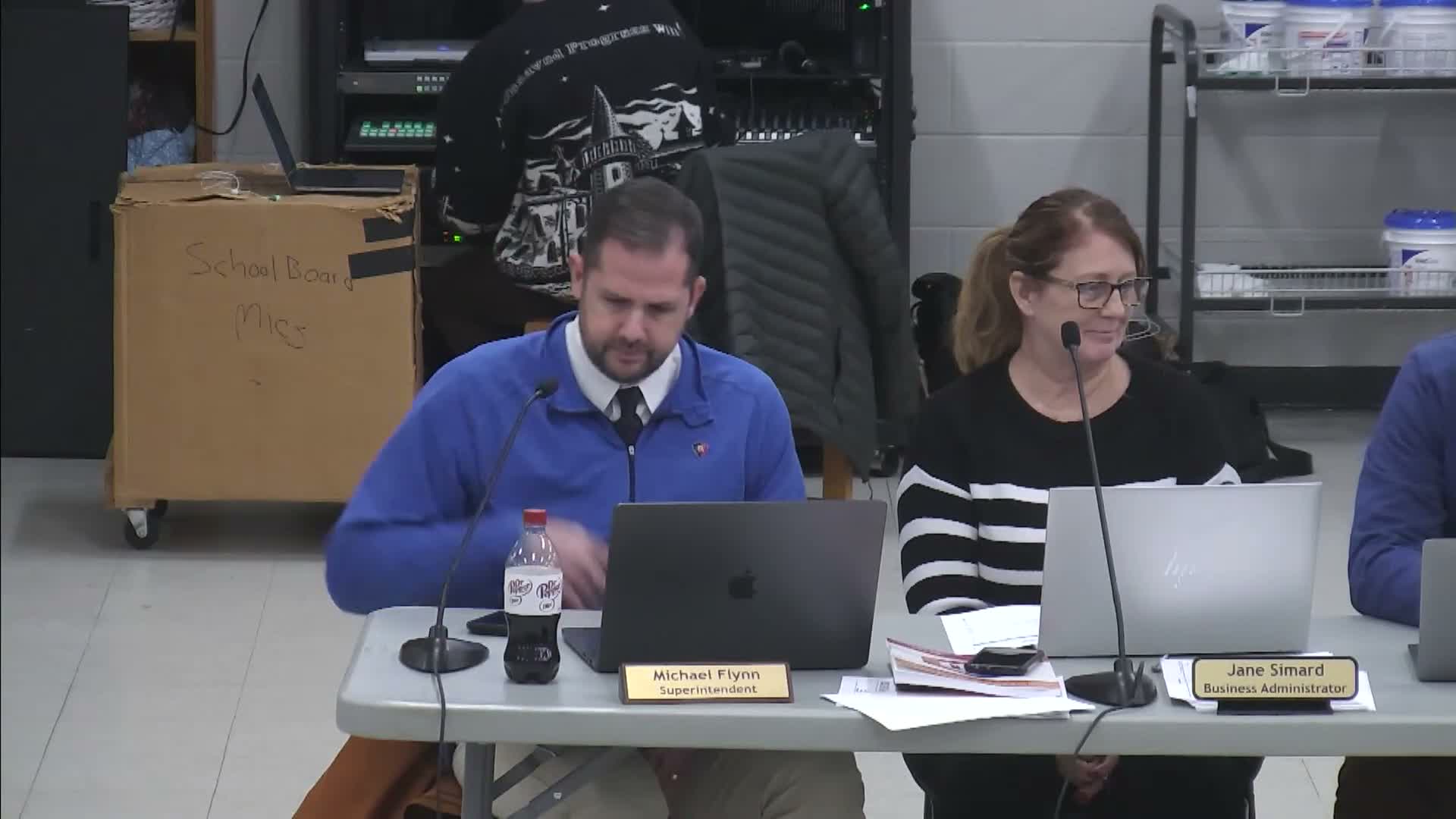
Summary
Administrators presented class-size comparisons from eight neighboring districts, recommended formal class-size policy work, and warned that special-education volatility and Education Freedom Accounts (EFAs) have reduced state adequacy funding (Derry reported a $45,374.60 adequacy loss).
District administrators presented a short analysis of classroom sizes from eight neighboring districts and urged the board to consider a formal class-size policy to provide guardrails for staffing decisions.
"These are actually true class-size numbers," Assistant Superintendent Joe Crawford said, explaining the spreadsheet collected direct counts from neighboring districts rather than state staff-to-student ratios. Crawford and Superintendent Michael Flynn emphasized the difference between class size (the number of students in a specific classroom) and the state’s staff-student ratio calculation, which includes related-service staff and can mislead comparisons.
Members discussed that class-size bubbles occur across buildings and grade levels and that the administration will bring a policy discussion to the policy committee. A school-board member noted noninstructional factors — equipment needs or special supports in a classroom — sometimes justify smaller class sizes.
Administrators also described funding volatility tied to special education and the growing reach of Education Freedom Accounts (EFAs). Flynn told the committee Derry’s most recent calculation showed a $45,374.60 reduction in adequacy tied to EFAs, and explained the grant arrangement provides the district about "75¢ on the dollar" for any adequacy loss.
Committee members asked about predictability and whether the district could survey families (soft pulls) to gauge likely enrollment changes. Administrators said they will gather more data and refine projections; they cautioned qualifiers and program expansion at the state level make funding harder to forecast.
The administration recommended continued data gathering and presenting a class-size policy to the policy committee during the coming months, with the goal of creating clearer, longer-term staffing guidelines.