
Panama City commissioners push for formal process to manage unsolicited offers and spur affordable housing
Get AI-powered insights, summaries, and transcripts
Subscribe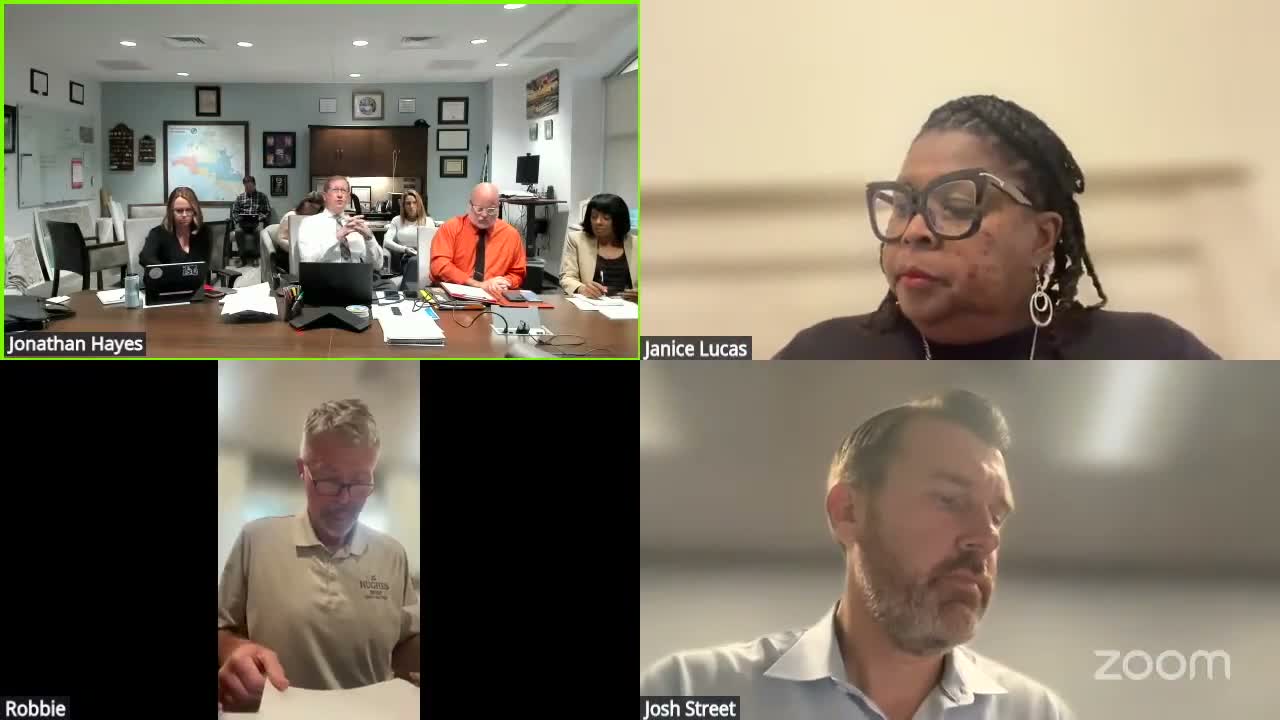
Summary
At a virtual workshop, Panama City commissioners and staff discussed a unified process for city-owned parcel disposition—sealing unsolicited offers, standard RFP parameters, protections for CRA parcels and targeted use of land to encourage affordable residential development.
Panama City commissioners and staff on a virtual workshop Thursday discussed formalizing how the city handles unsolicited offers and requests for proposals (RFPs) for city‑owned parcels, aiming to protect offerors, increase transparency and use land to advance affordable housing and neighborhood goals.
Commissioner Hughes introduced the proposal, arguing ‘‘No matter how it’s being bought, there should be a process for both,’’ and urged a sealed or ‘‘blind’’ initial period for unsolicited offers so private proponents have the same protections as public RFP respondents. Hughes recommended clear front‑end rules about allowable uses, fixed due‑diligence windows and standard contract forms to reduce uncertainty for staff and buyers.
The commission heard from Sean Self, the city’s logistics director who oversees purchasing, that RFPs can be structured with specific parameters and are typically sealed for 30 days before a public opening. Self warned commissioners that the city has recently received very low opening bids on some requests—‘‘starting out at a dollar’’—and said centralizing offer intake would improve bid quality.
Commissioner Josh Street said the city should treat residential and commercial land differently. Street proposed a ‘‘residential property bank’’ approach that would maximize subdivision of large lots, require builders to begin construction within about one year for residential offers and allow steep discounts—up to giving a lot at no cost—if the buyer commits to producing low‑income housing. ‘‘I do not think we should be looking to make money off of residential land when our citizens are sitting in a spot where there is not enough inventory to drive down pricing,’’ Street said.
Several commissioners and the mayor emphasized using land to create ‘‘momentum’’ in neighborhoods rather than simply selling to the highest bidder. Commissioner Granger recommended leveraging land in public‑private partnerships (P3s) to attract development and civic amenities rather than routine sales.
Housing staff cautioned that lots originally purchased with housing funds must be treated differently. Sheila, a housing department representative, said parcels bought with program funds may require repayment or liens and that recipients who receive a lot as acquisition assistance must qualify for the housing program. ‘‘If we are using the land as their in lieu of their down payment, that would be land acquisition assistance…they would have to be income qualified,’’ she said.
Commissioners asked staff to clarify appraisal timing and documentation. Participants agreed that a contract can be written ‘‘subject to appraisal,’’ allowing negotiation before final appraisal ordering in some cases. Commissioners also discussed options such as limiting how many lots a single buyer can acquire in a given period, placing time‑limited use restrictions (for example a 3–5 year restriction on resale or change of use), and subsidizing impact fees to make infill housing financially viable.
As a near‑term procedural step, the commission directed staff to centralize unsolicited offer intake in the purchasing division so the city maintains a single master list and ensures confidentiality during the sealed period. Sean Self told the commission the city currently has 15 unsolicited offers on file and offered to provide a detailed breakdown to commissioners.
Commissioners agreed to continue refining a written policy or purchasing‑manual procedure—rather than an ordinance at this point—and to meet one‑on‑one with staff to resolve technical issues and draft the guidelines.
The workshop closed with commissioners scheduling further meetings to finalize the policy language; no formal ordinance or binding vote was taken during the session.