
Community assembly urges Boulder to support local businesses, accessibility and diverse housing in ‘15‑minute’ neighborhoods
Get AI-powered insights, summaries, and transcripts
Subscribe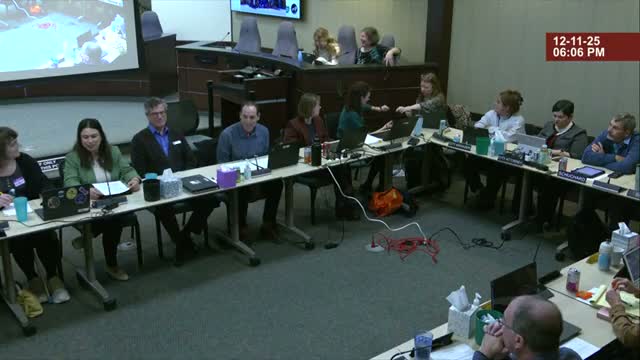
Summary
A community assembly presented recommendations to the Boulder council calling for policies to strengthen local retail, reduce barriers for home-based microbusinesses, prioritize accessibility and pursue mixed housing types; council members asked questions but took no formal vote.
A community assembly that spent dozens of hours developing a report on “15‑minute” neighborhoods presented its findings to Boulder council members, urging city leaders to back strategies that keep local services within walking distance while protecting affordability and access.
Alejandra Nielen Zavala, one of the presenters, said the assembly centered belonging and equitable access. “Como mujer mexicana que ha vivido en Boulder durante 3 años … me preocupa profundamente el sentido de pertenencia y el acceso,” she said, stressing that outreach alone will not help if families cannot afford to remain in the neighborhoods the city seeks to strengthen. (Quote translated from Spanish.)
The report recommends several steps: support for local businesses to keep neighborhood services available, programs to help residents navigate complicated city codes, easing certain limits on home‑based businesses to enable microentrepreneurs, and explicit attention to accessibility for people with disabilities.
Presenters told the council that while the assembly discussed a possible tax on vacant commercial properties or storefronts as one tool to activate empty spaces, that idea did not reach consensus and was not advanced as a formal recommendation. Brenda Ridnaur, a member of the assembly, told the council the vacancy‑tax concept “was discussed, but there was not a consensus to elevate it to a recommendation.” (Translated from Spanish.)
The assembly also emphasized housing diversity: its 15‑minute‑neighborhood definition envisions mixed density and multiple housing types — not just single‑family homes or large apartment blocks — to better connect residents to services. Presenters acknowledged unresolved trade‑offs around building for middle incomes and the economic pressures developers face.
Councilors pressed presenters on several points: what counts as a 15‑minute neighborhood, whether the assembly had data on vacancies versus market trends, and whether tribal and Indigenous perspectives had been part of the process. Presenters said they offered four principles for prioritizing pilot areas rather than prescribing exact neighborhoods, deferred technical market analysis to experts, and said relatively few participants self‑identified as Indigenous so sustained focus on land reparations was limited.
City planning staff signaled an intent to incorporate the assembly’s recommendations into upcoming plan drafts. Kathleen King of the city’s planning department said staff will use the report to map where 15‑minute neighborhoods already exist, identify gaps and draft policy language informed by the assembly’s work.
Council members and staff praised the depth of the assembly’s effort — presenters said participants invested about 57.5 hours each across seven full‑day sessions — but there were no motions or votes on the floor at this meeting. The presentation closed with applause and a brief pause before the council moved on to other business.